The Chool Bus (ch22)

CHAPTER 22: The Forks head south venturing close to LA via Santa Barbara and Moorpark, then, a taste of the Bakersfield sound at the Merle Haggard Museum.

As a prelude to the gang’s sweep through sunny Southern California (SoCal), Buck Wellstone dialed his all-access music smorgasbord to classic Bakersfield jams…Buck Owens…Merle Haggard…Dwight Yokem…the works. He knew they’d be on this road for a while. After all, California posts higher annual gross domestic product than major powers such as the UK, Japan, and France. There is much to discover and SoCal is no slouch for quality of living, despite stratospheric costs.

For example, Santa Barbara…sometimes referred to as The American Riviera: though evidence of human habitation of the area begins at least 13,000 years ago, it finally joined the Union in the mid-19th Century. During the Gold Rush years and following, the town became a haven for bandits and gamblers…it was a dangerous and lawless place…now a veritable paradise on the West Coast.

The gang didn’t have focus group interviews scheduled in Santa Barbara, but it (Santa Barbara) was on the road to Moorpark, a fairly newish LA-area enclave and home of Moorpark College, known for high rates of degree completion. Moorpark is also known for a unique program, The Teaching Zoo. One can imagine an inevitable mishap where people learning the exotic animal ropes lose control of their prickly critters. In this case, a Siberian tiger escaped a local resident’s confines.

Tuffy the Tiger met with an untimely demise as authorities were not privy to the animal’s history (Tuffy was declawed). Other reports indicate authorities couldn’t get a favorable angle for tranquilizer dart effectiveness, so they opted for deadly force…no more Tuffy…and the incident caused a bit of an uproar as the cat was on the loose for weeks. Escaped tigers not withstanding, Moorpark is said to have the lowest crime rates in Ventura County.

Anyway, the gang HAD to do some exploring in Santa Barbara. An area boasting a climate often described as Mediterranean with a strikingly beautiful view. The hillside community just north of downtown enjoys a sweeping view of the Pacific Ocean and Santa Ynez Mountains. With Mediterranean-style white stucco buildings topped with red-tile roofs reflecting the city’s Spanish colonial heritage. Billie was aware that she was missing most of the spectacle due to keeping her eyes on the road. But Buck was taking note, and when they finally got to stretch their legs and do some exploring provided guidance on where to go.

Movie buff, Professor T recalled his time in a class exploring the history of electronic media. He knew that Santa Barbara housed the world’s largest movie studio during the era of silent film. Flying A Studios and others produced over a thousand films during their tenure in Santa Barbara. While the massive American Film Company lot (which once dominated a full city block) was mostly torn down in the 1940s, a few key pieces remain: The Main Surviving Building…a one-story, Revival–style office located on Mission Street is still standing and meticulously preserved. It was once the actors’ green room, dressing rooms, and lounge, and now operates as the office for an architecture firm. When the Forks got there, they saw the original Flying A logo on the front of the building, the prominent arched windows, and the vintage entry light sconce…Mork Thompson was pleased. And once Professor T’s curiosity was satisfied, the gang trudged up the hill to Belmond El Encanto Dining Room in the Mission Canyon foothills, a gourmet lunch with incredible views.

***

Fed and edified in Santa Barbara’s alternate universe, the Forks made their way back to the Chool Bus and embarked for Moorpark…a couple days for focus group interviews at Moorpark College before pushing on to Bakersfield, a geological engineer’s dream museum right there in the same plot with Merle Haggard and the Bakersfield Sound Museum. Buck Wellstone wallowed in the detailed oilfield exploration and drilling exhibits, and the Hard Rock Cafe for country music fans, not to mention Mr Haggard’s boyhood home, fashioned from a vintage railroad caboose.

The flashy Nudie Suits, the back page stories of Bakersfield sound luminaries, the towering palm trees. It was all a bit dizzying for Buck…and he LOVED it.

Bakersfield is often considered to be the birthplace of the different, down-to-earth sound, sort of a rebellious response to Nashville’s highly produced, slick releases. The Bakersfield scene inspired many country artists, such as Dwight Yoakam and The Strangers. Yoakam, alongside Buck Owens, paid tribute to Owens by covering his 1973 recording of Streets of Bakersfield. The cover reached number one on the Billboard Hot Country Singles chart in 1988.

And Bakersfield’s premier luminary, Merle Haggard, was born and raised in Oildale. In the early 1960s, Haggard completed his first single, Skid Row, on Bakersfield’s Tally label. He went on to sign with Capitol Records a few years later. Most of Haggard’s early songs reflect his time spent in prison, farming, and working blue-collar jobs in Southern California, including Bakersfield. But he was more than just a unique interpreter of those lonesome country songs, he could also do amazing impressions of other country stars of the day. You could say he was the Jimmy Fallon of his era.

NEXT WEEK:
The Forks take a few days detour South to San Diego, then across the border to Ensenada before the next round of focus group interviews in Las Vegas.

GO BACK => Preface and Chapter Links

Audiovision: Redemption

Or… sometimes redemption requires discipline:

Seems we’re coming up on some hard scrabble times for citizens down on their luck. And hard scrabble times call for hard scrabble responses. We’re going to have to grapple with how to handle the consequences of gutting the social safety nets. Nothing new, we’ve seen this play before. In Les Misérables, Victor Hugo’s novel uses the theft of a loaf of bread by Jean Valjean to illustrate the harsh and unjust nature of the justice system in his time. In more recent times, Willie Smith Ward, a Texan, received a 50-year sentence in 2013 for stealing a $35 rack of ribs. Now granted, this was the logical conclusion of this man’s incorrigible behavior in the light of Texas’ habitual offender laws, allowing for lengthy prison sentences to repeat offenders. Yes, he was a pervasive violator of civic good faith, but the final straw was the theft of food.

It’s probably no coincidence original sin is connected to behavior inspired by hunger. According to the Judeo Christian holy book, we’re guilty as soon as we hit the ground. And guilty of what? And why? Because the first XY chromosomes in our hereditary line fell for a cock-n-bull story about an apple being verboten per maximum overlord’s command? And why the prohibition? Because consuming the apple would drop the scales from our minds regarding the existence of good and evil? And the consequences of gaining this knowledge is… death? But not until one experiences a veritable parade of humiliation, pain, sorrow, and general suffering? Again… we get to ride this roller coaster of woe because some dipshit, 10,000 years ago chose to enjoy a spot of fruit with his girlfriend? Yeah… i don’t know if i can get behind this allegory. It seems a bit unfair to the XX natives. It paints them in a devious light. Like, both of them were instructed to avoid the fruit, but the devil’s serpent chose XX as an ideal target for corruption. And XY was just too gullible or dumb to mount an effective argument. Bottom line, XX is an hedonistic schemer, and XY is a goofy simpleton that just wants to eat. Naw, we’re not gonna fall for that misogynistic bullshit. XX and XY are born equally innocent, if they go bad as they grow, it’s the result of non-optimal environmental conditions or physical chemistry, but mostly… bad behavior is taught by irresponsible caretakers. 

The whole “bad behavior inspired by hunger” issue might grow into a nagging problem in this age of prioritizing gilded ballrooms, machine automated labor, and antiquated energy policies over the well being of the XX and XYs who happen to lack connections in society’s power structures. And how might that play out? We could look to historical record for cues. Has hunger ever been an issue for working and doomed classes through the ages as economic and technology conditions change? Indeed it has, is, and will continue to vex policy makers… Victor Hugo’s novel is a vivid example.

And outcomes have varied widely. The most recent encounter with abject mass deprivation in this country got defeated by what was known at the time as a New Deal for the nation’s people. This, many would acknowledge was a best case scenario. Things didn’t go so smoothly in Russia or France as they transitioned away from monarchical rule. You could say, for the ruling classes, these are a couple worst case scenarios. Given that, what’s driving the U.S.A. away from democracy, careening toward authoritarian ethno-nationalist governance? Time will tell, but for now, it might behoove the ruling classes to recognize working people and the doomed are talking to each other. They’re not as hampered by ignorance as has been a hallmark of previous socio-economic upheavals. Consolidating power may not be the golden ticket they think it is.

Now… how will all of this shake out? I wouldn’t venture a guess, but i do see chatter crisscrossing the social networks, and i can confidently predict how some will approach the oncoming hunger dilemma. As we advance into this age of machines automating repetitive rote tasks, and jobs continue to evaporate, people will ask for opportunities to earn the means of feeding their families. When no useful work is available, they will ask for food assistance, and when no food assistance is available, they will take the food from whatever source is handy. And there will be plenty of XX and XYs with the resourcefulness and discipline to create their own redemption. Regarding original sin i, for one, am grateful for the flood of knowledge passed down by the original XX and XYs. I’m GLAD they ate the apple. And if supporting tax dollars for food security to people i’ve never met makes me a communist, well, pepper-spray my ass and call me “Comrade!”

I gotta black bomb…
It’s tickin’ away…
Gonna take it out…
On the Blue Highway.

Cheers… Rohlfie

This Land: Connecticut

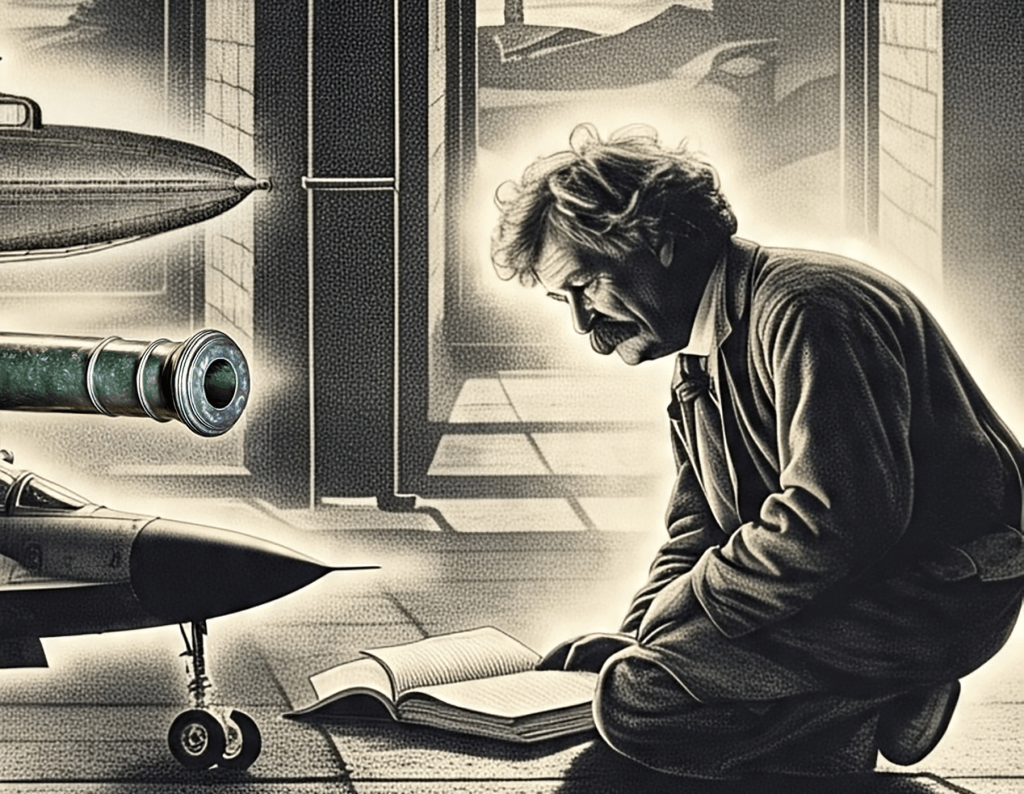
LISTEN: If you want to understand the United States of America, and you’re in a hurry, you could do worse than look at Connecticut. It’s a real grab bag of a place. It’s got all the shiny things and all the sharp, rusty things America keeps in its pockets. It’s a place of beautiful, brilliant minds, some of which are put to work making new and interesting ways to blow people to pieces.

C’EST LA: They had a war there, once. The Pequot War. This was long before the powdered wigs and the Declaration of Independence. It was just plain, old-fashioned barn-burner. And then, not so long ago, a young man walked into a school called Sandy Hook and did something so awful it’s hard to write words about it. Between those two points, you will find a long and profitable history of making tools for the unfortunate vocation of killing people and breaking things.

A man named David Bushnell built a submarine there called the Turtle. This was way back. It was supposed to sneak up on British ships and make them go away forever. It didn’t work so well, but we’ve been perfecting the idea ever since. Now Connecticut is home to companies with names that sound like comic book villains. Raytheon. Pratt & Whitney. Lockheed Martin. They make clever things that fly very fast and then explode. Busy, busy, busy. And the money rolls in.

But here’s the thing about people: they are messy, unpredictable creatures. For every looper building a bomb, there’s another sitting in a quiet room, trying to write a letter that might save the world.

Connecticut had one of the best letter-writers of all time. His name was Sam Clemens, but he called himself Mark Twain. He lived in a big, beautiful, goofy house in Hartford. He had a mustache. He saw all the greed and the violence and the hucksterism, and he thought it was the saddest and funniest thing in the world. He used free speech like a fire hose. He pointed it at hypocrisy and cruelty and tried to wash some of the filth away.

And not far from him lived a woman named Harriet Beecher Stowe. She wrote a letter about owning other human beings. It made a lot of powerful people very, very angry. That’s how you know a letter is doing its job. She was using her brain and a bottle of ink to fight against loopers using whips and chains.

It’s enough to give you an existential whiplash…?

And get this: back in the day, the political party of Democrats in Connecticut thought the Civil War was a bad idea. They weren’t too bothered about the whole slavery business. Now, of course, that same party in that same state plants signs in every lawn about diversity and inclusion. The names on the jerseys have stayed the same, but the players, and the rules of the game, have gone topsy-turvy. It’s all very confusing. It’s a good reason to spark up some of Snoop Dogg’s doobois.

So what’s next for the little state with the big contradictions? Now we’ve taught the machines to think, or at least to write book reports and make up pictures. We’re feeding all of our nonsense into these things, all of our history, and our hatreds, and our love poems. What will the thinking machines make of Connecticut? Maybe they’ll tell us to keep building the bombs, only to do it more efficiently. Or maybe they’ll read Mark Twain and decide the whole human experiment is a joke. A bad one.

I imagine old Sam Clemens would have a thing or two to say about it. He’d look at the internet, where everyone has a megaphone and no one has an editor, and he’d probably light a cigar, pour himself a whiskey, and rack the billiards. He might have watched that movie, Idiocracy, and said, “They got it mostly right, but it should have been sadder.” He knew the score. He knew that human genius was a beautiful and dangerous thing, like a bottle of nitroglycerin. You could use it to help prevent a heart attack, or you could use it to blow up the world.

C’EST LA: We have the angels of our better nature, and we have the howling monkeys who want to burn it all down. They both live in Connecticut. They both live in us. Words are nice. Books are nice. But they might not be enough to keep the monkeys from the matches.

We’ll have to do better. We’ll just have to be kinder. And that’s all we have to say about that.

Next Stop: Jersey, Baybay!

Onward through the fog… RH

You got your swords…
You got your ploughshares…
Visit Hartford…
They’ve got it all there…
Commune with ghosts…
Converse with brilliant minds…
All await you in Connecticut!

Below the Earth – Above the Sun: Faith

There’s a certain breed of American, bless their star-spangled hearts, convinced they hold the exclusive lease on the Almighty’s ear canal. Like a toddler throwing a tantrum in a supermarket checkout, they believe their brand of piety is the only gateway to a decent life or the ticket to a glorious afterlife. To them, faith is less a comfort and more a cudgel to whack everyone else into submission.

Now, listen up, Bible thumpers and incense-waving gurus of every persuasion. If blind faith brings you existential relief, knock yourselves out. But the second you try shoving your dogma down our throats louder than a carnival barker with a megaphone, well, there’s gonna be trouble. This isn’t some backwater church social, loopers. This is the United States of freaking Everything, a kaleidoscope of cultures clashing in a glorious, messy mosh pit of individuality.

We built this nation with the blood, sweat, and tears of those fleeing religious persecution, remember? We’re a nation conceived in liberty, not some divinely ordained daycare center. This whole “one size fits all” piety might fly in some homogenous, beige part of the multiverse, but here in this cosmic bubble, in this vibrant, cacophonous land of the free and the home of the brave, it sticks out like a polka-dotted clown suit at a funeral.

Think about it. You got loopers praying to eight-armed deities in India, chanting to ancestors in China, and down here in the good ol’ US of A, we have a smorgasbord of salvation schemes, from the hallelujah hollering Baptists to the crystal-clutching New Agers. It’s beautiful, in a completely batty way, like a fireworks display gone rogue, illuminating the sky with a thousand different colors.

Sure, some might say this multiplicity makes for a messy democracy. Like herding cats on roller skates, right? But here’s the thing, loopers: forcing everyone into the same drab uniform of belief is a recipe for disaster. Look at history, it’s littered with the wreckage of holy wars and inquisitions, all fueled by the delusion that one brand of faith is the One True Path. Bunk! It’s a celestial cul-de-sac, leading nowhere but to resentment and bloodshed.

The beauty of America is the glorious, chaotic cacophony, remember? We tolerate, we debate, we argue like drunken sailors on shore leave, but somehow, someway, this messy gumbo keeps bubblin’ along. It’s not perfect, hell no, but it’s a damn sight better than some theocratic theme park where everyone wears the same itchy robes and sings the same hymns.

So, to those monoculture missionaries, those who dream of a beige, homogenous America where everyone worships at the same altar, i say this: be careful what you wish for. Because the line for religious dominance is a lot longer than you think, and it winds all the way back to the days of inquisitions and witch trials. In the meantime, the rest of us will be here, celebrating the glorious mess that is the USofA, a multicolored mosh pit with a divine soundtrack blaring from a thousand different speakers. Now, who wants to crowd surf?

Onward through the fog… R.H.