CHAPTER 13: The Forks and Buck witness the nation’s fibrillating heart a little more directly than anticipated in the Pacific Northwest.
The Forks had a few days to make the trip to Coeur d’Alene where the next set of interviews were scheduled to be conducted at the University of Idaho. After breakfasting at a Salt Lake mom & pop pancake house, they set off for Missoula, Montana. It would be nearly eight hours on the road, but Billie was up for the challenge as some of the nation’s finest hot springs are located there. She was excited to check out some of the less developed spots for a truly unique communion with mother nature.
Toward the back of the Chool Bus, the hypnotizing hum of rubber and asphalt lulled Professor T to some fitful napping. He remembered at least three moments between sleep and wakefulness where the dream, or nightmare, stuck to his conscious memory like peanut butter on the roof of your mouth when there’s too much PB and not enough J. One of these, in particular, had the good professor sort of dreading this push into the Great American Redoubt (GAR), an area of the country deeply steeped in apocalyptic religious fundamentalism.
Now, Professor T is a live-and-let-live secular humanist at heart, one hundred percent in support of the 1st Amendment’s explicit provision of religious practice free from government involvement (for or against) but the folks in the GAR of Northern Idaho, Eastern Washington/Oregon, had been slowly creating a space where their brand of apocalyptic Christianity was seeping into a cultural dominance. Not that there’s anything wrong with that, thought Professor T, as long as they don’t try to draw everyone into their oxygen deprived world view. He wasn’t worried for himself so much as for Billie’s safety as a person of gender fluidity.
It didn’t help that Professor T was watching a documentary on YouTube about the GAR, drifting in and out around the point where some of the worst extremists urged followers to seek out and identify Communists, Jihadists, Antifa & BLM. When responding to a critique over the white nationalist flavor of their apparent political goals, they loudly declared their token black pastor negated all claims of their wish to establish a white ethnostate set to secede from the union like those southern states in the mid-19th Century. Of course, that separation led to a bloody civil war and the radical element of the GAR seemed anxious for a rematch.
In that misty state between wakefulness and dreaming, Professor T heard voices declaring California and the i25 corridor in Colorado the playground of the devil… spiritual warfare … good-vs-evil. There’s mention of a manifesto that reads like the Anarchists Cookbook for prepper GAR compatriots… lots of tactical advice. For example, in The Biblical Basis for War: A Plan For Creating a New Theocracy Through Violence. First, “Make an offer of peace before declaring war.” This offer would not be a negotiation or compromise of perceived righteousness. Non Christians MUST surrender on terms of the GAR’s brand of justice, including the halting of all abortions, same sex marriage, idolatry, occultism (read: no Wicca, or anything resembling paganism), no communism (whatever that’s supposed to mean), and all must obey biblical law (like the Taliban in Afghanistan). Those who comply must pay the GAR’s taxes and those males who refuse… will be killed… read that again… they. will. be. killed!
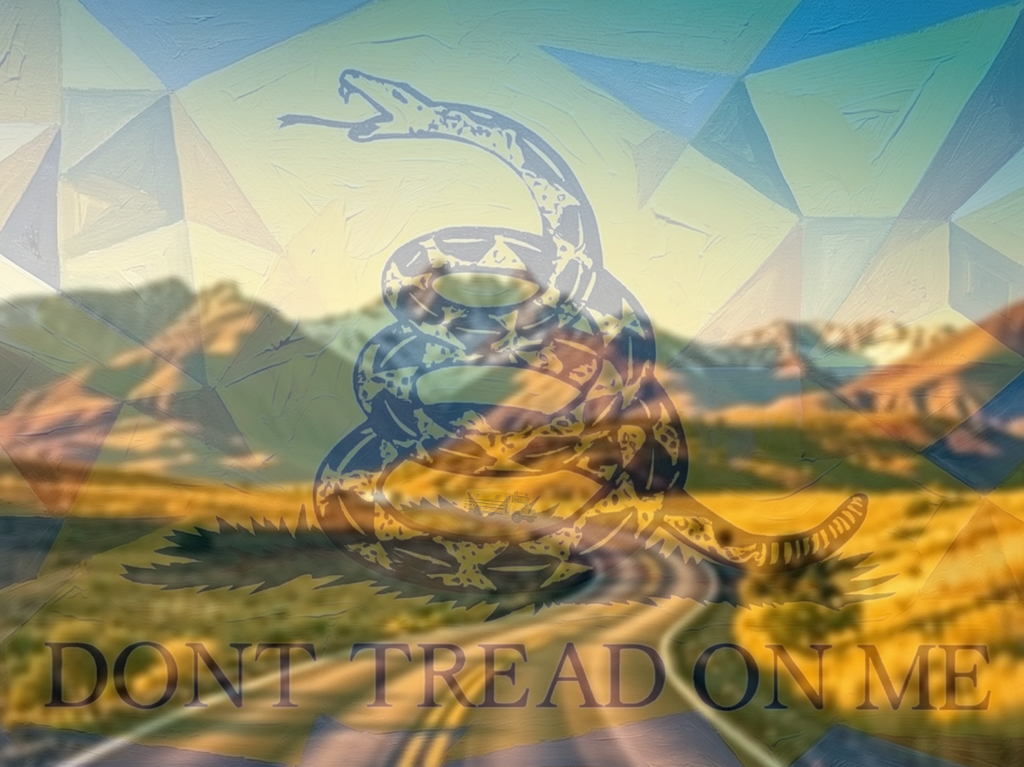
“Comply or die.” Jack was hip to the irony of folks displaying Gadsden Flags with a snake expressing a desire that tyrannical government entities refrain from stepping near them… the folks who trumpeted warnings of a nationwide gun confiscation and establishment of concentration camps by the previous administration were now silent as their own political party’s federal government was snapping up abandoned warehouses for the stated purpose of facilitating mass deportation of illegal immigrants. As well, sending divisions of armed goon squads into cities run by political opponents.
“Irony is dead,” Jack mumbled as Professor T voiced his increasing apprehension approaching the GAR.
“Yes, dead, but unacknowledged ironydoesn’t mean mixing with the folks in the GAR could be dangerous… yet.” Professor T cued up an interview featuring a librarian from the Coeur d’Alene area who had spent time in law enforcement during the bad old days when Neo-Nazi groups had set up compounds in the area, some taking their views to extremes with the murder of 1980s talk radio personality, Alan Berg. She said she was certain Idaho would not allow that sort of militant activity again.
“But still,” Jack’s 6th sense was tingling. He was worried they might run into some trouble poking around asking questions of the GAR locals.
“Not to worry,” Buck was listening to Jack and Professor T’s conversation. “I know plenty of rodeo dudes from Northern Idaho, and they say all of that great secessionist redoubt talk is empty bluster. You know, like in Iran when they chant ‘Death to America’. Really, all they’re saying is they don’t like our one sided approach to Middle East diplomacy. It’s how they express dissatisfaction.”
“Take the goddamn next exit,” Sam Jackson barked from Siri’s Drunk Sister’s bluetooth audio link.
“Well, i don’t much care about politics, but i am hungry,” Billie had to weigh in as she steered the Chool Bus into a truck stop somewhere around Idaho Falls. “Let’s get some truck stop food.”
NEXT WEEK: Professor T steps in it again, and Billie arranges a mineral hot spring rendezvous with a kindred spirit.
It was 2:00 P.M., give or take a minute, on an ordinary Tuesday, though in the suffocating maw of Northern New England’s July “Heat Dome,” nothing felt particularly ordinary. The very air hung thick and greasy, a humid shroud draped over the land, making even the squirrels pant like Alaskan Malamutes at Disney World. Inside the tin-can confines of Ronnie’s trusty, but un-air conditioned mount, Rocinante, a veritable bake oven on wheels, Ronnie noticed the cabin batteries sputtering, their digital readout fading like a bad dream. Keeping the provisions from turning into a science experiment in this hundred-degree crucible was draining the lifeblood right out of them. And when that happens, a drive, an hour or so, a nice little constitutional for the battery, that’s the ticket.
So, off they went, Ronnie at the helm, the digital siren song of Siri’s perpetually inebriated sister (known in these parts as Google Maps) croaking directions. The mission was to find the nearest watering hole for their dwindling provisions… a grocery emporium with a filtered-water refill station, a veritable oasis in this overheated landscape. Mission accomplished. The electronic drunkard was commanded to lead them back to their pre-designated encampment. But alas, Siri’s drunk sister, in a fit of digital delirium, delivered them not to the sylvan serenity of their New Hampshire hideaway, but to Tewksbury, Massachusetts.
Tewksbury, MA? Ronnie’s eyebrows shot up like a rocket. What the Sam Hell!? they weren’t done with New Hampshire yet! The verdant hills of Derry, still echoing with the ghost of a post unfinished. But by then, the sun, a malevolent orange eye in the hazy sky, was already dipping low, casting long, bruised shadows. Backtracking? Forget about it. The die was cast. And besides, they had everything they needed to finish the New Hampshire dispatch right here, right now, in this unexpected patch of overheated forest. Serendipity, it seems, often arrived in the guise of a geographical screw-up. For lo and behold, a stone’s throw from their new, accidental roost, stood the Tewksbury Public Library, and just beyond its brick façade, a short, almost ominous stroll away, loomed the Tewksbury State Hospital, its Gothic spires reaching for the heavens like skeletal fingers, steeped in a history as thick and dark as molasses. SERENDIPITY NOW! A drumroll, please, for the universe’s peculiar sense of humor.
Now, pull up a folding chair, pop a squat, and lend an ear, because we’re about to embark on a journey, a rollicking, rambunctious ride through the peculiar, the profound, and sometimes downright preposterous tapestry of this place called Massachusetts. It’s a land of “firsts” and “extremes,” as some folks are fond of saying, and if you ain’t careful, it’s liable to give you a case of psychic whiplash just trying to keep up.
Way back, long before your great-grandpappy’s great-grandpappy even thought about being born, this neck of the woods hummed with the quiet rhythm of life, home to a diverse tapestry of Indigenous peoples… the Wampanoag, the Narragansett, the Nipmuc, and a slew of others, their names whispered on the wind. They dwelled in ingenious lodges called wigwams, conical cocoons of bark and hide, or sometimes in grander longhouses, sprawling communal abodes, all under the watchful eye of their sachems, leaders who could be as easily a woman as a man, which just goes to show you some things ain’t so new under the sun. Why, the very name “Massachusetts” itself is a linguistic echo, plucked from the Massachusett people, a tribute to their enduring presence.
Then, in 1620, like a scene out of a stained-glass window, along came the Pilgrims, their faces grim with conviction, seeking a place to worship God without all the fuss and bother of the Old World. They clambered off their creaking wooden ark, the Mayflower, and promptly set up shop in Plymouth, a desolate spit of land that would forever be etched in the annals of American myth. A mere decade later, in 1630, another wave, an even more earnest phalanx of Puritans, arrived, their heads buzzing with the grand, almost hubristic idea of building an “ideal” religious society, a shining city upon a hill. They called their settlement the Massachusetts Bay Colony, a name that would eventually be swallowed by the booming metropolis we now call Boston. They even had what some historians, with a twinkle in their eye, refer to as the “First Thanksgiving,” a three-day bacchanal of feasting and goodwill after their initial, hard-won harvest. Now, whether that was a true act of profound gratitude or merely a darn good excuse to eat till their britches burst, we can’t rightly say, but it’s a yarn woven tightly into the fabric of American lore.
These Puritans, bless their earnest, God-fearing hearts, were mighty serious about their faith. So serious, in fact, that if you didn’t quite see eye-to-eye with their rigid interpretations… folks like the fiery Anne Hutchinson and the stubbornly independent Roger Williams… they’d politely (or perhaps not-so-politely, depending on the day and the prevailing winds of theological disagreement) suggest you try your luck elsewhere. And that, loopers, is how the feisty little state of Rhode Island got itself started, by gawd. It seems religious dissent, coupled with a hankering for a bit more elbow room, were quite the potent forces for colonial expansion back then.
Plymouth, MAMassasoit, Wampanoags’ SachemPlymouth Rock (allegedly)Mayflower II (definitely)
And let’s not overlook a grim chapter that unfolded in Salem, a town that earned itself a dark and indelible reputation for a spell of mass hysteria that involved accusations of witchcraft swirling through the air like a noxious fog. It just goes to show you what happens when folks get themselves all riled up, gripped by fear, and start pointing accusatory fingers. A truly grim chapter, that one, leaving a stain on the Puritanical ledger.
Now, fast forward a bit, through the sleepy colonial years, to the late 18th century, and Boston, like a coiled spring, begins to flex its muscles, asserting its destiny as the “Cradle of Liberty.” See, after the French and Indian War, a bloody, protracted affair that emptied the British coffers, the Crown decided it was high time the colonies, those spoiled colonial brats, paid their fair share. Massachusetts, being a feisty, independent-minded sort, didn’t much cotton to that idea. There were protests, simmering resentments, a bit of a ruckus in 1770 that went down in history as the Boston Massacre, where redcoats, those lobster-backed soldiers, fired into an angry crowd. And then, in ’73, those rascals, dressed like painted Indians, tossed a whole heap of tea… crates of it, a veritable harbor-full… into the frigid waters of Boston Harbor. The British, naturally, got their knickers in a twist, their royal temper flaring like a bonfire, and slapped Massachusetts with a series of punitive measures known as the Intolerable Acts. Well, that just poured gasoline on an already raging fire, and pretty soon, firebrands like Samuel Adams and John Hancock were stirring up so much trouble, so much revolutionary fervor, that it lit the fuse for the American Revolution in 1775. Massachusetts, it seems, was always good at getting things started, a perpetual instigator of change.
And speaking of rebellions, after the hard-won victory of the Revolution, a fellow named Daniel Shays, a weathered veteran of that very war, led a populist revolt from 1786 to 1787. They were disaffected, as the fancy folks in powdered wigs would say, burdened by debt and taxes, and they even tried to seize a federal armory in Springfield, a dramatic, ill-fated gambit. Now, this Shays’ Rebellion, as it’s known, didn’t exactly succeed in its immediate aims, but it certainly put the fear of God, or at least the fear of anarchy, into the fledgling nation, convincing everyone that the Articles of Confederation were about as useful as a screen door on a submarine. So, with a sense of urgency, they decided to draft a brand-spanking-new Constitution, a gleaming blueprint for a more perfect union, and Massachusetts, being quick on the draw, ever eager to be a pioneer, was the sixth state to ratify it in 1788, cementing its place in the grand experiment.
Now, this Massachusetts, it’s always been a veritable hothouse for big thinkers, for minds that dared to gaze beyond the mundane. It was a hotbed for the Transcendentalist movement, a philosophical ferment that preached the gospel of intuition, individual experience, and a deeper, almost mystical connection with nature. Ralph Waldo Emerson, a Boston boy who preferred the quietude of Concord’s leafy lanes, pretty much cooked up this whole philosophy, like a gourmet chef perfecting a new recipe. And his pal, Henry David Thoreau, that rugged individualist, spent a year roughing it in a little cabin at Walden Pond, living simply, observing the world, and writing about it all in prose as clear as spring water. Seems they liked to contemplate the universe, those two, and then tell everybody about it.
When the storm clouds of the Civil War gathered, Massachusetts, ever on the vanguard, was front and center, a tireless drum major in the parade for the abolition of slavery. It was the first state to muster itself a Black regiment, the 54th Massachusetts, a bunch of brave souls, sons of freedom, who went on to earn themselves some serious glory. And not content with just freeing folks from the shackles of bondage, in 1852, Massachusetts became the first state to make sure every child, rich or poor, got a bit of schooling. Compulsory education, they called it, and it just shows you they were always ahead of the curve when it came to smarts, ever eager to enlighten the populace.
And speaking of smarts, after the two big global conflagrations, when the smoke cleared and the cannons fell silent, eastern Massachusetts, which used to be all about the greasy gears of heavy industry, decided to give itself a radical makeover. It transformed itself, like a caterpillar into a butterfly, into a service-based economy, with all sorts of government contracts, private investments, and gleaming research facilities popping up like mushrooms after a spring rain. And the Route 128 corridor, that ribbon of asphalt winding through the suburbs, well, that became a regular parade of high-tech companies, a silicon valley of the East, all snatching up the bright young graduates from the area’s many fancy universities… places like MIT, where they’re so smart, they taught the world to ditch clunky analog media for the sleek, ethereal wonder of the “digital.”
Mass. Ethnic DiversityHenry David Thoreau’s Cabin SiteMITBattle of Lexington
Another feather in its progressive three-cornered hat, Massachusetts, ever the trailblazer, was the first state in the whole U.S. of A. to legalize same-sex marriage in 2004. They decided, plain and simple, after much deliberation and legal wrangling, that excluding loopers from civil marriage simply wasn’t constitutional, a blow for equality that reverberated across the nation. See? Extremes and firsts, a constant dance.
And they’ve got more famous literary figures than you can shake a stick at… from the colonial verses of Anne Bradstreet to the whimsical rhymes of Dr. Seuss, with the brooding prose of Nathaniel Hawthorne, the exquisite introspection of Emily Dickinson, and the epic seafaring tales of Herman Melville thrown in for good measure. It’s a regular literary jamboree, this place, a veritable feast for the word-hungry soul.
But let’s not get too puffed up, too self-satisfied, because even a place of such soaring highs has its crushing lows. And we’re not just talking about the low-down, gut-punching feeling you get when you see your quarterly property tax bill. The very place where this post is composed, this serendipitous stopping point called Tewksbury, whose State Hospital looms a short, somber walk away, started out as an almshouse back in 1854. It was a place for the poor, the sick, and later, the pauper insane, their minds adrift on stormy seas. A good many of its early residents were immigrants, especially the weary, hopeful souls from Ireland, fleeing famine and despair, and a full third of ’em, heartbreakingly, were children, their young lives touched by hardship. Why, Anne Sullivan, the remarkable woman who later taught Helen Keller to see the world with her mind’s eye, spent some of her own formative, often brutal years there. Discussing her time in the Tewksbury Hospital, she said, with an almost chilling detachment,
“Very much of what I remember about Tewksbury is indecent, cruel, melancholy, gruesome in the light of grown-up experience; but nothing corresponding with my present understanding of these ideas entered my child mind. Everything interested me. I was not shocked, pained, grieved or troubled by what happened. Such things happened. People behaved like that—that was all that there was to it.”
A chillingly matter-of-fact observation, a child’s stark assessment of a stark reality.
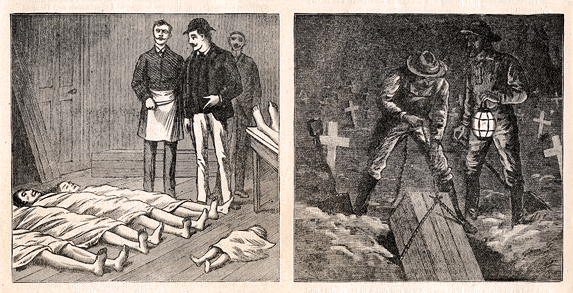
And if that ain’t enough to give you the shivers, to send a cold whisper down your spine, up to 10,000 souls are buried in the woods nearby, their final resting places marked only by tiny, anonymous numbered metal laurels, like miniature tombstone epitaphs. Most of their stories are lost to the mists of time, devoured by fires that consumed the early records, leaving only a spectral void. Some folks even whisper that the place is haunted by ghosts… friendly specters, they say, ghosts that have even infiltrated the hallowed halls of the library, no less. Benign ghosts, they say, and that’s a comfort given all the suffering that surely took place there.
Tewksbury Benign ghostsTewksbury Hospital Admin. Building10,000 Numbered GravesTewksbury 1907Hell is for ChildrenTewksbury Campus Tunnels
So there you have it… a tiny taste, a mere morsel, of the peculiar grandeur that is Massachusetts. Ronnie, ever the wanderer, says he’d love to hang out a while longer, to savor the coastal sights, to stroll the hallowed grounds of the MIT campus, perhaps even touch the very bricks where a nation was born. But alas, the open road calls, that siren song of adventure echoing in his ears. Two more states to go (Maine and Rhode Island), and then, like a homing pigeon, it’s back to Kanorado to take care of some of Ronnie’s personal business. After that, it’s the final leg, the grand pilgrimage back to Florida City, where the salt air and the gentle lapping of the waves will serve as the backdrop for the main event, the book, the very reason for this grand odyssey. Working title, you ask? One Year on the Road: Searching for the Fibrillating Heart of our Divided Nation. A grand ambition, indeed.
We’ll see you in Rhode Island.
Onward through the fog… Rohlfie
You can’t just breeze by… Massachusetts… The highs are too high… The lows are cavernous… The nation’s birth pangs… The death of innocence… Behold… the city on the hill.
On a July Monday in the year of our lord, 2025, Ronnie and Rocinante woke up to a new day, in a strange land. And with all apologies to the natives, it appears they brought the Kanorado weather with them. Average July temps in Derry New Hampshire (no, not that Derry) is between the upper 70s and mid 80s. Today, it’s 92 with tomorrow’s forecast predicting temps up to 96! Fortunately, no one in the Derry Public Library knows it’s Ronnie’s fault… woo hoo!
Anyway, New Hampshire, the Granite State. The first to weigh in on the various candidates making bids to run the most powerful nation on the planet (till it’s not). These loopers are fiercely independent, proving themselves resilient and worthy from the jump.
On January 5, 1776… long, long ago, the cantankerous loopers of New Hampshire decided they’d had enough of old King George. Wham… first colony to declare independence! Nearly half a year before those other guys got around to signing the Declaration. Brave souls, or maybe just impatient.
“Live Free or Die!” It’s what they say.
Established in 1629, named after some place in England… typical. Then came the British troubles. In 1774, before most folks even knew what was what, New Hampshire jumped the gun seizing Fort William & Mary, just like that. Two years later, they had their own government and constitution. First again. No dilly-dallying for these loopers.
“Live Free or Die!” Sounds about right.
Later on, when the big American family squabble happened, the one they called the Civil War, New Hampshire was all in for abolition. Thirty-two thousand soldiers, give or take a few, marched off to fight for the Union. After that unpleasantness, boom… factories everywhere! Textiles, shoes, paper. The Amoskeag Manufacturing Company in Manchester was the biggest cotton mill on the planet. Can you imagine? Then came the French Canadians, by the droves. Now, a quarter of the population has French-American blood. And these days, New Hampshire is rich and smart. Go figure.
“Live Free or Die!” A mantra, if you will.
They’re not big on religion here. Least religious U.S. state, they say. Staunchly libertarian, they won’t be taking orders from priests… they really like their freedom. A Pew survey in 2014 showed that thirty-six percent here were part of the fast growing demographic known as the “nones“. Thirty percent Protestant, twenty-six percent Catholic. Not many Mormons or Jews. They don’t go to church much, these New Hampshirites. Only fifty-four percent are “absolutely certain there is a God,” compared to seventy-one percent elsewhere. Curious, isn’t it? Oh, and here’s a kicker: New Hampshire is the only state to have a woman governor and two women as U.S. senators. There’s another kick in the agates for the patriarchy.
“Live Free or Die!” And make room for the ladies in your ol’ boy network.
Now, before all the European colonizer hullabaloo, the Abenaki tribes were here, minding their own business. Different cultures, different gods, but same language, mostly. People were living near Keene up to twelve thousand years ago! Imagine that. You can commune with the sacred spirits in the White Mountain National Forest, winding through the Appalachian Trail.
“Live Free or Die!” A long, beautiful nature hike.
On Mount Washington, they call it… the “World’s Worst Weather.” Hurricane-force winds every third day. Through the years, more than a hundred visitors underestimated that fury, and now they cant. Little dwarf trees, all matted and gnarled, like angry bonsai. So it goes. And the Old Man of the Mountain, a face carved by nature itself, watched over Franconia Notch for ages. Then, one day in May 2003, poof! Gone. Just like that. And Ronnie thought Kanorado had windy days.
“Live Free or Die!” Until you can’t.
Lakes, ponds, rivers, streams. Eight hundred of the first, nineteen thousand miles of the second. Hard to keep track of all this windy river vertigo. Sometimes state boundaries get bungled. New Hampshire and Maine had a little squabble over the Piscataqua River boundary, specifically some islands. The Supreme Court said Maine owned them. But New Hampshire still says the naval shipyard on Seavey’s Island is theirs. Stubborn, these Granite Staters.
New Hampshire has the shortest ocean coastline in the whole darn country, eighteen miles. Blink and you miss it. Hampton Beach, where folks go to get sunburned. And the Isles of Shoals, nine tiny islands offshore. Four of them are New Hampshire’s. Poet Celia Thaxter had an art colony there. And Blackbeard, the pirate, supposedly buried treasure there. Treasure and art. A strange combination.
“Live Free or Die!” For rum, booty, and framing services perhaps?
“Live Free or Die!” Or at least, take it with a generous sense of humor.
And with that, again we point out the fact that New Hampshire’s average July temperature ranges from the mid-70s to mid-80s. As this entry gets logged the thermometer is in the mid-80s, on the way to a high of 96! Now without sounding like a total narcissist, Ronnie is rehearsing excuses in case anyone were to irrationally put the blame on him and Rocinante for bringing the Kanorado “Dawg Days” all this way north. You gotta admit, it is an astonishing coincidence. On the drive from Burlington VT to Derry, NH, the conditions were gorgeous. Light rain and upper 60s to mid 70s. Ronnie was breathing a sigh of relief for getting away from the punishing Kanorado summer heat, only to find he had apparently brought his customary suffering with him, to the astonishment of the Yankee natives.
PS: There is a silver lining… Ronnie always manages to find one. That being, evening temps cool down significantly so that Ronnie’s able to switch the ceiling fans off around 10 or 11 P.M. as they aren’t needed for the rest of the night. So… there’s that.
Onward through the fog… Rohlfie
You won’t get far… In the Granite State… With Shuck and Jive… They can’t relate… First to weigh in… On the Presidential Race… Live free and chalk it up to fate.
LISTEN: If you want to understand the United States of America, and you’re in a hurry, you could do worse than look at Connecticut. It’s a real grab bag of a place. It’s got all the shiny things and all the sharp, rusty things America keeps in its pockets. It’s a place of beautiful, brilliant minds, some of which are put to work making new and interesting ways to blow people to pieces.
C’EST LA: They had a war there, once. The Pequot War. This was long before the powdered wigs and the Declaration of Independence. It was just plain, old-fashioned barn-burner. And then, not so long ago, a young man walked into a school called Sandy Hook and did something so awful it’s hard to write words about it. Between those two points, you will find a long and profitable history of making tools for the unfortunate vocation of killing people and breaking things.
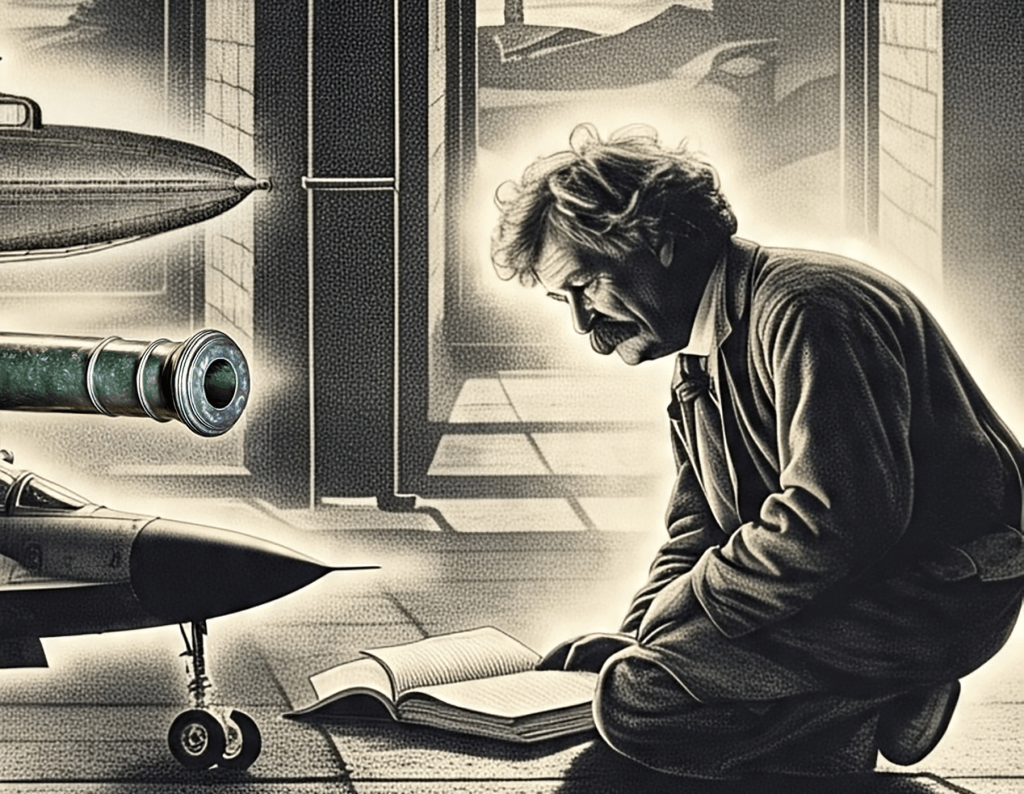
A man named David Bushnell built a submarine there called the Turtle. This was way back. It was supposed to sneak up on British ships and make them go away forever. It didn’t work so well, but we’ve been perfecting the idea ever since. Now Connecticut is home to companies with names that sound like comic book villains. Raytheon. Pratt & Whitney. Lockheed Martin. They make clever things that fly very fast and then explode. Busy, busy, busy. And the money rolls in.
But here’s the thing about people: they are messy, unpredictable creatures. For every looper building a bomb, there’s another sitting in a quiet room, trying to write a letter that might save the world.
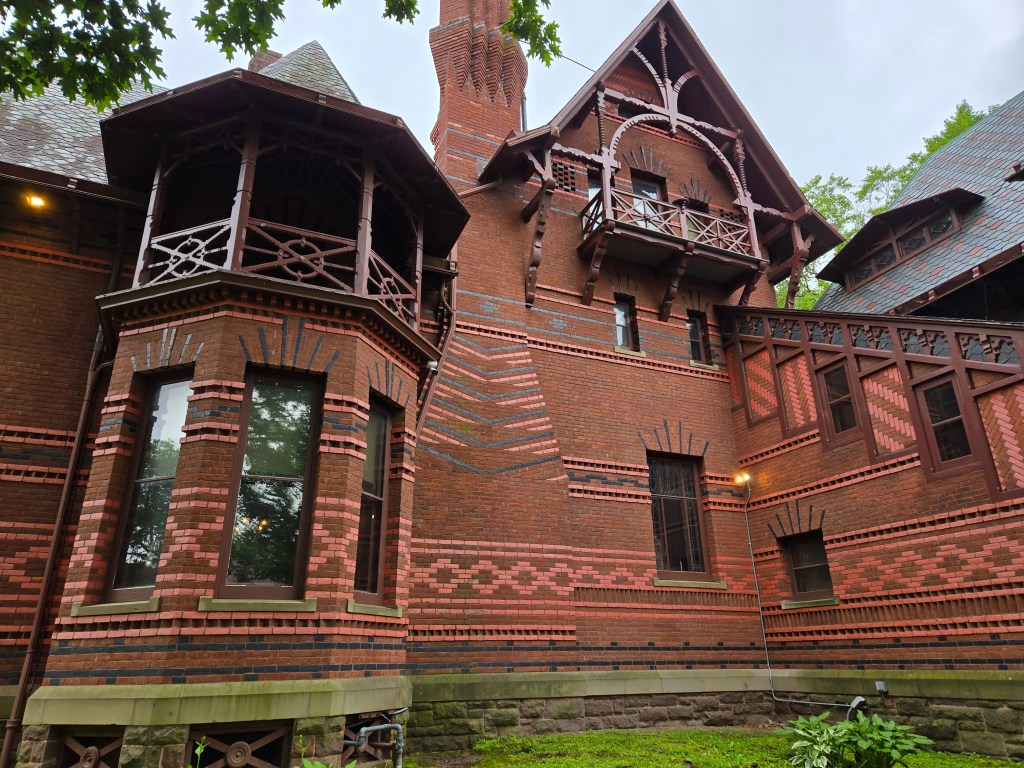
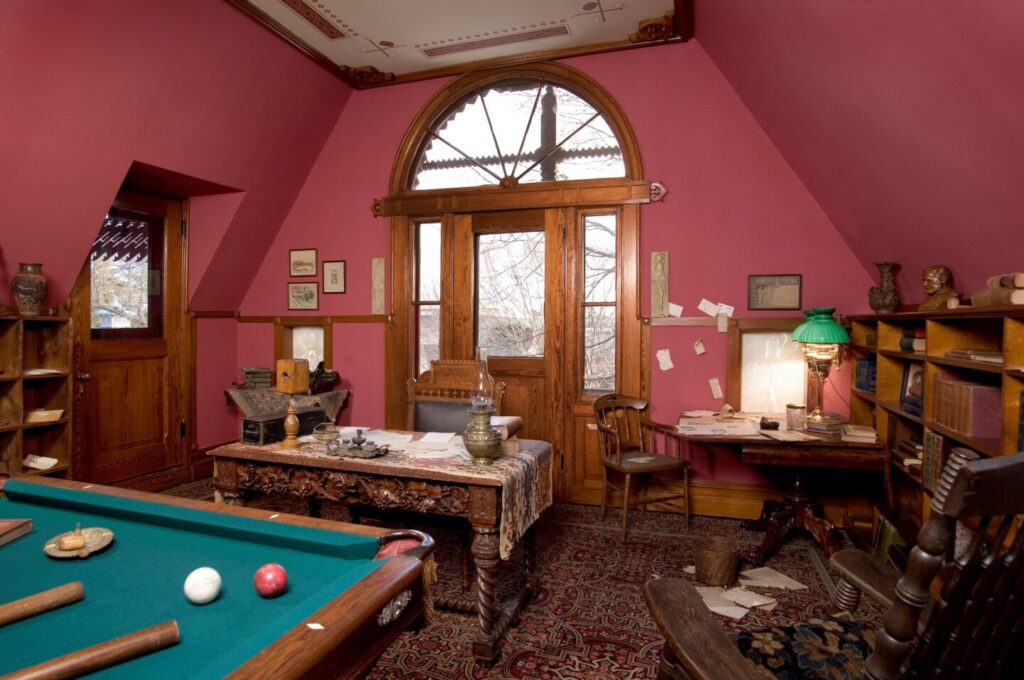
Connecticut had one of the best letter-writers of all time. His name was Sam Clemens, but he called himself Mark Twain. He lived in a big, beautiful, goofy house in Hartford. He had a mustache. He saw all the greed and the violence and the hucksterism, and he thought it was the saddest and funniest thing in the world. He used free speech like a fire hose. He pointed it at hypocrisy and cruelty and tried to wash some of the filth away.
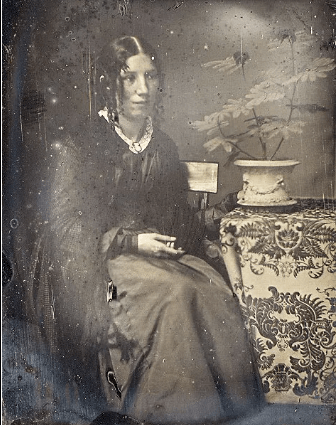
And not far from him lived a woman named Harriet Beecher Stowe. She wrote a letter about owning other human beings. It made a lot of powerful people very, very angry. That’s how you know a letter is doing its job. She was using her brain and a bottle of ink to fight against loopers using whips and chains.
And get this: back in the day, the political party of Democrats in Connecticut thought the Civil War was a bad idea. They weren’t too bothered about the whole slavery business. Now, of course, that same party in that same state plants signs in every lawn about diversity and inclusion. The names on the jerseys have stayed the same, but the players, and the rules of the game, have gone topsy-turvy. It’s all very confusing. It’s a good reason to spark up some of Snoop Dogg’s doobois.
So what’s next for the little state with the big contradictions? Now we’ve taught the machines to think, or at least to write book reports and make up pictures. We’re feeding all of our nonsense into these things, all of our history, and our hatreds, and our love poems. What will the thinking machines make of Connecticut? Maybe they’ll tell us to keep building the bombs, only to do it more efficiently. Or maybe they’ll read Mark Twain and decide the whole human experiment is a joke. A bad one.
I imagine old Sam Clemens would have a thing or two to say about it. He’d look at the internet, where everyone has a megaphone and no one has an editor, and he’d probably light a cigar, pour himself a whiskey, and rack the billiards. He might have watched that movie, Idiocracy, and said, “They got it mostly right, but it should have been sadder.” He knew the score. He knew that human genius was a beautiful and dangerous thing, like a bottle of nitroglycerin. You could use it to help prevent a heart attack, or you could use it to blow up the world.
C’EST LA: We have the angels of our better nature, and we have the howling monkeys who want to burn it all down. They both live in Connecticut. They both live in us. Words are nice. Books are nice. But they might not be enough to keep the monkeys from the matches.
We’ll have to do better. We’ll just have to be kinder. And that’s all we have to say about that.
Next Stop: Jersey, Baybay!
Onward through the fog… RH
You got your swords… You got your ploughshares… Visit Hartford… They’ve got it all there… Commune with ghosts… Converse with brilliant minds… All await you in Connecticut!
Ronnie Hays, a man whose summer spirit animal was likely a slightly singed tumbleweed, had come to the nation’s capital with the best of intentions. The Hot Springs or Busk tour, a grand delusion hatched during a particularly brutal February, was predicated on the simple, Nietzschean idea that purposeful suffering builds character. Having already suffered enough, Ronnie decided to route his nation-wide tour to stay in climate zones ranging from fifty-five to eighty-five degrees, the sweet spot of human endurance, the crucible of the soul! He’d envisioned himself a Thoreauvian guitar hero, strumming universal chords amidst humanity’s waxing and waning.
The “Heat Dome,” as the local news charmingly called it, wasn’t a dome at all. It was more like being trapped inside a giant, sweaty armpit, the kind belonging to a long-haul trucker who’d mainlined lukewarm coffee for three days straight. The air in Ronnie’s trusty Sprinter van, Rocinante, felt thick enough to chew. He’d envisioned festive busking celebrations, though getting him no closer to Saturday Night Live, would render enough spare coin to grab a meal at the local sandwich shop. Instead, he found himself sweating under a near ineffectual ceiling fan, each morning waking up feeling like a poorly wrung dishcloth.
So, the busking gear gathered dust. The call of the troubadour was drowned out by the siren song of the mall food court’s air conditioning. After a productive shift dodging rogue toddlers and the whispered anxieties of the internet-addicted masses at the public library, Ronnie would retreat to this muzak-infused oasis. There, amidst the clatter of plastic cutlery and the pervasive aroma of lukewarm orange chicken, he’d tap tap tap away on his tablet, crafting ironic insights (or at least, moderately coherent sentences). Roughing it, his ass. This was more like politely surrendering to the crushing reality of climate change and a distinct lack of masochistic tendencies.
He pictured himself now, a bumbling, modern-day Don Quixote, sweat beading on his five-o-clock shadow. His armor traded in for a Hawaiian shirt that clung to him like a damp second skin. On his head, not a gleaming helmet, but a decidedly un-gleaming bucket hat, perpetually askew. His trusty spear replaced by a backpack, its hydration bladder more vital than any lance against the oppressive thermal foe. Rocinante, the wheezing van, stood sentinel in the D.C. Metro Branch Avenue parking lot… a tin can beast of burden in this concrete desert. In the hazy distance, a monstrous broadcast tower pulsed with invisible signals, a modern-day malevolent windmill against a humidity-choked sky, a reminder of the information war that had lured him to the proud highway in the first place.
He’d braved the sweltering streets of D.C., a city buzzing with a nervous energy thicker than the humidity. The political air crackled with a pre-apocalyptic fervor, the news a constant barrage of impending crisis. A grumpy waiter here, a train car full of faces etched with worry there. And then, the memes. Oh, the memes. Those digital harbingers of discontent, the unfunny, menacing pronouncements hinting at a redux of some long-ago, blood-soaked uncivil conflict. Ronnie, with his comfortable former life in the ivory towers of academia, knew he was on the wrong side of that particular partisan divide, labeled with that delightfully reductive term: “woke.”
He’d spent hours wandering around the fenced-off National Mall, the intended epicenter of his social exploration just out of reach. Denied entry to the Pride Fest because of his backpack – a water bottle deemed a potential weapon, for Christ’s sake – he felt like a character in some absurdist Kafka adaptation. The irony wasn’t lost on him: all this purposeful social exploring he’d signed up for, only to be thwarted by something as mundane as a plastic water bottle and transparent back-pack.
He thought of Churchill, of course. That eternal optimist (or perhaps just a bloke with a stiff upper lip and a fondness for the drink). “Americans can be counted on to do the right thing once they’ve tried everything else.” Ronnie clung to that like a life raft in a sea of digital vitriol and oppressive heat. This flirtation with the dark side, this collective descent into the fever swamp of ethnonationalism – it was just a phase, right? A particularly sweaty, anxiety-inducing phase. Eventually, the fever would break, and they’d stumble back towards something resembling pluralistic sanity.
He hoped.
The Metro ride back to Rocinante was a sweaty, sullen affair. The promise of the night in a tin can under a sky slow to cool was less than appealing. Just weeks ago, he’d been shivering in that damned mummy bag, wishing for a single degree of warmth. Now, the thought of trying to sleep in a pervasive coating of sweat felt like a prelude to spontaneous combustion.
He’d had enough. This noble experiment in “Hot Springs or Busk” had devolved into a sweaty, keyboard-tapping surrender in a mall food court. Protest season in D.C.? They could have it. The call of the open road, the beckoning of cooler climes further north… that was the only pursuit that held any appeal now. Time to point Rocinante toward the hazy promise of something less… apocalyptic. All that said, and with all the hassle of dodging heat stroke, he’d still take these dog dayz over winter frostbite and existential dread any damn day of the week. Over and out, he muttered to himself, the glow of the tablet screen reflecting in his weary eyes. Over and out. Time to get back to the original plan. Time to head NORTH. And for the love of all that is holy, someone please convince the powers that be we REALLY don’t want to turn Earth into another Venus. Can we please get back to that Post WWII spirit of sacrifice in the face of collective crisis? Can we, PLEASE, start prioritizing a life-friendly climate over billionaires’ bank accounts?
We have the “West”. We have the “Midwest”. We have the “Southwest”. We have the “Post-Jim-Crow South”. We have the “New England” colonies.
All of these regions have their unique character. However, there is a place where this variety gets brewed into a delicious stew. That place is called Maryland. Sorta like “spiral motion physics,” where the motion around a source of attraction forms spiraling patterns toward the source like a whirlpool. That point is DC, and the American stew is at its diversity-best in the surrounding area, Maryland. And it’s not just the people as the geography is also representative of this diversity. Maryland may not be one of the largest states in the US, but with its variety of culture, climate, topographical features, and temperament, some would say…
Maryland is America in Miniature
Now… it’s impossible to speak of Maryland in the year of our lord 2025 without mentioning the apparent shifting in nature of that cultural/political source of gravity in DC. It is a brazen spectacle to behold, our present-day republic teetering on the precipice of a descent into a veritable kakistocracy. A governance of the witless and the fearful as outlined in the so-called “Project 2025.” This ponderous tome, a testament to the enduring American appetite for sanctimonious nonsense, imagines a future so bleakly uniform, so relentlessly scrubbed of the invigorating cacophony of realpolitik, that one is almost moved to pity the authors for their impoverished imaginations. They pine for a nation remade in the image of a white-washed sepulcher, a monotonous ethno-state lorded over by a monarch of their own anointing.
In moments of such profound national heartburn, it is instructive, and indeed, affirming, to cast a backward glance at the decision to remove the federal government’s seat from the feverish grasp of Philadelphia to the relatively blank slate of Maryland and what is now known as the District of Columbia. This was not merely a geographical relocation, but a providential compromise of competing interests escaping the miasma of a political homogeneity that then, as now, threatened to asphyxiate the nascent republic in its sleep.
One need only consider the character of Maryland, that delightful America in Miniature, to appreciate the wisdom of our founders. Here is a state forged in the crucible of religious tolerance, a haven for England’s persecuted Catholics, who, though a minority, were granted the revolutionary courtesy of coexisting with their Puritan tormentors. This early experiment in pluralism, though not without its lamentable “plundering times” at the hands of Cromwellian zealots, set a precedent for the rich and varied tapestry that is modern Maryland. It is a state where, to this day, the descendants of indentured servants and the progeny of freed slaves live and work alongside a vibrant influx of souls from every corner of the globe – Africa, Asia, Central America, and the Caribbean. Indeed, it stands as one of a handful of states where the so-called “minorities” now constitute the majority, a demographic destiny that sends shivers down the spines of the Project 2025 Christian Nationalist hierarchs.
The very soil of Maryland seems to reject the notion of a monolithic culture. From the salt-laced air of the Chesapeake to the rolling hills of the Piedmont, the state’s varied topography mirrors the diversity of its people. It is a place where the first American-born saint rests, a testament to its Catholic roots, yet where Protestants and the happily godless now outnumber the papists. It is a “Free State” not merely in its defiance of Prohibition’s follies, but in its very essence – a haven for the unconventional, boasting one of the highest concentrations of those who defy the rigid taxonomies of gender and sexuality. Let us not forget that the first American to proudly proclaim himself a “drag queen,” the courageous William Dorsey Swann, hailed from these parts, a pioneer in the eternal struggle for the right to be oneself, however flamboyant.
National ArchivesPride Day on the MallCapital HillSummer Cool-Down ShelterAmerica!Navy MemorialHoover FBI BuildingThe Center of GravityTransparency PleaseChina TownCongressional Reading RoomArchives Metro StationWar CabinetWashington MonumentWTH is this?
Contrast this vibrant, chaotic, and ultimately more interesting reality with the sterile vision of the Project 2025 evangelists. They yearn for a nation of one political philosophy, one creed, one stultifying set of beliefs, a landscape as flat and featureless as their own intellectual horizons. Theirs is a philosophy born of fear – fear of the other, fear of the new, fear of the messy and unpredictable nature of a truly free society. They would dismantle the very administrative state that, for all its bureaucratic bungling, provides a framework for our collective endeavor, and replace it with a system of pay-to-play patronage and ideological loyalty tests. They would, in essence, turn the clock back to an imagined golden age that never was.
The historical record of Maryland stands as a powerful rebuke to this retrograde fantasy. It was in Maryland that the ideals of the Revolution led to the liberation of thousands of slaves, a moral awakening that, while imperfect and tragically delayed, pointed toward a more just future. It was on Maryland’s soil, at Antietam, that the tide of a bloody Civil War, fought over the very soul of the nation, began to turn. And it was Maryland that, in the ashes of that conflict, abolished slavery and extended the franchise to its non-white citizens. This is not the history of a people wedded to a single, exclusionary identity, but of a people grappling, often violently, with the complexities of building a society out of disparate and often conflicting parts.
The proponents of this newfangled ethno-nationalist monarchy would do well to study this history. They would do well to observe the thriving economy of Maryland, buoyed by its proximity to the very federal government they seek to corrupt. They would do well to visit its public libraries, those bastions of self-directed education that offer knowledge to all, regardless of station or background.
In the final analysis, the decision to plant the nation’s capital in the embrace of Maryland was a stroke of genius. It was an implicit recognition that the strength of this republic lies not in its ability to enforce a bland uniformity, but in its capacity to absorb and celebrate its manifold diversities. The future of this nation, if it is to have a future worth mentioning, will not be found in the sterile pages of Project 2025, but in the noisy, vibrant, and gloriously untidy reality of places like Maryland. Let the hollow sycophants preach their gospel of homogeneity; the rest of us, the free human beings in this republic, will continue to draw our strength from the rich and fertile soil of our diversity.
And that’s all we have to say about that.
Onward through the fog… RH
You can’t just waltz by… The state of Maryland… Too much to see… Too much to do… Get on the Metro… To the Fed. Triangle… And don’t forget… To hydrate properly.
Ok… laundry day in Waldorf, Maryland. A mere 16 miles from DC-Metro’s “Green Line” to the Federal Triangle. Last weekend, i spent 45k steps perusing the triangle, including a walkabout in the Jefferson Library and the Smithsonian “Portrait Studio.” As well, it just so happened to be Pride Fest and that’s the reason i got so many steps. I had to walk AROUND the fenced-in festival area until such time as they accepted revelers. When they started letting people in, they wouldn’t allow my freakin’ backpack, so i had to ditch it for the Sunday visit.
Summer Cool-Down ShelterNavy MemorialPride Day on the MallHoover FBI BuildingCenter of the WhirlpoolNational ArchivesCongressional Reading RoomWTH is This?Archives Metro StationWar CabinetCapital Hill
Anyway… this is No Kings weekend, the 250th year anniversary of the Continental Army, and (more importantly) Donald Trump’s birthday. So, in honor of all that (mostly the naked emperor’s birthday), there will be a festive military parade, as if we had something to prove to our nation’s enemies. By the way, what enemies really need to be intimidated?? The DOMESTIC enemy?? That’s right, Mr. Trump and his acolytes have been demonizing his political opposition for nearly a decade, declaring them the “enemy of the people.” He behaves as if he REALLY wants a Civil War redo. He even re-renamed all of those recently renamed Southern military bases after Confederate Generals.
I would say, “can you believe it?” But we’re WAY past that, we can believe it. It’s no longer horrifying, and i fear a climate of having the US executive branch at odds with half the population they are SUPPOSED to be serving is getting normalized. Seriously, what does he think? That he can politically cleanse the nation till only MAGAs remain
Bleep THAT!!
How this shakes out beyond the political black hole’s event horizon is anyone’s guess. Mine is as good as any, so here are a few plausible scenarios:
ONE: Investigators chasing the possibility that Elon and his hacker buccaneers rigged the 2024 election, find a smoking gun that proves Mr. Trump’s posturing about a stolen 2020 Election was merely foreshadowing for everything 2024 and after. Between congressional gerrymandering, the stacking of the courts by McConnel, and Elon’s hacker squad actively changing ballots, we’ll find Harris actually won that election, and the house of cards Mr. Trump built comes crashing down in a whispering whimper.
TWO: The rightward shift of several key demographics was actually a thing. Trump holds on to his Trifecta, and there’s no more democracy. Curtis Yarvin’s wettest of dreams come true, Steve Bannon finally pops like the malignant cyst he is, Stephen Miller laps up the blood, and the upside down is permanently installed until such time as a stout resistance infiltrates the military and stages another coup, setting in motion a constant cycle of banana republic-esque military coup after military coup.
THREE: The mid-term turnout is so overwhelmingly blue that no amount of cheating can stand, and MAGA’s demise is somewhat delayed.
FOUR: California, Washington, Oregon, and the North Eastern New England states secede from the MAGA disunion, join forces with Canada setting off a fierce border war with which Idaho, Montana, and North Dakota desperately lobby Texas, Louisiana, Arizona, and Florida for assistance. A futile effort in the end as Mexico takes advantage of the chaos keeping the southern states too busy to be of much help on the Northern Front.
Yikes…!!
I ask my MAGA friends and neighbors… “is this REALLY what you want? Do you HATE gays, atheists, independent-minded women, brown and trans people so much that you’ll gladly push this formerly respected world power into a zero-sum contest over cultural trivialities?” Seriously, i NEVER got mad at anyone wishing me “Merry Christmas.” In fact, i am prone to throw that greeting around preemptively as a way to bring down the temperature in my ruby red neighborhoods.
As well, i have been propositioned by gay men for what reasons i cannot fathom other than you CAN’T JUDGE a BOOK by the COVER (duh)! Did i get angry?? Of course not. It’s flattering. In one case, i was in a typical top-40 dance band playing a ski-resort gig. Flaming youth! Apparently, i was broadcasting pheromones… it was a compliment. I politely thanked the bar patron for the compliment and let him know i was playing on the hetero team, “straight as an arrow.” He turned his attention elsewhere and that’s that… not rocket science.
At another extreme… in my elementary school days, i was on fire for Jesus and ready for a lifetime of evangelism and missionary wanderings. But something happened as my frontal lobes started developing expanding my worldview past the tip of my nose. I came to understand that all devoted religious followers believe theirs is the best or only path to the divine. Mine also happened to include doctrines about those who do NOT believe, that they would be in for eternal agony if they didn’t, “see the light.” This i simply could not square with what i learned about Jesus’ example, and so i began a spiritual search that ended up somewhere around Tao, Buddhism, QuantumMysteriousness.
Do i now hate those who cling to their exclusionary creeds?? NO… i have Muslim friends, Mennonite friends, Baptist friends, Hindu friends, Catholic friends, Cherokee friends, etc. etc. I tend to regard religion with the same discretion as sexuality, in private, among friendly interlocutors.
Regarding trans people: Do those hopelessly bigoted troglodytes actually believe a person would CHOOSE social ostracization, a lifetime of being regarded as a freak? Anyone who believes a human being (social animals to the core) would CHOOSE exile probably need professional help. I wonder if they’ve ever tried engaging empathetic thought experiments, like walking in the metaphorical shoes of a trans person found in any community. Not in your back yard, you say? Maybe think in terms of bell curves. The numbers may be miniscule but each bell has a tail at the extremes; least and most likely. Can you put yourself in the shoes of the trans person you’ve encountered personally? Did you choose to be that way? Why? Think it through and get back to me won’t you?
Dear MAGA… Why can’t you be more like Jesus? Please explain as if speaking to Kindergartners.
If you don’t want to have this discussion in public, please DM me, i will keep your confidence… you have my word.
FINALLY… i’m getting this out in the open because there have been speculations about what may happen to protesters in DC tomorrow. If we have another Kent State or Tiananmen Square and i don’t make it out, i want my MAGA friends to ponder the above questions for my sake. Lastly, i beg you… don’t drag my children into a zero-sum violence choice… Please Please Please??
Well well well, we’re still on the road. This week… West Virginia. We’re finding the fun has dwindled a bit. At times Ronnie confesses to feeling like an exposed nerve. It may have something to do with the change of scenery. After all, as a Kanorado native, Ronnie’s comfortable with wide open spaces. But starting in North Carolina, approaching the beginning humps of the Appalachians, Ronnie started developing a contracting state of claustrophobia. This sense of dread actually started earlier, in South Carolina, with conjured imaginings of what it would be like to navagate congested urban sprawl nestled amongst relentless steep grades, up and down and up and down, trying not to ride the brakes but sometimes unable to avoid it. Then what do you know? The two West Virginia college towns Rocinante stumbled into (WVU and Fairmount State) presented conditions exactly like Ronnie’s worst roller-coaster imaginings.
Now, the other side of Ronnie’s Kanorado upbringing leaves him no stranger to mountaineering. And, truth told, our heroes have learned to keep up with the locals. But there ain’t no autopilot moments like those on the prairie, and Ronnie’s exposed nerve feeling keeps interrupting the vagabond felicity. So, this brings us to what appears to be a recurring theme investigating West Virginia’s general “vibe”. From readings and conversations, Ronnie has detected a more than usual sense of bi-polar contradiction, set in some of the most beautiful, lush country our heroes have yet encountered.
West Virginia! A veritable Janus of banjos and 5g smartphones. Even before the rabble in Philadelphia started their tiresome bleating about liberty and taxes, this land of craggy peaks and shadowed hollers harbored a glorious dichotomy. On the one hand, you had rugged frontiersmen, creatures of axe and rifle, suspicious of anyone wearing hats indoors and whose idea of polite conversation involves hitting the spittoon bullseye. Folks of fierce independence, mind you, who’d sooner wrestle a bear than abide a revenue agent or a banker.
Then, cheek-by-jowl with these noble savages, you’d find the seeds of a peculiar sort of… let us call it genteel indolence. Picture the languid river valleys, where the air hangs thick and sweet as overripe peaches, and where ambition rarely stretches beyond a decent slash of corn liquor and a comfortable spot on the porch swing. Folks who view haste as vulgar and consider vigorous debate over the proper way to cure tobacco the height of intellectual ferment.
Enter the great unpleasantness of the Revolution, and West Virginia, bless her conflicted heart, found herself straddling the fence like a hound dog caught in a barbed wire. Still part of greater Virginia, she sent forth her share of flinty riflemen to give the Redcoats a proper thrashing, a surprising burst of collective energy. Yet, even amidst the patriotic fervor, one might suspect there were plenty of mountaineers more concerned with deer season than the pronouncements of some powdered wig in Williamsburg.
The Civil War, naturally, only amplified this delightful schizophrenia. Brother against brother, neighbor against neighbor… a perfect illustration of a populace simultaneously capable of profound loyalty and stubborn contrariness. One faction, fiercely attached to the traditions (and peculiar institutions) of the Old Dominion, marched off under the Stars and Bars. The other, smelling a chance for their own patch of sovereignty and perhaps harboring a lingering resentment for the tidewater gentry, cast their lot with the Union. The result? A bloody, internecine squabble fought amidst some of the most gorgeously indifferent scenery on the continent.
And now, in this glorious age of the World Wide Web, this bi-polar beast roars on. You have pockets of genuine, unadulterated Appalachia, where decent 4g access is as mythical as the Sasquatch, and where the most pressing technological concern is whether the battery in the coon-hunting flashlight is still good. Here, the ancient rhythms of the land persist, the wisdom is passed down through generations of storytellers, and a firm handshake still means more than a thousand likes or shares.
But then, just over the next ridge, you’ll stumble upon a Starlink antenna sprouting from a double-wide, its tendrils reaching out to the digital ether. Here, the denizens are just as likely to be scrolling through TikTok as whittling a piece of wood. They’re ordering drone parts on Amazon while simultaneously canning beets according to a recipe passed down from their great-grandmother. They’re arguing about cryptocurrency on Reddit while their hound dog snoozes by the wood-burning stove.
It’s an all too human mess, this West Virginia. A land where the echoes of Daniel Boone‘s long rifle mingle with stock-ticker notifications. A place where the fierce independence of mountaineers clash with the modern craving for instant gratification and online validation. It is, in short, a microcosm of the American condition, amplified and seasoned with a healthy dose of mountain stubbornness and a suspicion of anything invented after the Mason jar. Long may it remain so, a testament to the enduring human capacity for glorious contradiction.
As for OUR contradicted heroes, they’ll keep pushin’ on. Ronnie’s “exposed nerve” will surely abate. And just as well as the worst is yet to come. In fact, we’re told Blue Highway windshield time in Upstate NY and further North amounts to traveling up endless claustrophobia-inducing tree alleys. It’s funny because delusional Ronnie thought he would NEVER miss driving on endless prairies, but here we are. He probably just needs a reminder that flatlander driving very often includes bucking white-knuckle gale-force head and cross-winds… and that ain’t no fun neither.
Onward through the fog… RH
It makes you dizzy… Blue Highway shizzy… In West Virginia… You can get busy… And take a page from… The Tao Te Ching… This too will pass… And equalize.
To be clear, Rocinante is no stranger to mountaineering. In fact, she was literally born in Colorado Springs, her first initiation over Independence Pass through the valley of the Roaring Fork northwest of Aspen, where Owl Farm, Hunter S. Thompson‘s home redoubt sits. A gorgeous, exhilarating trip and Rocinante handled it without a hitch. Now, this is all familiar territory for Ronnie, a native of Kanorado. He’s seen it all, from Black Bear Road to the endless prairies of Western Kansas. That said, it’s hard for our heroes to stay focused traveling through Virginia as the lush Edenic land goes on and on and on. They made a point to stay on what Heat Moon dubbed “Blue Highways” and by arrival in Waynesboro, Ronnie was overwhelmed with the beauty of Virginia’s interior. So much he began to doubt his ability to return to the flatlands.
Anyway, let’s try to scratch the surface of Virginia, warts and all. The name whispers of a land steeped in history, and since Ronnie has no personal memories here, he’ll have to rely on the testimony of others weaving a tapestry with threads of glory and shame, beauty and brutality.
THE GOOD: In the nascent days of the Virginia Colony, a spirit of enterprise, however fraught with unintended consequence, took root. Brave souls, lured by the promise of land and opportunity, crossed the vast ocean, establishing settlements like Jamestown. Here, amidst hardship and uncertainty, the seeds of a new nation were sown. Think of the fortitude of women like Pocahontas, who, whether through romanticized legend or historical fact, stands as a bridge between two worlds, a figure of diplomacy in a time of great tension. The fertile soil yielded tobacco, a golden leaf that fueled the colony’s growth and prosperity, laying the foundation for a burgeoning society. Later, Virginia became the cradle of revolutionary thought, birthing patriots like Washington and Jefferson, whose eloquent pronouncements on liberty and self-governance echoed across the land, ultimately shaping the destiny of the United States. The establishment of institutions of learning, like the College of William & Mary, fostered intellectual pursuits and contributed to the development of a uniquely American identity. Even in later years, the spirit of progress continued, exemplified by the tireless efforts of individuals like Booker T. Washington, born into slavery in Virginia, who rose to become a beacon of hope and advocate for education and self-reliance for African Americans across the nation. His work at the Hampton Institute and Tuskegee University stands as a testament to the enduring power of human aspiration in the face of adversity.
THE BAD: Alas, like the shadow that invariably accompanies the light, Virginia’s history is not without its darker chapters. The very prosperity of the early colony was built upon a foundation of injustice: the brutal exploitation of the land and its indigenous inhabitants, and the abhorrent institution of chattel slavery. The arrival of enslaved Africans marked a profound and enduring stain on the Virginian narrative, a contradiction to the lofty ideals of liberty espoused by its leading figures. The echoes of the lash and the cries of the oppressed resonate through the centuries, a stark reminder of the inherent cruelty and inhumanity of this system. Even the allure of the land led to conflict and displacement, as the relentless westward expansion often came at the expense of Native American tribes who had called this land home for generations. The seeds of division sown in these early days would ultimately contribute to the cataclysm of the Civil War, a bloody conflict that tore the nation asunder and left an indelible scar upon the Virginian landscape.
THE UGLY: Beyond the grand narratives of heroism and injustice lie the more granular, often overlooked aspects of life that reveal a less romanticized past. The harsh realities of colonial life – the disease, the famine, the constant threat of conflict – painted a grim picture for many early settlers. Imagine the squalor of early settlements, the precariousness of existence, the ever-present specter of illness claiming lives with cruel indifference. Even the pursuit of wealth could lead to avarice and exploitation, as individuals sought to amass fortunes at the expense of their less fortunate neighbors. The social hierarchies, rigidly enforced, often left little room for advancement for those born into less privileged circumstances. And let us not forget the presence of those who operated outside the bounds of law and decency, preying on the vulnerable. While not directly a Virginian, the infamous pirate Blackbeard, with his fearsome reputation, certainly cast a shadow over the coastal waters, a symbol of the lawlessness that could occasionally disrupt the ordered (or disordered) affairs of the colony. The tales of his depredations, though perhaps embellished over time, speak to a certain brutishness that existed on the fringes of society.
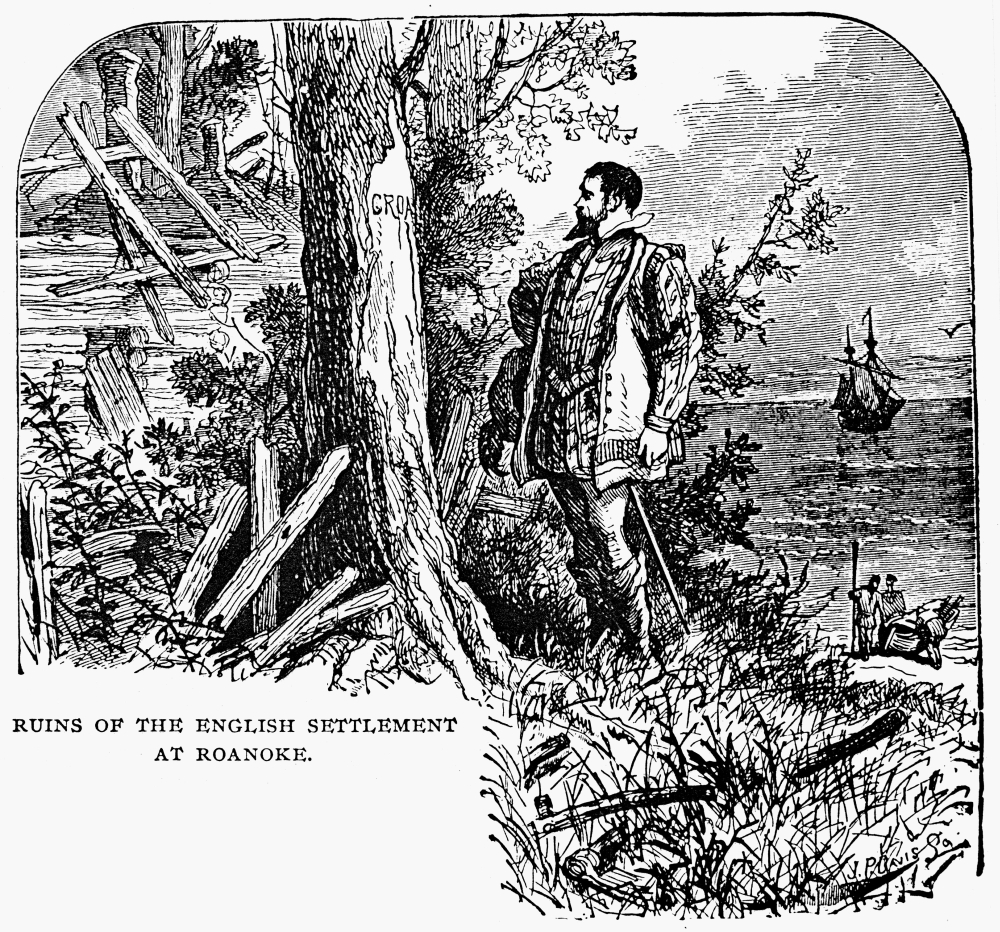
BELIEVE IT OR NOT: Now, let us turn our attention to some of the more curious and perhaps less widely known aspects of Virginia’s history. Virginia once boasted a significant wine industry in its early days, with attempts made to cultivate European grape varieties. Though these initial efforts met with limited success, they speak to the early aspirations and diverse ambitions of the colonists. Furthermore, consider the intriguing stories surrounding the Lost Colony of Roanoke in present-day South Carolina, a mystery that continues to baffle historians to this day. The disappearance of an entire settlement, leaving behind only the cryptic word “Croatoan,” fuels speculation and whispers of unknown fates. And who would have thought that Virginia played a crucial role in the development of early American literature, with figures like William Byrd II chronicling colonial life in witty and insightful prose? These lesser-known facets add layers of complexity and intrigue to the well-trodden paths of historical narrative.
GHOSTS: Ah, and now we venture into the realm of shadows and whispers, where the veil between worlds is said to thin. Given its long and often turbulent history, it is perhaps unsurprising that Virginia is rife with tales of spectral encounters. Ancient plantations, witnesses to generations of joy and sorrow, are often whispered to be haunted by the lingering spirits of those who once walked their halls. Tales abound of disembodied voices, unexplained footsteps, and the spectral apparitions of former inhabitants, forever bound to the land. Civil War battlefields, soaked in the blood and anguish of a nation divided, are said to echo with the cries of long-lost soldiers, their restless spirits forever reenacting the tragic events of the past. Even the coastline, once frequented by pirates and privateers, holds legends of ghostly ships sailing through the mist, their spectral crews guarding long-lost treasures. Whether these tales are mere fancy or hold a kernel of truth, they undeniably add a certain mystique to the rich tapestry of Virginia’s past, a reminder that perhaps some echoes of history refuse to fade entirely.
Jamestown Church (restored)BlackbeardBooker T. WashingtonPocahontasRoanoke
Thus, we have traversed the variegated landscape of Virginia’s history, from its promising beginnings and noble aspirations to its darker realities and enduring mysteries. The story of Virginia is one of stark contrasts, of light and shadow, of triumphs and tragedies, all woven together to create a snapshot as compelling and enduring as the land itself. And with that Ronnie and Rocinante bid Virginia fare well setting a course for neighboring West Virginia.
Onward through the fog… RH
From the strife of Jamestown… To Colonial Union… The nation’s birth pangs… Start in Virginia… And though the land was… Abundant paradise… Independence came with a heavy price.
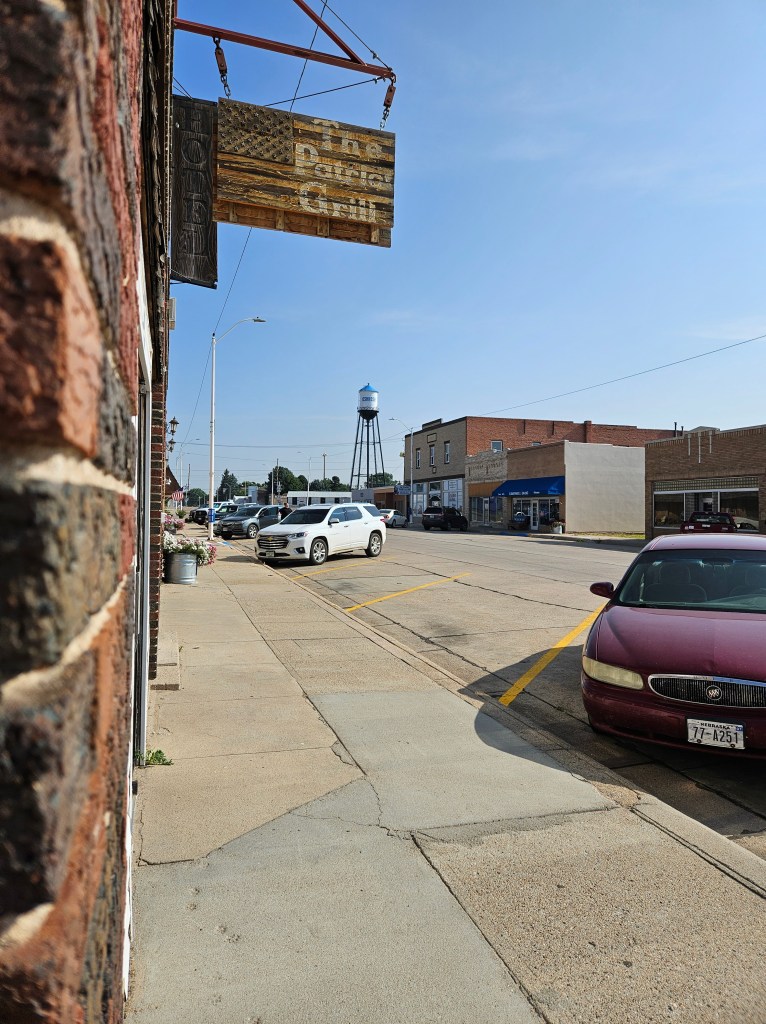
Greetings, loopers! We find ourselves in the state where the wind whispers secrets through endless fields of corn – Nebraska. A land where the motto, emblazoned on their flag with all the subtlety of a neon sign advertising a discount root canal, screams “Equality Before the Law!” Just like a drunken carnival barker promising a live unicorn.
Our intrepid reportorial team (R.H. and a belly full of cheesy blueberry grits) tracked down Carl Spicher, a librarian in Chadron with the patience of a saint and a reference desk powered by spread-spectrum WiFi. Turns out, Nebraska’s motto stemmed from a bygone era – the Civil War, to be precise – when they removed their “whites only” voting restrictions and welcomed newly emancipated African Americans. Now, emancipation long relegated to the dusty corners of the Dewy Decimal system… Nebraska these days spends more time extolling the virtues of “The Good Life” in their state ads than acknowledging their, shall we say, reluctant progressive past.
Hot Springs: Nebraska’s geothermal spas were recognized by Pawnee and Sioux tribes who used them for healing ceremonies and relaxation. European settlers in the 19th century recognized their therapeutic potential setting up various popular resorts. Victoria Springs State Recreation Area (established in 1925) operates to this day.
Arts: High? More like high school cafeteria food. Low? Now we’re talkin’! Dive bars with murals that would make a sailor blush and performance art that’ll leave you wondering if you accidentally stumbled into a psych ward… glorious!
Colleges: You got your pick of public and private institutions, churning out everything from future astronauts to rodeo champions (because Nebraska, baby!).
Literary Landmarks: Slim pickings here, folks. Unless you consider endless cornfields a metaphor for the crushing emptiness of existence, which some might argue is a valid point.
The Nebraskan Character: A Portrait in Contradictions: – The Good: Friendly, fiercely independent, and with a work ethic that could shame a pack mule. They’ll give you the shirt off their backs, as long as you don’t mess with their corn or their college football team. – The Bad: Stubborn as a Missouri mule (apologies to Missouri), suspicious of outsiders, and with a penchant for casserole concoctions that would make a health inspector weep.
Famous Figures: Not exactly a who’s who of Hollywood royalty. But you got Marlon Brando, who chilled in Omaha for a bit, and Johnny Carson, the gold standard for late night TV.
Lifestyle: Visitors? Brace yourself for wide-open spaces, small-town charm (read: everyone knows your business), and enough fried food to clog your arteries faster than you can say “Go Big Red!” Nebraskans themselves? They live the simple life, content with their land, their families, and their Huskers.
Vox Populi: As for that whole “Equality Before the Law” shtick? Let’s just say the opinions range from polite chuckles to outright guffaws. But hey, at least they have an aspirational motto, right?
It’s a land of contradictions, cornfields, and a healthy dose of absurdity. So come on down, y’all! Just don’t expect a Pulitzer Prize-winning literary scene or a red carpet welcome. But if you’re looking for authenticity, a soak in a hot spring, and a chance to experience Americana, uncut and unfiltered, then Nebraska might just surprise the hell out of you.
So… here we go… apologies to Woody Guthrie:
Onward through the fog… R.H.
In the dive bars… And Nebraska murals… Creative spirit… Leans toward surreal… But in the depth of… Our nation’s history… These folks made room… For the newly free.













 Loopcircus