Seems we’re coming up on some hard scrabble times for citizens down on their luck. And hard scrabble times call for hard scrabble responses. We’re going to have to grapple with how to handle the consequences of gutting the social safety nets. Nothing new, we’ve seen this play before. In Les Misérables, Victor Hugo’s novel uses the theft of a loaf of bread by Jean Valjean to illustrate the harsh and unjust nature of the justice system in his time. In more recent times, Willie Smith Ward, a Texan, received a 50-year sentence in 2013 for stealing a $35 rack of ribs. Now granted, this was the logical conclusion of this man’s incorrigible behavior in the light of Texas’ habitual offender laws, allowing for lengthy prison sentences to repeat offenders. Yes, he was a pervasive violator of civic good faith, but the final straw was the theft of food.
It’s probably no coincidence original sin is connected to behavior inspired by hunger. According to the Judeo Christian holy book, we’re guilty as soon as we hit the ground. And guilty of what? And why? Because the first XY chromosomes in our hereditary line fell for a cock-n-bull story about an apple being verboten per maximum overlord’s command? And why the prohibition? Because consuming the apple would drop the scales from our minds regarding the existence of good and evil? And the consequences of gaining this knowledge is… death? But not until one experiences a veritable parade of humiliation, pain, sorrow, and general suffering? Again… we get to ride this roller coaster of woe because some dipshit, 10,000 years ago chose to enjoy a spot of fruit with his girlfriend? Yeah… i don’t know if i can get behind this allegory. It seems a bit unfair to the XX natives. It paints them in a devious light. Like, both of them were instructed to avoid the fruit, but the devil’s serpent chose XX as an ideal target for corruption. And XY was just too gullible or dumb to mount an effective argument. Bottom line, XX is an hedonistic schemer, and XY is a goofy simpleton that just wants to eat. Naw, we’re not gonna fall for that misogynistic bullshit. XX and XY are born equally innocent, if they go bad as they grow, it’s the result of non-optimal environmental conditions or physical chemistry, but mostly… bad behavior is taught by irresponsible caretakers.
The whole “bad behavior inspired by hunger” issue might grow into a nagging problem in this age of prioritizing gilded ballrooms, machine automated labor, and antiquated energy policies over the well being of the XX and XYs who happen to lack connections in society’s power structures. And how might that play out? We could look to historical record for cues. Has hunger ever been an issue for working and doomed classes through the ages as economic and technology conditions change? Indeed it has, is, and will continue to vex policy makers… Victor Hugo’s novel is a vivid example.
And outcomes have varied widely. The most recent encounter with abject mass deprivation in this country got defeated by what was known at the time as a New Deal for the nation’s people. This, many would acknowledge was a best case scenario. Things didn’t go so smoothly in Russia or France as they transitioned away from monarchical rule. You could say, for the ruling classes, these are a couple worst case scenarios. Given that, what’s driving the U.S.A. away from democracy, careening toward authoritarian ethno-nationalist governance? Time will tell, but for now, it might behoove the ruling classes to recognize working people and the doomed are talking to each other. They’re not as hampered by ignorance as has been a hallmark of previous socio-economic upheavals. Consolidating power may not be the golden ticket they think it is.
Now… how will all of this shake out? I wouldn’t venture a guess, but i do see chatter crisscrossing the social networks, and i can confidently predict how some will approach the oncoming hunger dilemma. As we advance into this age of machines automating repetitive rote tasks, and jobs continue to evaporate, people will ask for opportunities to earn the means of feeding their families. When no useful work is available, they will ask for food assistance, and when no food assistance is available, they will take the food from whatever source is handy. And there will be plenty of XX and XYs with the resourcefulness and discipline to create their own redemption. Regarding original sin i, for one, am grateful for the flood of knowledge passed down by the original XX and XYs. I’m GLAD they ate the apple. And if supporting tax dollars for food security to people i’ve never met makes me a communist, well, pepper-spray my ass and call me “Comrade!”
I gotta black bomb… It’s tickin’ away… Gonna take it out… On the Blue Highway.
People love stories! Coherent frameworks for making sense of the often-unintelligible chaos of existence. If a truly good story is unavailable, a vapid stinker will do. And this desperate embrace of the easily digestible is what we might call the Deification by Default… the human brain settling for any compelling fiction, no matter how empty.
And the believers… they congregate in concrete echo-chambers, modern-day amphitheaters for a new kind of spectacle. Their gaze is fixed on an angry face projected onto a giant, 16k screen, a digital idol spitting vitriol like a croaking raven or territorial baboon.
They see our guy up there. And what a Guy. He is not merely human… he is a creature of pure, unadulterated id, a walking monument to the most cherished American religion… Getting Away With It. He is a living testament of the belief that consequences are for them. That rules are for suckers, despite the fact that he’s been tried and convicted of transgressions that would usher lesser mortals into country club prisons. And so on. The universe, in its indifference, allows such animals to prosper. This particular specimen has been fined millions for frauds so brazen, so loud and brassy, they transcend mere criminality and achieve a perverse kind of art. He’s the zero-sum game personified, a playa whose existence dictates that for him to win, others must lose. He is a babbling font of perpetual-grievance, forever the victim, endlessly fueling his sad tale of victimhood and defiance. He can’t even stand up straight, a physical manifestation of his moral scoliosis. He is covered in a fine orange paste, a desperate veneer masking the gray, clammy, countenance of a moldering corpse.
And the people… the God-fearing, the church-going, the hands-praying people, look at this babbling, orange vessel, and astonishingly proclaim: “Yes. Him. He is our champion.” Not so much admiration as an act of religious conviction… a leap of, what Mr. Bierce’s sarcastic dictionary might define as: “FAITH, n. The acceptance without evidence in the words of one who speaks without knowledge of things inexplicable.” It is the suspension of critical thought in favor of comforting delusion, the embrace of narrative that fills a void, regardless of its factual basis or internal consistency.
The human brain is funny about credulity. It needs reasons, rationalizations, even if they’re entirely bogus. The brain conjures prestige labels to slap onto zircon-encrusted baubles in order to justify worship. So, in this desperate search for legitimacy, the people dug up a relic from the annals of biblical history. They found Cyrus the Great. Cyrus! The Persian! And they told themselves, with remarkably straight faces, that this tangerine-hued Nero… was the new Cyrus. They called him a “flawed vessel,” which is precisely what you call a boat that has already sunk to the bottom of the sea.
Very well: “VIRTUE, n. In a king, that quality which keeps his subjects from sharpening their knives.” It is not necessarily about moral uprightness or inherent goodness, but about the practical efficacy of governance, the ability to maintain order and loyalty through action, not just rhetoric.
Cyrus II was a profoundly practical man, a shrewd statesman and a brilliant conqueror. His actions were dictated by strategic advantage and pragmatic necessity. Tolerance? It was not a deeply held philosophical conviction but a calculated policy. He observed the Jews moping by the river, exiled and dispossessed. Click-click-click went the imperial abacus, weighing the costs and benefits. He permitted them to return home. He didn’t smash idols or persecute local religions. Why? Because it was simply cheaper than cleaning up the inevitable riots and rebellions that religious intolerance would provoke. Mercy? A merciful conqueror, in Cyrus’s view, was one who spent less on garrisoning ruins, who avoided the costly and protracted business of subjugating a rebellious populace. Generosity? A king who hoards all the gold for himself, who starves his populace and his armies, soon finds his head in a basket, a grim lesson in the economics of power. Cyrus understood math, the cold, hard logic of imperial administration.
And now, our guy. The Cyrus of the Golden Commode, a man whose reign is marked by ostentation and vulgarity rather than strategic brilliance.
On Tolerance: Cyrus the Great managed a vast, multi-ethnic empire, understanding that stability required a degree of accommodation. Our modern Cyrus, however, manages a cable-news cycle, a perpetual loop of manufactured outrage. His entire machine runs on intolerance, a relentless jihad against phantom gremlins labeled “wokeness,” creating divisions rather than bridging them.
On Inclusivity: Cyrus the Great let diverse peoples in on the grift of empire, integrating them into its functional framework. Our Cyrus, conversely, wages a cultural war on letters… specifically D, E, and I (Diversity, Equity, and Inclusion)… and openly dreams of an America built solely of pale, northern European peoples. He welcomes an imagined homogeneity while demonizing actual diversity.
On Compassion: Where Cyrus the Great understood the practical value of a measured mercy, our guy’s philosophy can be succinctly summarized as: “Fuck the doomed.” There is no pretense of empathy, no concern for the less fortunate, only a brutal, unvarnished disdain.
On Wisdom: Cyrus the Great was a strategic genius, a master of statecraft. Our guy’s intellectual prowess, by his own proud admission, extends to being able to identify the difference between a camel and an elephant.
On Fortitude: Cyrus the Great was a formidable warrior and empire-builder. Our guy’s most celebrated display of “fortitude” was his aggressive and ultimately successful war against the Vietnam draft.
On Generosity: Cyrus the Great understood the strategic importance of a king’s generosity. Our guy’s much-vaunted “generosity” extended to giving billions to Argentina… a country, not coincidentally, where many unhappy Germans went for a long vacation in 1945 and conveniently forgot to go home. Astonishing Coincidence?
So, what is this comparison, this desperate attempt to link a modern figure with an ancient legend? It is not history… it is a pet-rock fad, a shabby attempt to pass off an empty metaphor as genuine good, to assign a false provenance to something entirely unworthy. It is a magical story for magic junkies, a comforting fable for those who have abandoned the pesky demands of reality for the soothing embrace of fantasy. It gives us a new definition, a diagnosis of a collective delusion… sound familiar?
Now, back to our Bierce-esque sarcastic dictionary: “CYRUS-COMPLEX, n. The political hallucination wherein one mistakes a bankrupt casino boss for a Persian philosopher-king.” It is the fond, almost childlike belief that a man who cannot manage a golf score without cheating can, in fact, be trusted with an empire… a testament to a complete divorce from logical reasoning. It is a bedtime story for those who, having consciously abandoned reason and critical thought, must now shop for their saviors not in the marketplace of ideas, but in the remainder bin of historical analogies, grasping at any discarded narrative, no matter how ill-fitting or absurd.
It is all very, very silly. And so on. The endless, circular dance of self-deception continues, with profound and often tragic consequences for the bewildered animals who crave a story, any story, to light their way.
And… there it is… warts and all.
I got a black bomb… It’s tickin’ away… Gonna take it out… …on the Blue Highway!
(A single spotlight hits an avatar, RONNIE HAYS, mid-60s, holding a worn acoustic guitar. He doesn’t play it. He just holds it like a shield or a piece of driftwood. He stares out, not at the audience, but through them.)
My pinkie toes. That’s what i remember about New Mexico. Not the Flagstaff sky, which was a shade of blue so deep i could’ve drifted upward into it forever. Not the train… a glorious old steam-belching dragon chuffing its way toward the biggest ditch on planet Earth. Nope… i remember my pinkie toes, both of them, singing soprano arias of pure, unadulterated pain inside a pair of waffle stompers that were just a whisper too narrow in the front. A purchasing error. A metaphor. I was trying to rise above the heat and the soul-choking smog of Albuquerque, to summit the Embudito Canyon Loop, but i was grounded by a millimeter of poor planning. C’est la. I turned back halfway up, defeated by footwear, then pointed Rocinante toward Georgia O’Keeffe’s ghost in Taos.
And like all of those “best laid plans”… a perfect day, ruined, setting me off on another journey altogether. You get those, sometimes. A gift. A trick. I was at Lake Wilson, back in Kansas. A limestone bowl of water so almost clear, like a dusty mirror on a rocky prairie. Not a breath of wind. The kind of day that makes you think the whole grand, chaotic carnival might just work out. And then the phone rang… a branch of the family tree just… fell to the grass… just like that… gone. The universe had provided a perfect day, and then, the bill. The HSoB tour was born right there, in the silence between the ringing and the news… an extended Bardo in motion.
Lake WilsonDusty MirrorRocky Prairie
And then, as if waking to a disjointed lucid dream, Cannery Row. Walking through the ghosts of Steinbeck’s worlds, smelling the salt and the history… beautiful. Then from the hand-held dream portal, i saw some new AI-generated video… something someone made with a sentence prompt. And soulless cartoon pop-stars with autotune larynxes, hitting all the right pitches on demand. Was this a dream, or were we building a world without flaws, without the shaky notes, without the happy accidents? A world of deus ex machina? A perfect, yet unrealized machine partnership? A place where my screaming pinkie toes would seem out of place.
What can we do? Here in the real(?) world… after the 2024 election, when the tectonic plates groaned and shifted rightward… a slow-motion drift that picked up steam with Bubba’s saxophone… and then poor Uncle Joe took to the debate stage like he was trying to remember where he’d left his tennis ball tipped walker… what do we do? I decided. I would be an anonymous troubadour… like Kwai-Chang Kane with a song list instead of Kung Fu. At worst, i’d languish in utter obscurity, singing to light posts and fire hydrants. At best, i’d become a gadfly on the rear end of a naked emperor’s pony. A tiny, buzzing annoyance for the forces of indecency.
Then came winter. The bomb cyclones and blizzards hammering the interior, but where was the Anonymous Troubadour? South Florida. All of January, February, half of March. I became a connoisseur of the Everglades, that “River of Grass.” Alligators sunning themselves like lazy, armored gods. The quiet hum of a billion insects. It was a primordial peace. Meanwhile, the forces of chaos were perfecting the art of “flooding the media zone.” A new outrage every hour, a new tweet to send half the country into a fit of cheering and the other half into a spiral of despair. The gasping death of democracy, playing out on a 6-inch screen with real life, ancient and unbothered, oozing by in a Florida swamp.
EvergladesSleepy GatorRiver of Grass
Then, Springtime in Foley, Alabama. A land of asphalt and every consumer convenience this roving malcontent could desire. Wide parking spaces. Good Wi-Fi. I almost stayed. But Mother Nature was cooking up her own brand of chaos. Springtime tornadoes, spinning up like God’s own potter’s wheel. I grew up believing this was a Kansas/Oklahoma thing. Now they were chasing me through the coastal South, as if to say, “You can’t escape the whirlwind, son. Not even here.”
On the way, i met a guy in a Louisiana dive bar who told me about Amos Moses, a local swamp-dweller who could allegedly dance with gators and heal the sick. A regular Cajun Jesus Christ. The New Apostolic Reformation had nothing on this guy. And while we were swapping local myths, the big, global myths were playing out in blood. The Holy Land, a place that’s anything but. Civilian casualties, famine, talk of ethnic cleansing and genocide. No easy answers, just the hard, cold reality of bellicose leaders discarding compassion like a soiled napkin. Even Israeli Jews were in the streets, screaming against their own government’s handling of the tragedy.
Amos MosesWhite Knuckle NightsLouisiana Bayou
We find our bliss where we can. A perfect song, a mineral bath. Oh, Sweet Golly Miss Molly, the mineral baths. Glenwood Springs, Colorado. Hot Springs, South Dakota. Sinking into that sulfur-scented heat, you understand that this isn’t indulgence; it’s healthcare. It’s sanity. Ancient Romans knew it. I was just catching up. And while i was soaking, trying to dissolve the knots in my soul, the ticker tape of modern U.S.A. life scrolled on. In the year of our lord, 2025, there would be over 300 mass shootings. Over 300 little holes punched in the fabric of the country, one for every day, it was getting harder to feel whole. A perfect day… then the bill. Maybe i should avoid consuming news for a while.
Turn the page, and the Appalachians… the rolling hills of the Virginias and Carolinas were beautiful and suffocating. But towns like Boone and Morgantown were so peak-and-holler infested, driving through them was like being on a roller coaster you can’t disembark. It gave me a strange kind of claustrophobia. And then perspective… the morning news from Ukraine. Atrocities that make the U.S.A.’s 300+ mass shootings look like kindergarten playground scuffles. It’s all a matter of scale.
Then Pennsylvania… Amish country. A different kind of rolling beauty, pastoral and profound. The horse-drawn buggies, the men’s beards, the ladies’ bonnets. It was like driving through a photograph from a hundred years ago. Strange and wonderful. And then, as if Stephen King had personally designed our itinerary, we landed in Horseheads, New York. A town named for the mountain of bleached horse skulls discovered by early settlers. They put the weird right there on the welcome mat. From Horseheads’ digital nomad-friendly library we planned several day trips. From the macabre to the hallowed… Woodstock and the Big Pink. We meandered through the forest and landed outside the house where The Band forged their sound. I just listened to the whispering pines. After that, to Hartford, to see Sam Clemens and Harriet Beecher Stowe’s next-door visitor’s centers, wrestling with the soul of America a century and a half ago. Some fights never end.
Sam ClemonsStowe Visiter CenterHorseheads Public Library, New York
Which leads us, of course, straight into the belly of the ailing beast: Washington D.C. The 250th birthday of the U.S. armed forces. The President wanted a parade, a big, gaudy show of military hardware down the Mall for his own birthday. In response, a “No Kings” protest was called. I went, expecting a worst case scenario, like Kent State, like Tiananmen Square. What did i find? Maybe a hundred people. Mostly old hippies, the very same tie-dyed specters Stephen Miller claims to be a clear and present danger to the republic. Lots of smoke. No fire. An insurrection of gray ponytails and Birkenstocks.
And the road goes on forever… stay tuned… much more to come.
(Ronnie Hays looks down at the guitar in his hands, as if noticing it for the first time. He strums a single, unresolved chord that hangs in the air, then begins to sing…)
I got a black bomb… It’s tickin’ away… I’m gonna take it out… On the Blue Highway.
So a wise man, or a man who was at least passing for wise, started talking about truth. And the first thing he did, the clever bastard, was admit that nobody has the first clue what it is. We’re all just monkeys with car keys, little fizzing bundles of electricity piloting meat-suits around the planet, and we haven’t even figured out what the fizz is. Consciousness? Human thought? We don’t know what’s running the projector, but good lord, the movie is colorful, brief, and loud.
And yet…
Out there in the great electronic shrieking festival… pow! slap! kick! BOOM! you’ve got no shortage of bloviators, of sidewalk saviors and cable news prophets with shellacked hair, their faces glowing in the 4k pixel bath, absolutely convinced they’ve got the universe on a leash. They are selling Truth like it’s a used car, a timeless, irrefutable, low-mileage beauty that can be yours for the low, low price of your own brain. And the loudest dealership on the whole cosmic car lot is, of course, religion. These fanatics, these apostolic holy rollers with their eyes spun back in their skulls, insist their particular brand of Truth is the only one that gets you to the bliss of heaven. Just have a little faith, they say. Which is a five-dollar word for blind credulity.
And so on…
Sometimes, you see, you have to do more than just believe. Sometimes you have to get up from the couch and move your feet. Take Vlad Dracul III. There was a man who put his convictions on a stick. A very long, sharp stick. He wasn’t playing around with faith and hope. He was a man of action, a walking thunderhead of revenge. Why? Was it because the Ottoman Turks read the wrong magic book? Nope. It was because his own father traded him and his brother like hockey cards to the Sultan, who was not a nice man. It was because while Vlad III was learning to hate in a Turkish dungeon, his father and brother were being tortured and murdered by his own people.
This sort of thing can change a boy’s outlook…
Vlad’s truth wasn’t a holy whisper in his ear; it was the hot, screaming fact of betrayal, and his answer was a field outside Târgoviște decorated with two thousand screaming, writhing, shish-kabobbed exclamation points aimed at a merciless sky.
That was his dark sermon… that was his truth…
Now, let’s rewind history to Simon the Zealot, a different cat altogether. For him, the truth was a revolutionary tinderbox just waiting for a match. He saw this Jesus fellow, this Nazarene miracle man, and his synapses started to crackle with visions of Roman eagles falling out of the sky. He saw the critical mass, the juice, and he wanted to turn the power of popularity into a revolutionary battle-cry. He was trying to shove a prophet shaped like a question mark into a political hole shaped like a sword. This, you might imagine, made the local authorities a little jumpy. While Simon was trying to crown a savior king, the Romans were sharpening their nails. Was Judas the real betrayer? Or was it the man who tried to turn a movement about turning the other cheek into a bar fight with an empire? As a wise old Chinaman is supposed to have said, “If you do not change direction, you may end up where you are heading.” Simon may have changed his tactics, but his all too mortal king wound up in the same place as Vlad’s unfortunate enemies: pinned to a piece of wood, proving a point about the interaction of truth and power.
Undeniable truth? Not so fast. It’s a road, not a motel. Anyone who tells you they’ve checked in and unpacked is either running a con or they’re so lost they think the lobby is the entire universe. The best we can do is what that magnificent, gloomy German filmmaker suggests: you can actually stare into the void until misty clouds of undifferentiated nothingness take shape and stare back. Who knows? You might find something interesting in there. Mostly, you’ll just see yourself, your own egocentric story reflected in a million broken pieces. But if you can lose yourself, as the poet from Detroit once said, you might stumble over a shard of something real. Something inspiring. Just be wary the winds of power can short circuit your heartfelt illusions.
For now, until we actually begin to understand the wellspring of consciousness, could we please interrupt the merry-go-round of inherited cruelty, this endless cycle of pain passed down by people who were taught to be main characters in a story written by a mysterious, all-powerful Sky-CEO who actually cares to keep a running tab on every thought, every misdemeanor, every everything. The horror show starts when these people realize… and they usually do… that the Sky-CEO, in fact, isn’t watching and doesn’t care.
Anyway… what if we tried something else? A little compassion… a little kindness… a pinch of skepticism and doubt. After all, the points of light seen in the dark night are mostly distant clusters of billions of stars and their satellites. That the universe allows for individual micro-particles such as you, me, astrophysicists, theologians, filmmakers, schizophrenics, etc. a glimpse of itself is nothing short of miraculous. What we know (we’ve learned quite a lot over the last couple centuries) amounts to no more than a quark, on a barnacle, attached to a massive seagoing cargo barge. We’re as good as bats experiencing hearing loss, we’re constantly bumping into reality in the barely audible darkness.
But so what?
Don’t be afraid… Keep stumbling… We’ll see you there… Fishing for ecstatic truth… …in the gallery of the void.
So… here we are… in the Hays Public Library with a mission to tie the Oz parody in a bow in order to make room for the book project planned as a capstone to the Hot Springs or Busk tour. The relevant characters have been sketched… the basic outline drawn. So… i guess… without further adieu…
Audiovision: The Folly of Oz
We begin with a narrator. Picture the Twilight Zone’s Rod Serling, smoking a characteristic cigarette. Behind him, a projection screen shows stylized, harsh-lined images of a yellow brick road winding through lush green fields. He addresses his audiovision audience thusly:
“The Yellow Brick Road, they called it. A path to salvation. Hah! In Oz, all roads lead to a single, glittering lie: Riviera City, where the Wizard, a paper-tiger wrapped in loud noise, holds court.”
The narrator continues, “And so, our pilgrims gather, driven by the oldest, most pathetic of human hungers: the desire for an easy fix. There’s J.R. Murgatroyd, the Scarecrow, a poor fool who’d traded his common sense for a bowl of good-time gravy. He clutched his straw-stuffed ears between which a brain should be. He yearns for an education, for the power to understand the rigged game of Oz.”
The audiovision director signals a switch to angle #2, The narrator flicks his cigarette’s ash, exhales a billowing cloud of blue smoke, looks directly into angle #2’s vision and says, “Beside J.R.,Milo Woodsman, the Tin Man, stood stiffly, a polished monument to unfeeling ambition. No heart, but a singular, cybernetic goal: to be more than flesh, to be a god in the cloud. A heart? Sentimentality! He wanted to be a cyborg, a machine of pure, cold efficiency.”
A glint in the distance as the sun rises behind shimmering Riviera City. The narrator continues, “Then, Delicate Donny Goldencalf, the Cowardly Lion. A beast of magnificent self-promotion, selling a magnificent lie. He desired a crown, a throne, a kingdom built on his own vapid image. He was the Emperor with no clothes, surrounded by sycophants who whispered, ‘Surely, this lack of character is a profound statement!’”
Presently, we hear a small dog’s bark in the distance as the narrator describes the final leg of this pilgrim’s stool, “And finally, Amelia Wolfe, the interloper from Kansas, a nurse, whose flying machine had done the world the small favor of flattening a minor Oz bureaucrat, the Wicked Witch of the West (WWW), they called her. Amelia was the unwilling participant, dragging her terrier on a frayed rope, utterly bewildered by the local legends.”
Then, from the top of the frame, a stylized puppet of Glinda the Good appears, her motions rigid and deliberate… Our narrator introduces her: “Enter Glinda the Good, Queen of the Quadlings and a master of the Persuasion Paradox. Forget your spells! Her magic was simple observation, a well-placed question, the quiet, surgical dismantling of loud, stupid arguments. She showed the pilgrims a vision in the poppy fields… a glorious battle, a hard road to the Wizard, who, she promised, held all the answers.”
And so, the setup… a real hero’s journey… a quest for truth.
But Glinda, our “Good” Witch, was engineering events and she conveniently omitted a few details. For one, Amelia Wolfe could have flown her sorry ass back to Kansas at any time. The red shoes were the key, a free ticket out of the entire mess. But Glinda needed a blunt instrument to achieve her ultimate aim, the death of the WWW, mid-level bureaucrat whose groveling to the Wizard, Oscar Ambrose, was a political liability. And who better to deliver that blow than an innocent outsider? And when the Scarecrow caught fire in the ensuing battle, Amelia, a nurse, in the process of putting out the fire, gets water on the Witch… an unfortunate coincidence, but a very tidy political assassination masquerading as a rescue mission… all engineered by Glinda.
And here is where we interrupt the narrator for a Morality Play Interjection: We see for want of a brain (Scarecrow) and the desire to help a friend (Amelia) can lead to the death of a clever operator’s inconvenient obstacle (WWW)? In Oz, good intentions are just another whammy-bar to jiggle.
So… then we cut to SCENE 2: The Wizard’s War Room…A dimly lit chamber where Oscar Ambrose, the Wizard, sits on a throne made of oversized, gilded holograph projection equipment, and Dorine of Omaha paces, her face a mask of permanent battle readiness.
Wizard Oscar speaks into a microphone, his voice echoing, distorted, and overloud. “They came for me! My opponents, armed with a morbid curiosity… a fetish, i tell you… for the personal! They paraded my dear friends and co-workers, my ‘victims,’ they said! They tried a high-tech lynching! A political assassination!”
Oscar pauses this Wizardly monolog to wipe his brow, dramatically, as Stan Diller, the Flying Monkey, creeps from behind the throne, whispers into the Wizard’s ear, then ducks away.
Oscar resumes his diatribe, his voice is suddenly flat, adopting Stan Diller’s twisted rhetoric, “The powers of the wizard… will not be questioned,” he declares pompously. “The personal… must never be mixed with the political! I am the victim here!”
Dorine of Omaha slams her fist on a small table. She wears a pin that says’: ‘DESTROY THE ENEMY.’, “The enemy,” she said. “They shamed me. They spoke of my personal vulnerability! But now, i have him! Oscar Ambrose! A fully reformed Orange Oompa Loompa!” Taking a deep breath, she bellows, “Together we will rise! Together, we will destroy them all! We are at war with the woke half of this wretched country, and we will win!”
Presently, Curtis Loki, ranking flying monkey and agent of chaos, enters, bowing low. He simps at the Wizard’s feet. “Exalted Wizard! I have invented a new doctrine! The Inherent Wizardly Prerogative! It states that whatever the Wizard does, by definition, is legal, necessary, and virtuous!”
The wizard nods vigorously, instantly adopting the new phrase.“Inherent Wizardly Prerogative! It has a good, loud ring! Loki, you’re a genius!” And as Loki was reveling in his plan coming together, Stephen K. Moros, the Winkie gatekeeper burst into the antechamber. Breaking Loki’s reverie, Moros began to shout incoherently about “Uniting the Quadlings” and the necessity of “all means necessary.” With this outburst, Oscar waved a dismissive hand.
“Too much! Too extreme, Moros! Out! I want chaos, yes, but controlled chaos. You’re making the quiet part too obnoxiously loud.” With that, Moros is escorted out and “Lindsey” O Boq of the Castleforce Guild enters bowing deeply to Dorine and then to Oscar. With a ghastly, insincere grin, he grovels at the Wizard and Dorine’s shoes. “Esteemed, magnificent leaders! My Guild, the Castleforce, is with you! Unquestionably! We support the current power. Whomever holds the big stick! We are advocates for… for power!” As he is prostrating himself, the Befuddled Witch of the East (BWE) represented by a puppet on strings glides into the room, head bowed so low it scrapes the floor.
“Oh, Great Wizard! Your every pronouncement is a diamond! Your every flick of the wrist, a symphony! I adore you! I worship your power! Your enemies are swine! I am nothing! A mere crawling servant!” And just as fast as this puppet appears, it glides back out of the room.
The narrator fades, full body, into view and briefly addresses the audiovision audience, “The machinery of power. Personal attacks become a shield. A lust for status becomes a political manifesto. And the sycophants… the Boqs and the BWE’s… they merely lubricate the machine.”
As the Wizard’s antechamber fades to black, The Scarecrow, Tin Man, Lion, and Amilia stand under a single, harsh spotlight.
J.R. Murgatroid, The Scarecrow, his voice, a plaintive wail complains, “They said Glinda was Good. She promised answers. But she sent me to a fire. I was meant to burn! And Amelia, she saved me. But to save me, she killed the WWW! I have no brain, but even i can see the algebra of it: my life for the Glinda’s convenience. The supposed good serves itself with my straw-filled body!”
Next, Milo Woodsman, the Tin Man, in a cold, metallic voice added, “Glinda presented a problem, and a solution that benefitted her. Oscar, the Wizard, simply reframes every corruption as a virtue. Amoral, efficient, both of them. One uses observation, the other uses noise. Neither cares for true justice. I seek efficiency, but this is merely a shell game of power. I still have no heart, but i believe i see how useful the idea of one is to those who wield power.”
Not to be forgotten, Delicate Donny Goldencalf, the Cowardly Lion, sobbing theatrically, puffs out his chest. “I want to be King. King of the forest! But every King in Oz, even the ‘Good’ one, must walk through the mud to get there. Glinda used a nurse! A nurse! Oscar used the personal low-blow as a stepping stone! It is all a show, a magnificent, terrifying show. Perhaps my lack of courage is simply the wisdom to see how dirty the crown truly is! But I still want it.”
Finally, Amelia Wolfe, the nurse, practical, exasperated spoke for all,“I am a nurse. I put out a fire. I saved a life. That’s my job. I didn’t intend to kill anyone. I don’t care about ‘Wizardly Prerogatives’ or ‘Persuasion Paradoxes.’ I just wanna go home. All i see is a frightened man on a loud throne, and a woman who uses people as pawns, and a political system built on deceit and noise. This Oz of yours is a sick place, and i can’t treat everyone for collective delusion! Where’s my flying machine?”
The spotlight on our pilgrims fades and the smoking narrator reappears among the surrounding darkness. Snuffing out his cigarette, he launches into an epilogue, “And there you have it… the journey continues; the Scarecrow is no closer to a brain; the Tin Man is no closer to his cybernetic godhood; the Lion is no closer to his crown; and the Nurse? She’s still stuck in the middle of a political disaster, simply because she acted on instinct. The good are not always good. The evil are not always evil. They’re all simply people, or figures, or tin, or straw, pursuing their own ambitions.” And with that, the narrator fades to black, and a panoramic shot of glittering Riviera City fades in.
And the moral of this Audiovision presentation, if you can call it that, is simple: In the end, it doesn’t matter if you are a Munchkin, a Monkey, a Nurse, or a Lion. If you stand in the way of power, or if you serve power too completely, you will be used, you will be discarded, or you will be extinguished. And the Wizard? He sits on his throne, protected by noise, protected by the same Quadlings, Gillikans, Winkies, Munchkins, and naturalized Oompa Loompas he abuses. He’s the master of the turnabout. But is he a symptom of Oz corruption, or the cause?
The panoramic shot of glittering Riviera City fades out and a single, large banner drops, bearing the stark motto: “THE POWER OF THE WIZARD… WILL NOT BE QUESTIONED!”
In the grand pantheon of Oz’s legal history, none… not the fabled Tin Man Cyborg nor the Third Goldencalf Lion… had ever ascended with the peculiar, almost manic gravitational pull of Wizard Oscar Ambrose. He was, by acclamation and political fiat, the wisest of Oz’s supreme jurists, a man sworn into office by Glinda the Good herself in a ceremony so drenched in faux-humility it bordered on the obscene. It was a spectacle of political triumph, a testament to the idea that you can, in fact, become the most celebrated arbiter of law in the land despite a childhood that read like the annotated memoirs of a sentient bruise.
Oscar was born into a family so poor it made other Oompa Loompas look like robber barons. His biological father, a man possessed of a profound and fatalistic wanderlust, had one day simply run off with the circus, taking with him a single, beverage thermos and the last shred of his dignity. His mother, a perpetually anxious woman of diminutive stature and profound despair, had subsequently crumbled under the Sisyphean pressure of being an orange woman, a role that was, in itself, a kind of oppressive agony. Young Oscar and his big sister were promptly dispatched to a foster home run by a man whose very name… Jack Ketch… was a synonym for “ragman.” He was, in a cruelty-rich land, a veritable paragon of it, and the children were subjected to a ceaseless, grinding abuse that left them with psychological scars shaped like handprints.
The world outside the foster home was no kinder. As a schoolboy, Oscar was bullied with a relentless, pathological glee for being “a little too orange”… a color-based bigotry so bizarre and yet so utterly common in Oz it was considered a conversational staple. The taunts, the shoves, the sheer, bone-deep loneliness of it all drove him to seek refuge in the Quadling Holy Order. He became an Acolyte Attendant, a kind of spiritual gofer, where the monks and nuns, for reasons entirely unrelated to charity or goodness, pushed him to strive for a kind of purified excellence. He found, in their rigid doctrine and ceaseless demands for perfection, a perfect incubator for a nascent “I’ll show them all” supervillain shoulder chip. He promised to become the very first Oompa Loompa priest.
But it was not to be. Even within the supposedly hallowed walls of the monastery, he was bullied, again for the color of his skin. His faith, a fragile thing held together with the spiritual equivalent of chewing gum and duct-tape, was crushed. He bailed, leaving behind a monastery and a God he no longer believed in, his shoulder chip now growing exponentially. The foster family, upon learning he would in fact not be the very first orange priest, exiled him with the casual cruelty of a bored farmer flicking a bug off his sleeve.
In a bizarre twist of fate… the kind of bureaucratic, affirmative action initiative so beloved by governments with a guilt complex… he was accepted into an all-Quadling private school. The bullying, a constant in his life, continued unabated, a new chorus of taunts about his skin color and his diminutive stature. But he endured. From there, he parlayed his academic prowess into a spot at Oz’s most prestigious academies of law.
Upon graduation, the big-money firms, populated by a parade of perfectly coiffed, perfectly insipid Quadling partners, rejected him. To “show them all,” he found a shorter, albeit less lucrative, path to eminence through the short line of minority hopefuls vying for powerful conservative top government posts. In the process, he came to hate these very initiatives and, more profoundly, to loathe himself for the possibility that regular Quadlings might regard him as a “welfare hire.” The thought, the gnawing, gut-wrenching possibility that they might not see him for the genius he was… that he got where he was merely because he was orange and short… was an insult so deep it became a personal mission.
And so, he set his sights on the Wizard’s office, not for the prescribed two-term maximum, but for a permanent… a lifetime appointment. His path was not without its bumps. Opponents, armed with a morbid curiosity and a penchant for the political low-blow, tried to derail his ascension by bringing some of his more peculiar personal predilections to light. They paraded his victims before the public, a gaggle of witnesses whose damning testimony was meant to destroy him. But he was a master of the turnabout. He painted himself the victim of a “high-tech lynching,” a political assassination attempt of the purest kind. It worked. “The personal,” he argued, “…must never be mixed with the political.”
And this is where his partner and intellectual north star, a woman by the name of Dorine of Omaha, emerges. Dorine, a paragon of Quadling conservative holy-warriordom, was the other half of this premier Oz power couple. On the surface, they appeared to be in lock-step with their political beliefs, but those in the know… outsiders who watched their moves with the meticulous fascination of birdwatchers… knew that she had indoctrinated him. She was the brain… he was, as a lifetime Oz supreme-jurist, the muscle, and this power couple was, in every sense of the word, at war with their political opposition.
ScarecrowGlinda the GoodDorine of OmahaBWETim ManDelicate Donny GoldencalfRiviera City
Dorine was brought up in the plain vanilla provincialism of a small Quadling town, an environment that provided her with the kind of privilege that only the vanilla bourgeoisie could truly understand. She was a “good girl”… no mead, no poppies, just good grades and a deep, abiding sense of superiority. She was, as she liked to say, a “late-life oops,” a child born to aging parents and raised among the “Jerkers,” a group of culture warriors who believed that “politics is war.” She was, in every way, a product of her environment, one who idolized the Wicked Witch of the West and her particular brand of female disempowerment. Dorine waged a quiet but fervent war against the female autonomy movement (FAM), convinced that a woman’s rightful place was in the kitchen, churning butter and producing perfect, obedient Quadlings. At age twelve, she was already writing letters to Oz newspapers, a harbinger of the ambition, hard work, and mission-driven focus that would come to define her.
But Riviera City, a teeming metropolis of chaos and moral ambiguity, was not the best place for “good” girls. The harassments began… petty, pointless cruelties that chipped away at her carefully constructed facade. She became an angry shrinking violet, a woman whose rage was in direct inverse proportion to her confidence and agency. And so, she did what so many lost souls in Oz do… she joined a “self-help” cult. But, as cults will often do, they began the “body shaming” therapy (sans clothing), and Dorine, a woman whose every movement was driven by a deep-seated revulsion of personal over-sharing, bailed.
Like the ram-headed Ronnie Hays, when Dorine was in, she was IN. Her bag, her one and only focus, was to “destroy the enemy,” especially those who shamed her in her time of personal vulnerability. She was, and is, at war with more than half of Oz’s eligible voters. And when she met Oscar, she knew he was the man of her dreams. A fully converted Oompa Loompa! This unique combination promised to raise her social stock in a BIG way.
The pairing was perfect… he was against the universal rights movement (URM), and she was against the female autonomy movement (FAM). They were a perfect team for sticking it to the counter-culture of their formative years. And her family, a group of people whose approval was more fickle than a summer wind, decided the orange guy was okay once his opposition to the URM became apparent.
When Oscar’s bid for lifetime supreme jurist was in jeopardy due to his deep and troubling sexual perversities, her advice was simple. “This is WAR.” Duh. The nominating committee had to pay. The Ambroses made a pact… they would deny, deny, deny, and lie, lie, lie, because the ends always justify the means. And when the gods are on your side, you always double down because your cause is righteous. They played the ultimate race card… a privilege, of course, reserved only for them. “The Judge” used every tool in the book and laughed all the way to the Wizard’s throne.
The power couple’s schtick was now down to a science. Oscar must pose “above” politics, a man of profound wisdom and stoic judgment. Dorine, meanwhile, gets out there and brays their shared politics with a jumbo bullhorn, her manic talking-points designed to discredit anyone who dares oppose Oscar in the realm of Ozland power. And of course, she denies any and all conflict of interest, because a conflict of interest, like a lie, is only a problem when the gods aren’t on your side. And the gods, in their world, were definitely on their side… now and forever.
The word came down from the Tower of Smoke and Mirrors like a week-old tornado warning! Glinda the Good, that shimmering, pastel-drenched enigma whose public persona suggested a diet of spun sugar and unwavering good will, had landed herself a lifetime gig in the judicial system of Oz. Permanent. Locked in tighter than a Winkie guard’s sphincter at a tactics and control seminar. The Wizard, bless his holographic heart, figured she was a sure bet, a pre-packaged yes-woman bobbing along on her iridescent bubble, ready to rubber-stamp whatever flimsy decree wafted down from his lofty, smoke-filled cranium. He envisioned compliant nods and sparkling affirmations. What he got was a freakin’ constitutional originalist.
The first seismic tremor registered not on the Richter scale, but in the Oz Toot-sphere, that swirling cesspool of gossip and digital bile. A post, brutal in its unflattering candor captured mid-mastication on a truly formidable ripe yellow elongated berry-fruit, courtesy of the local trading post no doubt. The toot declared in no uncertain terms: “She’s a big problem!” One hundred and seventeen thousand-plus digital thumbs-up slammed into that poor banana, a collective grunt of outrage echoing across the digital plains. Initially, one might peg this as the handiwork of the Quadling Liberation Front, those tireless advocates for opening Oz’s borders to every Tom, Dick, and Kansas refugee with a hard-luck story. But no, this particular broadside originated from the very heart of the Wizard’s support base, the frothing legions of tin-foil hat keyboard warriors. Glinda’s transgression? A simple, yet devastating, vote to allow two billion gold coins poured into the Outer-Realm black hole. O-Z-A-I-D, for Christ’s sake… to some nebulous, faraway land that wouldn’t know a Poppy Field from a peyote button. The outrage was palpable, thick enough to choke a gaggle of giggling Munchkins.
Then came the inevitable chorus of “diversity appointment” accusations, a low, guttural moan that swiftly escalated into a full-bore demand for Glinda’s immediate and public immolation. Glinda, bless her pastel-hued soul, merely blinked. She understood the Oz vernacular all too well. Diversity appointment was simply the contemporary euphemism for anyone who didn’t enthusiastically sign onto their perpetually expanding list of grievances. The Befuddled Witch of the East, a creature whose default setting was apoplectic rage, even managed a semi-coherent screed opposing the aid, though her reasoning remained, as always, lost somewhere in the dense fog of her own bewilderment.
But here’s where the plot thickens, loopers, like a cauldron full of ill-conceived witch’s brew. A deep dive into Glinda’s magical rap sheet revealed a rather inconvenient truth for both sides of the Oz divide. The notion that she was some secret weapon of the Progressive lobby was pure, unadulterated fantasy. Nor was she some knee-jerk anti-Wizard revolutionary, itching to dismantle his flimsy empire of illusion. Case in point: her staunch defense of the Wizard’s “Official Oz Legal” immunity, a loophole wide enough to drive a fleet of Winged Monkeys through, protecting his every questionable act committed under the banner of “governance.”
No, Glinda, it turned out, was a far more insidious beast. She was a disciple of the “persuasion paradox.” Forget your ancient spells and dusty grimoires, this was a weapon forged in the fires of pure, unadulterated observation. Watch. Listen. Ask questions. Argue less. Persuade more. It was the antithesis of everything Oz stood for, a land where political discourse generally involved escalating decibel levels, launching personal attacks with the accuracy of a drunken Monkey, and, when all else failed, unleashing the aforementioned simian hordes.
Her most audacious deployment of this insidious tactic came during the Great Ruby Slipper Debacle. Some wide-eyed innocent from Kansas, whose flying contraption had inconveniently pancaked the Wizard’s favorite Western Witch, was in possession of the coveted foot wear. The Wizard, ever the pragmatist when it came to optics and power consolidation, wanted those slippers. Badly. His master plan involved Glinda snatching them and handing them over to the Befuddled Witch of the East (BWE), a transparent attempt to appease the increasingly unruly Eastern provinces. But Glinda, that quiet operator, had been watching. She’d listened to the girl’s simple, desperate longing for that flat, desolate landscape called “home.” And instead of engaging in the usual Oz screaming match with the Wizard, she simply started asking questions. Deceptively simple questions about the true nature of power, the purpose of magic beyond political maneuvering, and the fundamental need for belonging that resonated even in a bewildered Kansan. She didn’t argue. She didn’t counter. She simply… guided. And like a whisper in a hurricane, she prevailed. The slippers stayed put, the girl and her mangy mutt skipped back to Kansas, a refugee crisis averted by the gentle, almost imperceptible, force of quiet persuasion.
Emilia from KansasBWELoki the Flying MonkeyThe WizRiviera City
And so Glinda watched the latest digital lynching party unfold on the Toot-sphere, a barely perceptible smirk twitching at the corner of her lips. Let them rage. Let them post their tiny digital toots until their fingers bleed. She would, in her own unsettling, deeply humane way, continue to win. She would observe, she would listen, she would ask, and she would quietly, irrevocably, prevail. The swirling, chaotic vortex of Oz politics, a Category 5 shitstorm of epic proportions, would simply spin around her, the eye of the hurricane, a place of unsettling calm.
Stay tuned, loopers! The Yellow Brick Road is paved with broken promises and the occasional well-aimed banana. And Glinda? Well, Glinda is just getting started. The Oz citizens know it. And somewhere, deep in Riviera City, so does the Wizard. He just hasn’t quite figured out why yet.
The wind carried a faint scent of desperation and bruised fruit through the dusty antechamber, a space where grand pronouncements went to fester amongst discarded banana peels and mango pits. Here Curtis Loki, a simian with a spiffy vest and eyes hinting a few gears shy of full-blown psychopathy, laid his grand designs before the Wizard of Oz.
The Wizard… a man whose booming voice couldn’t quite mask the tremor of age and whose dramatic flair usually landed somewhere between impressive and vaguely menacing, reclined on a leather captain’s chair, a gift from a prominent Oz lobbyist. He sipped tea, courtesy of the perpetually twitchy Castleforce Guild leader and listened with an air of bored indulgence to Loki’s manic pronouncements.
Loki, all frantic monkey paw-wringing and self-important chest puffs, unveiled his masterpiece: the “Doctrine of Inherent Wizardly Prerogative.” It was a deliciously simple concept, dripping with the kind of logic only a megalomaniacal monkey could concoct. True governance, he argued, sprang solely from the Wizard’s “divinely-inspired” (a phrase Loki lingered on with sycophantic relish) mind. All that tedious business of elections and public sentiment? Mere distractions. Like shiny pebbles to a flock of easily-amused working-class munchkins, winkies… and quadlings.
The Wizard, whose patience for town hall meetings was non-existent, lapped it up. No more endless debates about the poppy trade? No more agonizing over the precise shade of yellow for that infernal brick road? The prospect was intoxicating. Good Witch Glinda, with her tiresome insistence on “the will of the people,” suddenly seemed as appealing as week-old guacamole.
Glinda the GoodBefuddled Witch of the EastCastleforce Guild MunchkinThe WizardRiviera City, Oz
Loki, sensing the hook firmly set, elaborated. First, a subtle campaign of disinformation against those pesky elected munchkin, winkie, and quadling officials – whispers of poppy crop hoarding and an unhealthy fixation on blingy stones. Then, “streamlining initiatives”: petitions on enchanted parchment only the Wizard could decipher, town hall meetings atop Unclimbable Mountains, voting booths guarded by creatures whose temperament matched their sharp claws. The Wizard chuckled, a wheezing sound that promised impending doom. “Devilishly clever, Curtis!”
Finally, when the inevitable bleating of the disenfranchised masses arose, the flying monkeys, Loki’s nominal command, would “encourage compliance” with persuasive aerial maneuvers and, the pièce de résistance, strategically deployed protester blacklists. The details, Loki waved off, would bloom in the “glorious theatre of conflict.” From the next room, the Befuddled Witch of the East (BWE), a creature defined by confused chirps and water phobia, mumbled something about restless winkies.
In the throne room, amidst the Wizard’s smoky, slightly threadbare projection, the doctrine was unveiled. The munchkins, winkies, and quadlings, a motley crew easily bewildered by anything more complex than a freshly polished coin, listened with growing unease. Loki, perched beside the shimmering visage of the Wizard, radiated officious self-importance. When a brave munchkin dared to inquire about their recently elected Poppy Distribution representative, Loki smoothly dismissed him. “The power of the Wizard will not be questioned!” Doubt, he declared, was the rust of progress.
A winkie mentioned the existing “Charter of Oz”. Loki scoffed. A “quaint historical document,” a “preliminary sketch” awaiting the Wizard’s glorious final brushstrokes. The Wizard’s projection beamed, oblivious to the rising tide of bewildered resentment. “Embrace the Loki Doctrine,” he bellowed!
Then, Glinda’s voice, clear and sharp, cut through the smoky air. “Oh dear. It seems someone has been reading too many pamphlets on ‘How to Subvert Democracy for Dummies.’” The audacity, she implied, was truly breathtaking. Loki paled. The Wizard’s projected face wobbled.
In the ensuing chaos, as the assembly began to murmur and regard the flying monkeys with newfound suspicion, Loki knew his window was closing faster than a winkie’s eyelid in a dust storm.
Back in the increasingly chaotic antechamber, littered with stray feathers and overturned furniture, Loki stuffed pilfered blingy stones and suspiciously shiny adornments into a small satchel. “Strategic repositioning,” he muttered. The glorious chaos having arrived, though not quite as he’d envisioned.
The Wizard burst in, looking crestfallen and thoroughly put out. Tomatoes, overripe ones at that, had been hurled at his projection. Glinda was being sweetly reasonable, droning on about fundamental rights. Meanwhile Loki feigning concern, suggested a tactical retreat to preserve the Wizard’s “magnificent aura.”
“But, but, but… my absolute power!” the Wizard wailed.
Loki, patted the Wizard’s arm condescendingly. Power was fluid, he explained. Sometimes, a cunning individual needed to let the turbulence subside, a new power vacuum to form. And who better to fill it than a seasoned advisor with a name that had a certain… ring to it? He glanced meaningfully at his bulging satchel..
Suspicion finally dawned in the Wizard’s bewildered eyes. “Curtis… are those my spare emerald cufflinks?”
“I saved them for you!” Loki chirped, just as a gaggle of singed and furious flying monkeys stormed in. Promises of fermented mango juice had yielded only angry prohibitionists and a lecture on temperance from Glinda. Loyalty, it seemed, had its limits, especially when faced with ripe projectiles.
“Loki!” they shrieked, advancing menacingly.
The Wizard pointed a trembling finger. “You were using me! This whole ridiculous ‘inherent prerogative’ BS was a ruse!”
Loki grinned sheepishly. He knew the jig was up. “All’s fair,” he quipped, “in love and the overthrow of democratically elected swamp critters. Besides, think of the legend! Curtis Loki, the monkey who almost…”
His voice faded into the chaos as flying monkeys descended in a flurry of feathers and angry chitters. The Wizard watched, a morbid fascination replacing his outrage. From the next room, the BWE’s voice surprisingly lucid, drifted in, complaining about the recent surge of migrant Oompa Loompas.
The lights faded on the sounds of simian squabbling and the Wizard’s bewildered sighs. The Loki Doctrine, born of manic ambition and a surprising taste in spiffy vests, had imploded. The game, as Loki had craved, had indeed begun, though he now found himself firmly on the receiving end of its brutal, sticky consequences. For now, at least. A monkey with a taste for power rarely stays down for long.
LISTEN: This is NOT just another travelog boilerplate.
No… we’re not even sure how that would go. Instead, these are fragmented impressions… mental snapshots from a recently released inmate of the professional hamster-cage! From the baker’s-dozen months spent on the road, impressions came fast, and furious, and much of this account’s details, admittedly, come from an overamped imagination. You see, Ronnie is a student of American Gonzo Journalism. He’s a hopeless optimist, idealistic to a fault. And though this brand of idealism drew some of Ronnie’s gonzo heroes to terminal cynicism, Ronnie’s not ruined yet. He clings to a measure of confidence that the slow, steady bending of humanity’s arc advances toward justice.
What follows is a brief summary of this frantic, glorious gallop through the sun-blasted plains, the rain-slicked coasts, and the very twisted, tangled Fibrillating Heart of our Divided Nation!
PHASE I (the great Kanorado-Kush Kingdom):
Gotta start in the Heartland, where the sun beats down like a vengeful god and the sky stretches on forever, a big, blue bowl of possibilities. We’re talking KANSAS, baby! The land of Oz and Dorothy and a whole lot of self-reliance, wheat, cattle, and grit. Some call it “flyover country,” those Manhattan-bound jet-setters, but they don’t know jack! Kansas loopers? They’re a different breed! Tough as old boot leather, polite enough to make you blush, and loyal as soldiers on night-watch in the foxhole. They’ll loan you a chainsaw, they’ll hunt for your lost dog, they’ll even spot you a smoky coffin nail if you’re down on your luck! But don’t forget… they believe in karma, and it comes back faster than a tumbleweed in a tornado! That’s right, justice delivered by a man of steel. And the whole damn state’s fighting over who gets to claim him…
Smallville is EVERYtown, Kansas!
Then, BAM! You cross the line and you’re in MISSOURI, the Show-Me State! But what’s showing ain’t necessarily pristine, unvarnished truth, no sir! John Steinbeck said it best: Pure objective observation? About as likely as a snowball surviving a Missouri summer! In other words, we see the world through our own tinted, yin/yang, magic eight-ball lens, and the best one can do is try to be fair, like a tipsy judge on a bender! These Missourians? A hearty bunch! Friendly as hound dogs with a belly full of barbecue, but with a healthy dose of skepticism that’s as down-to-earth as a hand-me-down Chevy pickup. And the political tension? So thick you could cut it with a butter knife. These days it seems the two sides won’t even talk to each other!
Now… hold on to your wallets, loopers, because we’re heading west! COLORADO! Land of the “Green Solution” and everything else! A playground for upwardly mobile yuppies with killer jobs and a penchant for yoga pants! But that privilege? It’ll cost more than a designer purse! But Ronnie Hays, bless his hop-soaked heart, he was down for the real deal. Every fragrant autumn, he’d don that pretzel necklace, the size of a Texas T-bone, and descend into the sacred, noisy, frothing bacchanal of The Great American Beer Fest! A communion of hops and happiness! Rocky Mountain High… Colorado!
PHASE II (The Great Plains and Sasquatch):
First up, NEBRASKA! A land where the motto on the flag screams “Equality Before the Law!” with all the subtlety of a neon sign advertising a discount root canal! It’s a relic, a dusty-corner piece of history from the Civil War, when they removed those “whites only” voting restrictions and welcomed newly emancipated African Americans! These days, they’re too busy extolling the virtues of “The Good Life” to dwell on any radical, progressive past!
Next, through the vast, empty sky of the Great Plains we find… SOUTH DAKOTA! Where Rapid City rolls like San Francisco with a giant grain elevator added for Midwest ambiance! The drive from Chadron, Nebraska to Rapid City was a technicolor dreamscape. Yellow wood-sorrel rippled across the rolling plains like a giant, undulating welcome mat punctuated by a playful thunderstorm featuring glimpses of blueberry sky and cotton candy clouds leaking a steady stream of nature’s own mercies. Ronnie’s initial plan was to hit a car wash in Rapid City to scrub the bugs off Rocinante’s snout, but Mother Nature, in all her benevolence, had already taken care of that with her pre-dawn van wash special. And for those wondering if we were ever going to find the hot springs, BINGO! In fact, it’s in the town’s name, “Hot Springs” South Dakota. The kicker? Ronnie met a retired park ranger while soaking in the steaming mineral water. Through the fog, Mr. Scotty spun a bizzarro story. Go HERE for the details.
Oh boy… egg on our face. You see, Ronnie has always confused IOWA with Ohio, so when he arrived in Ohio and learned it was the REAL “Buckeye” state, he felt some nostalgic pains for the days when publishers could afford fact-checkers AND copy editors. Anyway, the egregious error was corrected, and apologies to all Cardinals AND Buckeyes. Oh… one more thing. We think it’s important to note, among the hubbub over AI wrecking creative and journalistic landscapes, the abovementioned error (confusing Ohio’s with Iowa’s state mascots) was all-too-human.
ILLINOIS, the “Land of Lincoln,” struck a dissonant chord. A state where prestigious universities rub shoulders with soul-crushing property taxes, where the “Second City’s” sports teams inspire religious devotion amidst a backdrop of political chicanery. The summers, Ronnie discovered, were steam baths, the winters, cryogenic chambers… a climate that could curdle a saint’s disposition. Yet, there are glimmers of hope. Starved Rock State Park, a Xanadu of waterfalls and canyons, promise respite from the urban sprawl. The state boasts a pantheon of American icons… Honest Abe Lincoln, of course, but also Carl Sandburg, the bard of Spoon River, and Michelle Obama, a beacon of intelligence and moxy. Even Michael Jordan, the basketball demigod (and Bugs Bunny’s unlikely sidekick), hails from these plains.
On to Duluth, MINNESOTA. A granite jaw jutting into the maw of Lake Superior. Time is a river here, meandering leisurely through a landscape of pine and granite. The locals, bless their frostbitten hearts, seem to operate on a different clock altogether, a sundial perhaps, or maybe an ancient Norse timepiece that only reads ‘winter’ and ‘summer’. Our encounter across this land of sky and water began with the stories from Ronnie’s first college mentor. A woman of the theater. She’d painted the Twin Cities as a glittering metropolis of culture, a place where the soul could stretch its legs and breathe. And The Guthrie, a temple to the spoken word. But then, a siren song lured us to the heart of Minnesota, towards the iron-rich womb of the state, Hibbing. A pilgrimage, you see, to the birthplace of a bard, where we cleaned the laundry and stood on the shoulders of giants.
Ok… for Ronnie, INDIANA is a couple things on the surface, 1.) it’s the home base of one of his favorite authors, Papa Kurt Vonnegut, and 2.) the Indy 500 auto race. Now, these things might date Mr. Ronnie. After all, he can’t remember the last time the Indy 500 was headline news. And though Mr. Vonnegut has been gone since 2007, his work is still quite popular with readers around the world. Indiana is a state of contradictions. Its people are both fiercely independent and deeply rooted in tradition. They’re known for hospitality, but their conversations tend to revolve around the weather, sports, and the price of corn. There is a certain charm to their simplicity, a refreshing honesty in their lack of pretense. Yet, there is also a stifling provincialism, a fear of the unknown that limits their horizons. Indiana is a place where time seems to stand still. The past is revered, the future feared. There is a resistance to change, a stubborn clinging to the familiar. It is a state that is both comforting and claustrophobic, a place where one can find solace and despair in equal measure.
Now… after Ronnie’s frustrating experience with Indiana, with all those Mario Andretti wannabes humping his bumper, he was pleased rolling through Northern OHIO‘s green expanse. Sure, Cleveland’s urban freeways are fast-paced, but we didn’t hold speed-demons from their ultra-important destinations like those in Indiana. Anyway, the drive from Medina to Kent was a pleasure, but this was a pilgrimage of sorts. Ronnie felt obligated to stand on the hallowed ground where four students gave their lives for the cause of ending the Vietnam war. This event held special significance for Ronnie as he was just beginning to get glimpses of the adult world. He was 10 years old in 1970, and the US appeared to be a super-hostile place for youth. Granted, things could have gone worse. For example, in China when students forced the government’s hand, hundreds were killed in Tiananmen Square. That said, the Nixon Administration, the Ohio National Guard, and the Kent State ROTC, stepped over the line asserting their authority. In the end, Mr. Nixon paid a political price and the US finally withdrew military forces from the Republic of Viet Nam, all of this before Ronnie’s actual entrance into the dangerous world witnessed every day on his family’s TV screen at the dinner hour.
Then, on to MICHIGAN, a state so vast it often feels like it’s trying to encompass an entire continent. It’s a place where the earth, it seems, took a deep breath and exhaled a colossal, verdant sigh. A land of extremes, where the summer sun can bake you like a potato and the winter wind can howl like a banshee. Michigan is a state that demands respect. That said, we found parts of Ohio and Michigan “frighteningly beautiful”. Frighteningly, because driving on some of what William Least Heat-Moon called “blue highways”, in the lake-dotted double-canopy forests, gave us a serious case of the creeps… we’re talking “Chrystal Lake” vibes, where Jason or Sasquatch pops out from the woods to do malevolent things to whomever is unlucky enough to be within a hairy decomposing hand reach. Yes… uber creepy, but straight up gorgeous at the same time.
On to WISCONSIN, the “Badger State”, and from what we’ve heard about the winters here, well, if Honey Badger don’t care, neither does winter in Wisconsin. We landed in Fond du Lac working on the blog in the public library. Earlier, Ronnie was practicing his Dylan tribute song in the Lakeside park, which happens to be at the shore of Lake Winnebago. Granted, not nearly as enormous as nearby Lake Michigan, but enormous nonetheless, 215 square miles, or 137,700 acres, and is the largest inland lake in the state. It’s about 30 miles long and 10 miles wide. So when the locals at the park informed Ronnie the entire thing freezes over in the winter… enough to drive vehicles on, well, that puts it in perspective… it gets really cold here, and stays that way for a long… long… time.
Then, into the frozen plains of NORTH DAKOTA! A land of brutal, relentless winters that’d make a penguin question life choices! It’s a Coen Brothers movie come to life, a place where excitement is as rare as a warm day in February. After the thaw, no way can you get driver’s fatigue, because it’s straight up pastoral… beautiful! The state motto, in classic radio voice, declares “Liberty and union, now and forever, one and inseparable!” But hold your horses, loopers, because North Dakota liberty isn’t exactly Park Avenue window shopping. It’s more like strapping yourself to a goddamn rocket and blasting off into the great, howling void. But… there’s a peace here, a vast emptiness that allows you to breathe, to hear yourself think. We know! We experienced it firsthand on that long, lonely, pastoral drive to Bismarck!
Onward through the fog…Rapid City, SDAre we there yet?
Phase III (West Coast Wanderings):
Now, pay attention, loopers, because this ain’t your typical road trip! This is a gonzo odyssey, a kaleidoscopic funhouse of experience! Out west we go, through the Oro y Plata land of MONTANA, where the ghosts of cowboys and prospectors still whisper in your ears, where Native American oral traditions echo through the canyons, and where real frontier stories echo in the wind!
And then WYOMING! A land of contradictions! The “Equal Rights” motto proudly proclaiming a progressive past while some grapple with its present-day relevance! Yellowstone leaves you speechless, while the wind in Riverton leaves you breathless… and possibly frostbitten! They cherish their independence and self-reliance, but there’s a growing discussion about higher education! It’s a land of Esther Hobart Morris and J.C. Penney!
And what’s this? IDAHO! A land in need of some highway trash collectors! But the real star of this show is the stretch between Cody, Wyoming, and Idaho Falls! Yellowstone National Park! A geological freak show that would make P.T. Barnum green with envy! Mountains that scrape the underbelly of heaven, meadows bursting with wildflowers, and enough bears to staff a Russian circus! The only downside? No goddamn AT&T mobile service… stranded in the technological dark ages!
Onto the celestial paradise of UTAH! A land sculpted by a colossal stonemason, with towering crimson cliffs spilling out like a kaleidoscope on fire! The “Mighty Five” National Parks are a crown jewel collection fit for a psychedelic king! And the locals? A hardy bunch, the kind who’d build a log cabin with their bare hands and a smile! Sure, there’s a whiff of social conservatism clinging to the air, but it ain’t the in-your-face Bible-thumping you get down south! Just a politely phrased pamphlet tucked under your windshield wiper!
Phase IV (The Pacific Coast and Grand Canyon):
Good news, everyone! WASHINGTON STATE, a Pacific Northwest gem, offers a diverse landscape that’s as colorful as a Pollak canvas and as darkly fun as a date with Beetlejuice. First, Washington State holds a special place in Ronnie’s heart as he spent many a week in Spokane and Seattle either learning about the institutional food service business (four lifetimes ago) or tending to the computer networking needs of a western-region architecture/engineering firm, as well as a brief, but super-eventful romance with a Spokane co-worker (two lifetimes ago). And now… these reveries come crashing down on laundry day in Spokane. “Laundryland,” a facility filled with hungry hungry modern appliances. We ended up settling for the old-school machines because the new ones wanted SEVEN FREAKING DOLLARS for a single load. Now… we’ve grown accustomed to the already too high prices in Kansas, but a standard load to wash/dry was no more than five or six bucks, total. Now… these guys want even MORE just to do a single wash load (without bedding)… ARGH! Ok… rant over…
Heading down the coast, through the land of contradictions and extremes! OREGON! A place where the mountains are so tall they kiss the sky and the forests are so thick you could get lost for a lifetime! The sun shines one minute and then a torrent of rain, and you swear you see a Sasquatch lurking in the shadows! It’s a scene straight out of a nightmare, a testament to the raw, untamed beauty of this place!
And then CALIFORNIA! The land of pop culture and dreams!NorCal, where Eureka is a beach town crawling with former pirates. And Redding… like Garden City, Kansas, with palm trees! And then Steinbeck Country… Salinas! A weekend visit to the Northridge Mall where thousands of people, a rainbow of DEI, all having a grand time shatter the abandoned shopping center stereotype! An oddly refreshing experience for Ronnie, an average white male, being on the other side of the majority! Then down to SoCal, a place overrun with future Texans and Coloradans fleeing the high cost of living, the constant threat of earthquakes and wildfires, and the mind-numbingly long commutes! But let’s not forget the good stuff! Yosemite National Park, the birthplace of the film industry, and Silicon Valley! And Bakersfield! The home of country music legends Buck Owens and Merle Haggard!
And then, NEVADA! The Emerald City of the Desert! Las Vegas! Ronnie’s got a personal history with this place, a mountain of convention lanyards and memories of being propositioned by “escort” solicitors flicking cards in his face! It’s a land morphed from “Sin City” in the 1970s to a post-Y-2-K “Disneyland for Adults”!
And ARIZONA, a land where the sun beats down like a vengeful deity and the cacti stand guard like prickly sentinels. It’s a place where the Grand Canyon yawns like a cosmic chasm, a testament to the Earth’s ancient whimsy. But the beauty and awe-inspiring grandeur is only one side of the coin. This state is a microcosm of human endeavor, a place of both wonder and woe. Imagine Flagstaff, a city where the air is so crisp it could shatter glass. Then picture Phoenix, a sprawling metropolis where the heat shimmers like a mirage. It’s like comparing a snow-capped mountain to a fiery furnace. Arizona is a land of extremes, a place where the delicate balance of nature is constantly being tested.
A hiker’s lesson learned in NEW MEXICO: The waffle stompers Ronnie was counting on for long hikes in semi-challenging environments turned out to be unambiguous “cruel shoes”. This reality first emerged on the Grand Canyon “Bright Angel” hike, but became belligerently true, like the Kool Aid man, on the intermediate Albuquerque trail (Embudito). Did he make it to the summit? Hell to the no. Did he give it the ol’ college try? Sure, and this is where Ronnie FIRED the boots. His pinky toes, both of them were screaming the entire six mile trip (roughly half way to the summit). But no shame… it was a semi-challenging hike, and toward the end, his knees (those whiny little bitches) were singing harmony with the pinky toes. Ronnie resolved to engage the shoe experts at REI to hook him up with trail hikers a little less inclined to torturing the wearer. Oh… and a trek pole to make sure he doesn’t have to whittle a perfect stick a’la natural for knee-punishing descents.
Ronnie’s trusty mount.Looks yummy?Grand Canyon Old School
Phase V (Southern Comfort):
Alright, let’s dive into the heart of TEXAS, a place where the sun beats down like a jackhammer on your skull and the wind howls like a pack of Wiley Coyotes across the endless plains. As a lifelong Denver Donkeys fan, Ronnie has a personal vendetta against this state, courtesy of that Super Bowl debacle in ’78. But hey, even a man with a grudge can appreciate the bigger-than-life beauty of Texas. Picture this: a landscape painted in shades of burnt orange and turquoise, where weeds tumble and armadillos scurry. It’s a place where the only thing bigger than the sky is a ten-gallon-hat-wearin’ Texas oil-baron’s ego. And don’t even get Rocinante started on the heat. It’s like being trapped inside a giant oven, with more sage and fewer cookies.
OKLAHOMA, the Sooner State, Woody Guthrie’s stomping grounds, is a land where the contrasts are as stark as a prairie sunset against a storm-laden sky. It’s a place where the Wild West still whispers in the wind, where oil gushes beneath the earth, and where a Dust Bowl ghost haunts the plains. Imagine a state that birthed the Black Wall Street, a testament to post-slavery prosperity, only to see it crushed by a racist mob. Yet, today, it’s a tapestry woven with threads of Native American heritage, African American resilience, and the hopeful dreams of countless immigrants. Yet, from this crucible of contrasts, Oklahoma has forged a unique identity. It’s a land of country music legends, basketball heroes, and political figures who shaped the nation. It’s a place where the past and present collide, where hope and despair intertwine, and where the human spirit endures.
Onto ARKANSAS, home to several natural hot springs, many of which are open to the public. The most famous is Hot Springs National Park, which features 47 naturally occurring springs. Other notables include those found in the Ouachita Mountains and the Ozarks. Arkansas has a rich cultural history as well, with several famous landmarks. These include the boyhood home of Johnny Cash in Kingsland, the birthplace of Al Green in Forest City, and Billy Bob Thornton, born right there in Hot Springs. Ronnie has family from the state and they are doing quite well. They’re a hearty breed, known for their hospitality and their dry wit. They’ll welcome you with open arms, but don’t be surprised if they also give you a sideways glance and a knowing smirk. It’s a state where folksy wisdom and modern cynicism coexist.
Next up, GEORGIA… the home of former president Jimmie Carter. Do you remember Mr. Carter’s family business? That’s right, he was a peanut farmer. Peanuts are everywhere here in Georgia. For Thanksgiving, Ronnie and Rocinante were holed up in some backwoods Georgia manor, a relic of the Old South, courtesy of Ronnie’s kin who threw a Thanksgiving feast that would make a Roman emperor blush. The pièce de résistance? Peanut butter pie! Yeah, you heard right. A sweet and savory peanut butter pie. Only in the Peach State, where they grow enough peanuts to choke an elephant, and the peanut butter pie was a stone cold home run. If Ronnie ever hosts Thanksgiving dinner, there will be a peanut butter pie.
After a brief holiday stop in Savannah, Ronnie and Rocinante made a plan to escape the worst of 2024’s winter bomb-cyclones. So, Southward they traveled intending to follow the southern coastal towns. But then, waking from an overnight stay in Tallahassee enroute to Mobeele, AL, Ronnie opened his news feed to reports of Ol’ Man Winter reaching tentacles into his Midwest stomping grounds. This awakened a realization. Specifically, the point of this tour was to avoid any and all extreme weather, a priority for our van-life vagabond heroes.
Anyway, with time to step back and regroup. Hot Springs or Busk phases one, two, three, and four covered the West and the Midwest. Now, with winter bearing down, we found ourselves learning some Deep South lessons (HSoB Phase V), starting with Arkansas and Georgia. The lesson? It gets cold there too. Granted, we were confident about missing the snowfall, let alone all those bomb-cyclone blizzards, but, it wasn’t what we had imagined. Specifically, we expected nighttime temps between 40 and 60 with day temps between 50 and 70. Apparently we brought the 20s and 30s from Kansas along with us for the ride.
So there we were, a new “This Land” tour motto ringing in our ears: “Ever thus to the best laid plans,” like some cosmic Rodney Dangerfield whispering sweet nothings of misfortune. Or, as Iron Mike would say, “everyone has a plan till they get punched in the face.”
Now, for geography-minded loopers, Tallahassee is in the panhandle, East of St. Augustine, our first FLORIDA stop. Well, that’s in the North, and we needed to be heading South, waaayyy south, in order to avoid all hints of Ol’ Man Winter. So… yea… we had to backtrack a bit, a significant course correction. Spring Hill was the first stop enroute to Key West, all the while hoping for the best for friends and family up North.
Nearly three months in the southern tip of FLORIDA before embarking for the coastal South gave us a deep reverence for Mother Nature’s “River of Grass“:
Remember remember, the lessons of the wild, the delicate balance that’s easily disturbed. Remember remember, our schoolyard sorrow, the shattered peace, the pain of tomorrow. Protect this wilderness, protect these children, till silence swallows both… in a rolling river of grass.
And so… onto ALABAMA: We landed in Foley, en-route to Mobile. Our “boondocker’s workflow requires landing somewhere close to an urban center large enough for Planet Fitness without traffic snarls, but small enough for us to function at a pace suitable for wayfaring senior citizens. Foley, AL is perfect! Less than 50 miles from Mobile with all necessary accommodations located along a single boulevard. Once settled, we met some nice folks at the library and the nearby dog park. And some of the stories… well… For instance, this one fella, an Uncle Remus sort of elderly gent, told us he’d seen a Sasquatch stomping around Conecuh County. “A hairy beast hollerin’ and crossin’ roads like he’s late for supper.” He said. “Back in my day, we had ‘possums, maybe a bear. Now folks are scared. It’s prob’ly lookin’ for a decent sweet potato pie. Ain’t that somethin’?”
Now, they say MISSISSIPPI is a great place to commune with ghosts, that Mississippians love a good story. And so, in honor of the great state of Mississippi, here’s a real doozy of a ghost story. Mostly inspired by a dream from our first restless night here. For some reason, Ronnie awoke around 4:00am, probably from a limb scraping against the side of the van nudged by a gentle breeze (or something like that). Anyway, fragments of the dream are drastically embellished here… Enjoy!
On the road in LOUISIANA, Ronnie and Rocinante pulled into a mud bug shack for a bite before settling in for the night. Striking up a conversation with the bartender, Ronnie asked about all those Apostolic churches he was passing on the Louisiana back roads. In the next hour and a half, Ronnie got way more than he bargained for. The bartender had a mellow drawl Ronnie found mesmerizing… a combination of Southern gentry and creole. His ample snow white beard reminded Ronnie of those Park Avenue Santas helping New York parents discover the hopes and dreams of their little ones. He had the dark skin and flashing blue eyes of an avid sun worshipper, projecting the relaxed countenance of a lifelong beachcomber. His loose fitting color patterned shirt reminded Ronnie of African Dashikis, but the style was more like something you would expect to see at a Grateful Dead concert. The bartender seemed intrigued about Ronnie’s curiosity, and so began to unspool a strange tale of spiritual divergence in the great state of Louisiana.
Now… there we were… Memphis, TENNESSEE… home of Graceland and, if we may be so bold, some of the worst highways and city roads poor Rocinante was forced to endure on this tour. We didn’t hit a tire killer, but that’s only because Ronnie practices hypervigilance when traveling Tennessee roads. In other words, he’d seen this show before… he came prepared. That said, we had a super pleasant stay in Memphis. Not all of the roads were peppered with tank-traps. For example, the eastside Germantown area is quite nice. It reminded Ronnie of some of those old money neighborhoods in Kansas City. Anyway, on laundry day, waiting for machines to do their business, Ronnie struck up a conversation with one of the patrons. We’ll refer to him as Ronnie’s “laundromat companion” (LC). After some brief introductory exchanges, Ronnie’s LC launched into a string of Music Biz-related anecdotes, slightly embellished here.
Phase VI (East Coast Shenanigans):
Now, after a springtime tour of the coastal south, we headed North, a furious, fevered dash to the final HSoB phase, East Coast and New England. Starting in the Carolinas, and the Virginias. Along the way, Ronnie confessed to feeling like an exposed nerve. It may have something to do with the change of scenery. After all, as a Kanorado native, Ronnie’s comfortable with wide open spaces and alpine mountaineering. But starting in North Carolina, approaching the beginning humps of the Appalachians, Ronnie started developing a contracting state of claustrophobia. This sense of dread actually started earlier, in South Carolina, with conjured imaginings of what it would be like to navigate congested urban sprawl nestled amongst relentless steep grades, up and down and up and down, trying not to ride the brakes but sometimes unable to avoid it. Then what do you know? The two West Virginia college towns Rocinante stumbled into (WVU and Fairmount State) presented conditions exactly like Ronnie’s worst roller-coaster imaginings.
Ok, let’s take a high-speed, neon-lit, pinball-machine journey through the CAROLINAS! It’s a two-state demolition derby of contrasts, a sociological smackdown, a… well, you get the picture. First, the cities! NORTH CAROLINA, with its Chapel Hill, that bastion of Ashville cool, where the air crackles with Ph.D. energy and the bookstores overflow with Derrida! SOUTH CAROLINA? They’ve got… GreenvUlle! And Columbia, where the statehouse gleams, the humidity clings, and the barbecue joints are serious business! The music scene? Oh, sweet home Carolina, the music! Up north, it’s flutes and dreads, the earthy strum of acoustic guitars, the faint, sweet smell of patchouli oil wafting through the co-op. Down south? It’s hiking gear and bandanas, the twang of banjos at a bluegrass festival, and enough Realtree camo to outfit a small militia! Religion? North Carolina, with its burgeoning tiny home communities, whispers of Zen, and a general suspicion of anything too… organized. South Carolina? Mega Churches! Sprawling complexes with parking lots the size of aircraft carriers, where the faithful gather in their Sunday best to hear the good word, amplified to stadium levels!
To be clear, Rocinante is no stranger to mountaineering. In fact, she was literally born in Colorado Springs, her first initiation over Independence Pass through the valley of the Roaring Fork northwest of Aspen, where Owl Farm, Hunter S. Thompson‘s redoubt sits. A gorgeous, exhilarating trip and Rocinante handled it without a hitch. Now, this is all familiar territory for Ronnie, a native of Kanorado. He’s seen it all, from Black Bear Road to the high plains of Western Kansas. That said, it’s hard for our heroes to stay focused traveling through VIRGINIA as the lush Edenic land goes on and on and on. Our heroes made a point to stay on what Heat Moon dubbed “Blue Highways” and by arrival in Waynesboro, Ronnie was overwhelmed with the beauty of Virginia’s interior. So much he began to doubt his ability to return to the flatlands. But we digress… the story of Virginia is one of stark contrasts, of light and shadow, of triumphs and tragedies, all woven together to create a snapshot as compelling and enduring as the land itself.
And neighboring WEST VIRGINIA… a veritable Janus of banjos and 5g smartphones. Even before the rabble in Philadelphia started their tiresome bleating about liberty and taxes, this land of craggy peaks and shadowed hollers harbored a glorious dichotomy. On the one hand, rugged frontiersmen, creatures of axe and rifle, suspicious of anyone wearing hats indoors and whose idea of polite conversation involves hitting the spittoon bullseye. Folks of fierce independence mind you, who’d sooner wrestle a bear than abide a revenue agent or a banker.
Alright, alright, alright! Ronnie and Rocinante started this tour from the great state of Kansas, and in his stompin’ rock-n-roll salad days, Kansas was famous for springtime tornadoes. Well, times change, people change, and apparently weather patterns change as well. For instance, here in the Southeastern states, March and April 2025 subjected Ronnie and Rocinante to three, count ’em, three white knuckle evenings where one eye was on the online tornado trackers and the other on streaming movies. Two of those evenings featured sirens screaming, “take cover people, a funnel has been spotted!!” And so… with interrupted sleep comes memories of crazy dreams… here’s one for KENTUCKY.
Onward through the fog… the extent of Ronnie’s personal history withPENNSYLVANIAis from the dark days of the 1980s. A time of self-discovery, good times, and madness. Ronnie and a few other lost children formed a brief tribal bond, and one of those lost children was a native of Pennsylvania Amish Country. So… rather than dig up a bunch of boring travel-blog fare, let’s relive a version of this story. Without further adieu, the saga of “Dangerous Dan, the Sonesta Stud.” WARNING – nearly all of the following names and places have been changed in order to avoid future heartbreak or litigation. Consume at 2025’s level of truth-decay.
Ok… Ronnie wants to share another vivid dream. This time accompanied by a lone, mournful saxophone moaning a melody from some vaguely familiar smoky jazz club. The scene is a dusty phantom TV studio at night with the sound of a flickering fluorescent light, buzzing like a trapped fly. The dream conjured a vision so preposterous, yet so uniquely American in its blend of earnest naivety and jaded cynicism, that it deserves attention. To the mournful strains, a debate between two ladies, from drastically different eras, denizens of that diminutive state of DELAWARE. A place known for its accommodating incorporation laws and its haste in jumping on the Federal bandwagon.
MARYLAND and DC? The decision to plant the nation’s capital in the embrace of Maryland was a stroke of genius. It was an implicit recognition that the strength of this republic lies not in its ability to enforce a bland uniformity, but in its capacity to absorb and celebrate its manifold diversities. The future of this nation, if it is to have a future worth mentioning, will not be found in the sterile pages of Project 2025, but in the noisy, vibrant, and gloriously untidy reality of places like Maryland. Let the hollow sycophants preach their gospel of homogeneity; the rest of us, the free human beings in this republic, will continue to draw our strength from the rich and fertile soil of our diversity.
Now, if you want to understand the United States of America, and you’re in a hurry, you could do worse than look at CONNECTICUT. It’s a real grab bag of a place. It’s got all the shiny things and all the sharp, rusty things America keeps in its pockets. It’s a place of beautiful, brilliant minds, some of which are put to work making new and interesting ways to blow people to pieces. We imagine old Sam Clemens would have a thing or two to say about it. He’d look at the internet, where everyone has a megaphone and no one has an editor, and he’d probably light a cigar, pour himself a whiskey, and rack the billiards. He might have watched that movie, “Idiocracy”, and said, “They got it mostly right, but it should have been sadder.” He knew the score. He knew that human genius was a beautiful and dangerous thing, like a bottle of nitroglycerin. You could use it to help prevent a heart attack, or you could use it to blow up the world.
NEW JERSEY gets a bad rap. A real thumping from the wits over in New York, the titans of 30 Rock, who probably only ever see the bits that look like the inside of a vacuum cleaner bag… all that industry flanking the Jersey Turnpike. “Garden State,” they call it. And you drive past refineries that look like metallic dinosaurs coughing up their last, and you wonder about the gardener. Blue state. Thoroughly blue. But even in the bluest of states, you’ll find some folks trying to repaint the town red. Some genius, some absolute card-carrying comedian without an audience, tried to change the name of little Clinton to “Reagan”. Reagan, New Jersey. You can’t make this stuff up. The universe just hands it to you on a slightly greasy, very confusing platter. Who needs The Onion when you’ve got municipal politics?
Now when Ronnie thinks of VERMONT, his brain immediately goes to Senator Bernie Sanders. And why not? The man, with his rumpled suits and his waving arms, and the voice of gravel mixed with moral indignation, is practically a walking, talking, quintessentially American ideal. He’s the guy who reminds you of what Grandma told you about doing the right thing, even if nobody else is. He’s a fearless avatar, this Sanders, straight outta Vermont. And Vermont, well, it’s got this weird, similar history: secular, sure, but with a moral compass that points due north; revolutionary, absolutely, but grounded in a kind of unvarnished pragmatism that’d make a brick wall seem flighty.
Then after some missteps in Pennsylvania and Delaware, NEW YORK! Everybody’s got a New York story, right? A slab of concrete crammed with eight million other schmucks all trying to get somewhere faster than the next guy! And the subway? A moving petri-dish filled to the rim with way too much humanity and the distinct aroma of “what the hell is that?” So, hunkered down in Horseheads, a name that just rolls off the tongue and lands in a pile of “what the hell”, a place with a Stephen King-esque backstory that just puts the weird right out there on the welcome sign, we compose our New York yawp.
And what’s this? These postage stamp states… NEW HAMPSHIRE and RHODE ISLAND. On New Hampshire’s Mount Washington, they call it… the “World’s Worst Weather.” Hurricane-force winds every third day. Through the years, more than a hundred visitors underestimated that fury, and now they cant. Little dwarf trees, all matted and gnarled, like angry bonsai. So it goes. And the Old Man of the Mountain, a face carved by nature itself, watched over Franconia Notch for ages. Then, one day in May 2003, poof! Gone. Just like that. And Ronnie thought Kansas had windy days. And Rhode Island? A place so steeped in its own absurd contradictions that its best legacy is a perpetual punchline delivered by a cartoon with a metric ton of ironic jokes! Peter Griffin himself, lampooning the place he inhabits! A place called Providence that was founded by a human who was probably too goddamn weird for the Puritans! “Rogue’s Island,” they called it! More like Rage Island!
Then Tewksbury, MASSACHUSETTS? Ronnie’s eyebrows shot up like a rocket. What the Sam Hell? Serendipity, it seems, often arrived in the guise of a geographical screw-up. For lo and behold, a stone’s throw from their new, accidental roost, stood the Tewksbury Public Library, and just beyond its brick façade, a short, almost ominous stroll away, loomed the Tewksbury State Hospital, its Gothic spires reaching for the heavens like skeletal fingers, steeped in a history as thick and dark as molasses. SERENDIPITY NOW! A drumroll, please, for the universe’s peculiar sense of humor. Like the Pilgrims, their faces grim with conviction, seeking a place to worship God without all the fuss and bother of the Old World. They clambered off their creaking wooden ark, the Mayflower, and promptly set up shop in Plymouth, a desolate spit of land that would forever be etched in the annals of American myth. A mere decade later, in 1630, another wave, an even more earnest phalanx of Puritans, arrived, their heads buzzing with the grand, almost hubristic idea of building an “ideal” religious society, a shining city upon a hill. They called their settlement the Massachusetts Bay Colony, a name that would eventually be swallowed by the booming metropolis we now call Boston.
And then there’s MAINE! The final stickpin on this quixotic tour! The land of sprawling nothingness and the occasional Dunkin’! Bangor? A bust! A Gordian knot of SUVs and pickup trucks! Ronnie felt like a single, tangled strand of dental floss in a Sasquatch’s beard! Downtown felt less like a literary pilgrimage and more like the prelude to a particularly grim Edgar Allan Poe story! The meander back south was a blur of paranoia and close calls, a truly unsettling, unforgettable vibe of a state where you “can’t get there from here!”
Better bring a compassAnd so… it begins…DC Congressional Reading Room
And so, alas, the road calls, that siren song of adventure echoing in his ears! that siren song of adventure echoing in his ears! Ronnie’s homing pigeon instinct has them headed back to Kanorado. A break for tending personal business! After that, it’s the final leg, the grand pilgrimage back to the River of Grass! The salt air and the gentle lapping of the waves will serve as the backdrop for the main event, the book, the reason for this grand odyssey! Working title? One Year on the Road: Searching for the Fibrillating Heart of our Divided Nation! A grand ambition, indeed.
Stay Tuned… much more to come.
Onward through the fog… Rohlfie
This land is your land… This land is my land… From California… To the New York Island… From the Redwood forest… To the gulf stream water… This land is here for you and me!
Lindsey Boq was admiring Riviera City’s shimmering skyline in the summer heat, when a voice like a Carnyx came. “Boq, get your ass to the Riviera Gate. Stephen K. Moros is loose again. And the Wizard’s campaign is hemorrhaging Oz bucks faster than a Munchkin after a night of bad poppy-field wine.”
The whole scene was a goddamn circus. The air, thick with the stench of fear and burnt toast, buzzed with the frantic energy of a thousand Quadling Scouts gone mad. And in the center of it all, like a particularly odious toadstool in a field of poisonous mushrooms, was Stephen K. Moros.
This wasn’t some two-bit grifter peddling snake oil to the Gillikins. This was the man who, they say, earned his city planning degree and a frickin’ Castle Guard fur hat before seeing the light… or maybe just the dark, twisted underbelly… of the whole Oz Kingdom. He started as a loyal Oz Youth, a card-carrying member of the establishment, until a botched operation by the Winkie guards (oh-ee-oh, yo-ho, indeed) flipped a switch in his brain. He went from loyal lapdog to a full-blown, anti-establishment zealot… a secret rebel with a sneer and a plan to burn the whole rotten system down.
His first move, a brilliant stroke of pure, unadulterated cynicism, was to get in bed with the BWE’s conspirators on the castle wall and make a killing on poppy futures. Insiders. Trading. The man was a financial genius, but not the kind the Wizard of Oz would want to see on his campaign posters. With a bulging sack of gold, he was free. Free to unleash a storm of Molotov cocktails, first against the Gillikins, then against anyone who had the gall to defend them. He wasn’t subtle about it either. He called the Gillikins “something much darker” than the BWE and her Flying Monkeys. Even Boq, who’s no slouch when it comes to bomb-throwing, said he (Moros) was a bully who’d sell out his own allies just to back another bully, The Wizard.
Moros saw the BWE’s cult for what it was… a seething cauldron of “rootless white Quadlings” with “monster power.” He saw an army, a horde of flying monkeys and Quadling trolls who would come pouring in through the Riviera Gate, “turned onto politics and The Wizard.” He understood the dark magic of demagoguery, the power of fear and hate to bind a mob together.
Lindsey BoqBefuddled Witch of the East (BWE)Flying MonkeysThe Wizard
The man wasn’t just a political hooligan, though. He was also director of Oz-sphere2, some closed ecological system experiment that was supposed to help Winkies live in outer space. But under Moros, it turned into an exercise in pure, self-serving, anti-science madness, shifting its focus to obfuscating Oz’s environment and pollution data, all to serve his own twisted agenda.
He rode The Wizard’s coattails, spreading fake news and half-truths, a one-man disinformation campaign. His reign of terror ended, as these things often do, in a firestorm of his own making. A “Unite the Quadlings” rally went sideways, turning into a riot, and the blame… “many sides,” they said… came straight from Moros himself. The Riviera City representatives, not known for their bravery, even put out a statement calling on The Wizard to fire this “well-known Quadling supremacist leader.”
And what did Moros do? The moment The Wizard threw him to the wolves, he turned on his former boss, calling him a “crooked business guy” and “just another scumbag.” He was pure Machiavelli, a man who saw no loyalty, only opportunity. The word on the street was that he saw the BWE as a fellow nationalist, a kindred spirit in the crusade against cosmopolitanism.
His end, for a time anyway, was ignominious. Arrested for conspiracy to commit fraud and money laundering connected to the Oz Wall fundraising campaign. He pleaded guilty, got a slap on the wrist… three years of conditional discharge, but his luck ran out. The Oz Supreme Court laughed his appeal out of court, and he found himself in a federal prison for a year, a caged beast.
Now, he’s back, a little grayer, a lot crazier. He’s got a new obsession, a new target for his rhetorical Molotov cocktails: magic and anti-science. He’s proud to be an Oz Luddite, preaching against artificial intelligence and other new technologies, terrified that the Winkie guards might one day be replaced by some soulless machine. He’s a man fighting yesterday’s wars, a dinosaur roaring at the meteor, but a dangerous one all the same. The circus is back in town, and Stephen K. Moros is still the main attraction. And somewhere, we can hear a low, familiar growl “oh-ee-oh, yo ho!”




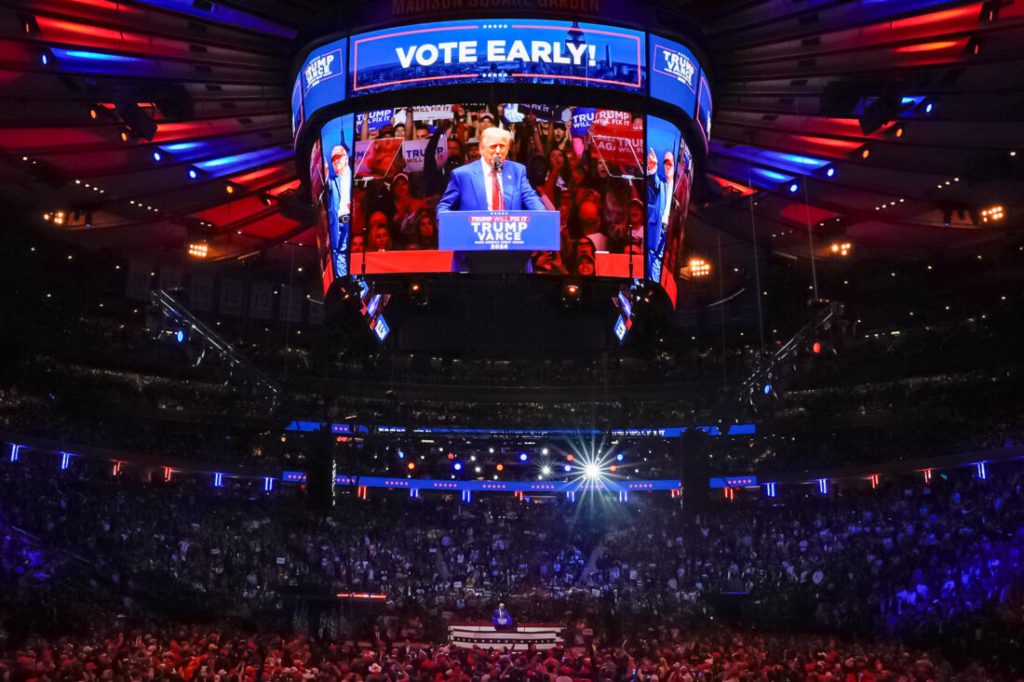


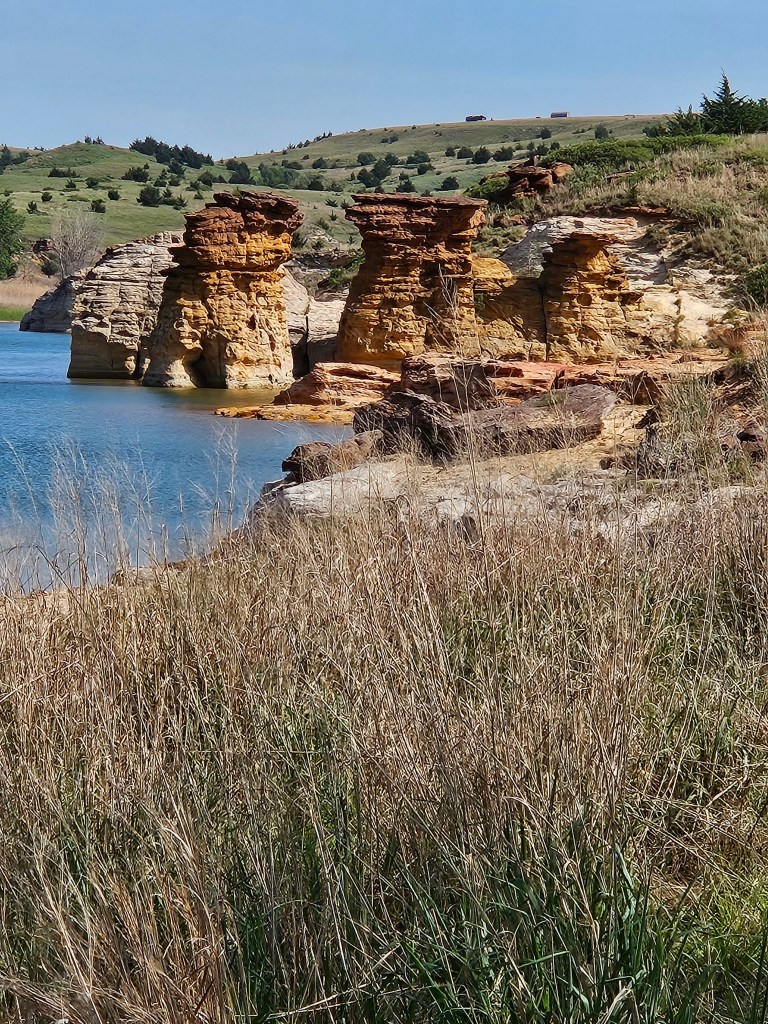

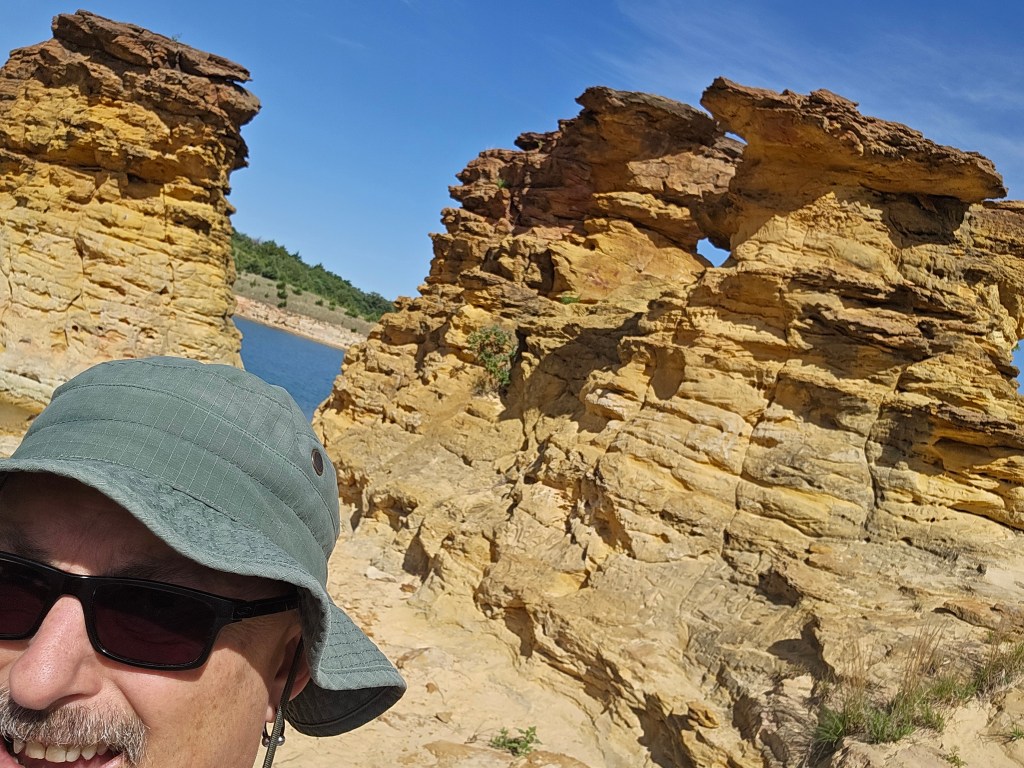


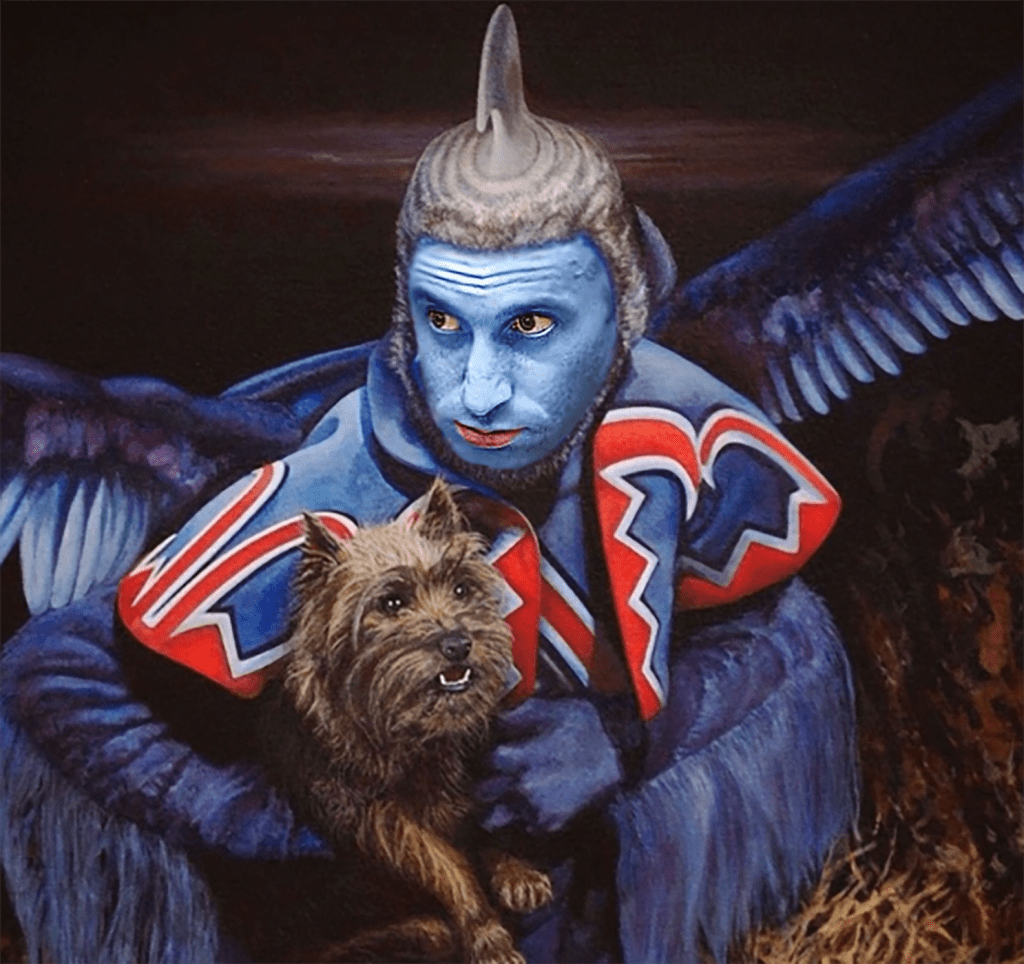


 Loopcircus