This Land: New Hampshire

On a July Monday in the year of our lord, 2025, Ronnie and Rocinante woke up to a new day, in a strange land. And with all apologies to the natives, it appears they brought the Kanorado weather with them. Average July temps in Derry New Hampshire (no, not that Derry) is between the upper 70s and mid 80s. Today, it’s 92 with tomorrow’s forecast predicting temps up to 96! Fortunately, no one in the Derry Public Library knows it’s Ronnie’s fault… woo hoo!

Anyway, New Hampshire, the Granite State. The first to weigh in on the various candidates making bids to run the most powerful nation on the planet (till it’s not). These loopers are fiercely independent, proving themselves resilient and worthy from the jump.

On January 5, 1776… long, long ago, the cantankerous loopers of New Hampshire decided they’d had enough of old King George. Wham… first colony to declare independence! Nearly half a year before those other guys got around to signing the Declaration. Brave souls, or maybe just impatient.

“Live Free or Die!” It’s what they say.

Established in 1629, named after some place in England… typical. Then came the British troubles. In 1774, before most folks even knew what was what, New Hampshire jumped the gun seizing Fort William & Mary, just like that. Two years later, they had their own government and constitution. First again. No dilly-dallying for these loopers.

“Live Free or Die!” Sounds about right.

Later on, when the big American family squabble happened, the one they called the Civil War, New Hampshire was all in for abolition. Thirty-two thousand soldiers, give or take a few, marched off to fight for the Union. After that unpleasantness, boom… factories everywhere! Textiles, shoes, paper. The Amoskeag Manufacturing Company in Manchester was the biggest cotton mill on the planet. Can you imagine? Then came the French Canadians, by the droves. Now, a quarter of the population has French-American blood. And these days, New Hampshire is rich and smart. Go figure.

“Live Free or Die!” A mantra, if you will.

They’re not big on religion here. Least religious U.S. state, they say. Staunchly libertarian, they won’t be taking orders from priests… they really like their freedom. A Pew survey in 2014 showed that thirty-six percent here were part of the fast growing demographic known as the “nones“. Thirty percent Protestant, twenty-six percent Catholic. Not many Mormons or Jews. They don’t go to church much, these New Hampshirites. Only fifty-four percent are “absolutely certain there is a God,” compared to seventy-one percent elsewhere. Curious, isn’t it? Oh, and here’s a kicker: New Hampshire is the only state to have a woman governor and two women as U.S. senators. There’s another kick in the agates for the patriarchy.

“Live Free or Die!” And make room for the ladies in your ol’ boy network.

Now, before all the European colonizer hullabaloo, the Abenaki tribes were here, minding their own business. Different cultures, different gods, but same language, mostly. People were living near Keene up to twelve thousand years ago! Imagine that. You can commune with the sacred spirits in the White Mountain National Forest, winding through the Appalachian Trail.

“Live Free or Die!” A long, beautiful nature hike.

On Mount Washington, they call it… the “World’s Worst Weather.” Hurricane-force winds every third day. Through the years, more than a hundred visitors underestimated that fury, and now they cant. Little dwarf trees, all matted and gnarled, like angry bonsai. So it goes. And the Old Man of the Mountain, a face carved by nature itself, watched over Franconia Notch for ages. Then, one day in May 2003, poof! Gone. Just like that. And Ronnie thought Kanorado had windy days.

“Live Free or Die!” Until you can’t.

Lakes, ponds, rivers, streams. Eight hundred of the first, nineteen thousand miles of the second. Hard to keep track of all this windy river vertigo. Sometimes state boundaries get bungled. New Hampshire and Maine had a little squabble over the Piscataqua River boundary, specifically some islands. The Supreme Court said Maine owned them. But New Hampshire still says the naval shipyard on Seavey’s Island is theirs. Stubborn, these Granite Staters.

“Live Free or Die!” And don’t tread on me.

New Hampshire has the shortest ocean coastline in the whole darn country, eighteen miles. Blink and you miss it. Hampton Beach, where folks go to get sunburned. And the Isles of Shoals, nine tiny islands offshore. Four of them are New Hampshire’s. Poet Celia Thaxter had an art colony there. And Blackbeard, the pirate, supposedly buried treasure there. Treasure and art. A strange combination.

“Live Free or Die!” For rum, booty, and framing services perhaps?

And New Hampshire has produced an impressive list of notable people: Mary Baker Eddy, who started Christian Science. Robert Frost, a poet who knew a thing or two about lonely roads. Alan Shepard, who went to space. Ronnie James Dio, the flaming heavy metal icon. Dan Brown, who writes those mystery novels. Adam Sandler, Sarah Silverman, Seth Meyers… funny people. So it goes.

“Live Free or Die!” Or at least, take it with a generous sense of humor.

And with that, again we point out the fact that New Hampshire’s average July temperature ranges from the mid-70s to mid-80s. As this entry gets logged the thermometer is in the mid-80s, on the way to a high of 96! Now without sounding like a total narcissist, Ronnie is rehearsing excuses in case anyone were to irrationally put the blame on him and Rocinante for bringing the Kanorado “Dawg Days” all this way north. You gotta admit, it is an astonishing coincidence. On the drive from Burlington VT to Derry, NH, the conditions were gorgeous. Light rain and upper 60s to mid 70s. Ronnie was breathing a sigh of relief for getting away from the punishing Kanorado summer heat, only to find he had apparently brought his customary suffering with him, to the astonishment of the Yankee natives.

PS: There is a silver lining… Ronnie always manages to find one. That being, evening temps cool down significantly so that Ronnie’s able to switch the ceiling fans off around 10 or 11 P.M. as they aren’t needed for the rest of the night. So… there’s that.

Onward through the fog… Rohlfie

You won’t get far…
In the Granite State…
With Shuck and Jive…
They can’t relate…
First to weigh in…
On the Presidential Race…
Live free and chalk it up to fate.

This Land: Virginia

To be clear, Rocinante is no stranger to mountaineering. In fact, she was literally born in Colorado Springs, her first initiation over Independence Pass through the valley of the Roaring Fork northwest of Aspen, where Owl Farm, Hunter S. Thompson‘s home redoubt sits. A gorgeous, exhilarating trip and Rocinante handled it without a hitch. Now, this is all familiar territory for Ronnie, a native of Kanorado. He’s seen it all, from Black Bear Road to the endless prairies of Western Kansas. That said, it’s hard for our heroes to stay focused traveling through Virginia as the lush Edenic land goes on and on and on. They made a point to stay on what Heat Moon dubbed “Blue Highways” and by arrival in Waynesboro, Ronnie was overwhelmed with the beauty of Virginia’s interior. So much he began to doubt his ability to return to the flatlands.

Anyway, let’s try to scratch the surface of Virginia, warts and all. The name whispers of a land steeped in history, and since Ronnie has no personal memories here, he’ll have to rely on the testimony of others weaving a tapestry with threads of glory and shame, beauty and brutality.

THE GOOD: In the nascent days of the Virginia Colony, a spirit of enterprise, however fraught with unintended consequence, took root. Brave souls, lured by the promise of land and opportunity, crossed the vast ocean, establishing settlements like Jamestown. Here, amidst hardship and uncertainty, the seeds of a new nation were sown. Think of the fortitude of women like Pocahontas, who, whether through romanticized legend or historical fact, stands as a bridge between two worlds, a figure of diplomacy in a time of great tension. The fertile soil yielded tobacco, a golden leaf that fueled the colony’s growth and prosperity, laying the foundation for a burgeoning society. Later, Virginia became the cradle of revolutionary thought, birthing patriots like Washington and Jefferson, whose eloquent pronouncements on liberty and self-governance echoed across the land, ultimately shaping the destiny of the United States. The establishment of institutions of learning, like the College of William & Mary, fostered intellectual pursuits and contributed to the development of a uniquely American identity. Even in later years, the spirit of progress continued, exemplified by the tireless efforts of individuals like Booker T. Washington, born into slavery in Virginia, who rose to become a beacon of hope and advocate for education and self-reliance for African Americans across the nation. His work at the Hampton Institute and Tuskegee University stands as a testament to the enduring power of human aspiration in the face of adversity.  

THE BAD: Alas, like the shadow that invariably accompanies the light, Virginia’s history is not without its darker chapters. The very prosperity of the early colony was built upon a foundation of injustice: the brutal exploitation of the land and its indigenous inhabitants, and the abhorrent institution of chattel slavery. The arrival of enslaved Africans marked a profound and enduring stain on the Virginian narrative, a contradiction to the lofty ideals of liberty espoused by its leading figures. The echoes of the lash and the cries of the oppressed resonate through the centuries, a stark reminder of the inherent cruelty and inhumanity of this system. Even the allure of the land led to conflict and displacement, as the relentless westward expansion often came at the expense of Native American tribes who had called this land home for generations. The seeds of division sown in these early days would ultimately contribute to the cataclysm of the Civil War, a bloody conflict that tore the nation asunder and left an indelible scar upon the Virginian landscape.  

THE UGLY: Beyond the grand narratives of heroism and injustice lie the more granular, often overlooked aspects of life that reveal a less romanticized past. The harsh realities of colonial life – the disease, the famine, the constant threat of conflict – painted a grim picture for many early settlers. Imagine the squalor of early settlements, the precariousness of existence, the ever-present specter of illness claiming lives with cruel indifference. Even the pursuit of wealth could lead to avarice and exploitation, as individuals sought to amass fortunes at the expense of their less fortunate neighbors. The social hierarchies, rigidly enforced, often left little room for advancement for those born into less privileged circumstances. And let us not forget the presence of those who operated outside the bounds of law and decency, preying on the vulnerable. While not directly a Virginian, the infamous pirate Blackbeard, with his fearsome reputation, certainly cast a shadow over the coastal waters, a symbol of the lawlessness that could occasionally disrupt the ordered (or disordered) affairs of the colony. The tales of his depredations, though perhaps embellished over time, speak to a certain brutishness that existed on the fringes of society.  

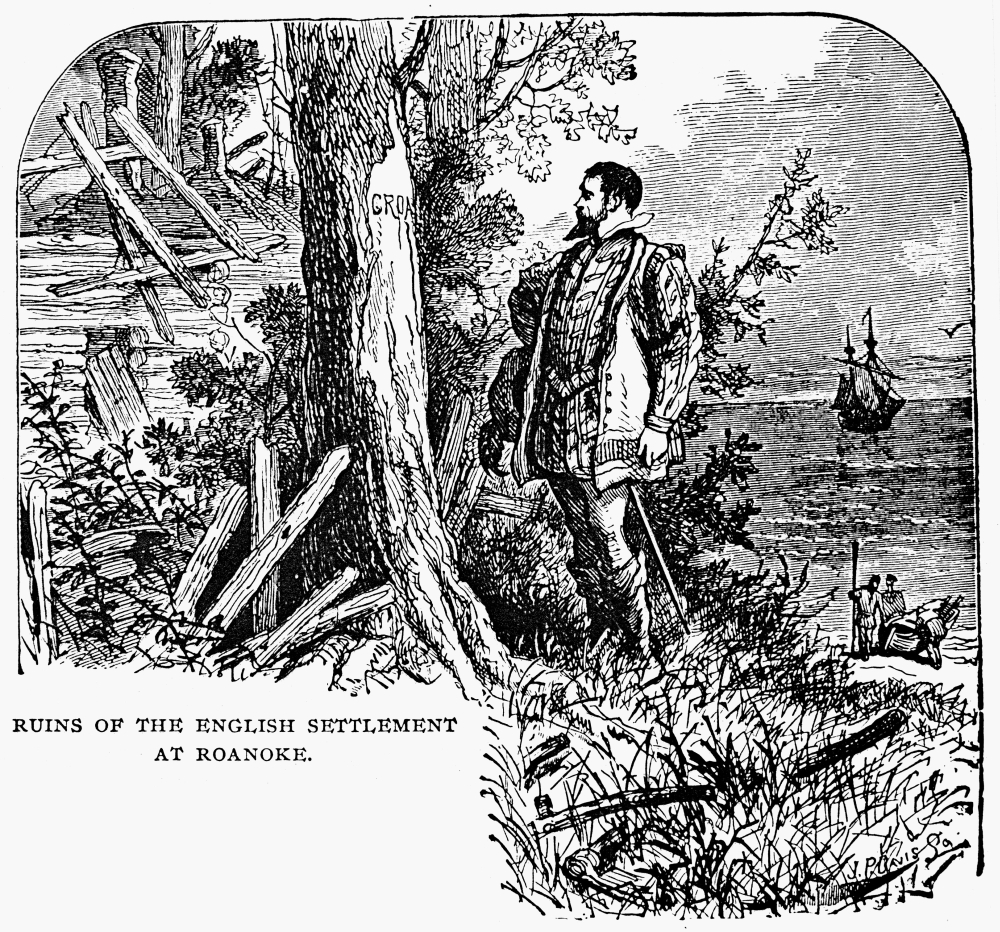
BELIEVE IT OR NOT: Now, let us turn our attention to some of the more curious and perhaps less widely known aspects of Virginia’s history. Virginia once boasted a significant wine industry in its early days, with attempts made to cultivate European grape varieties. Though these initial efforts met with limited success, they speak to the early aspirations and diverse ambitions of the colonists. Furthermore, consider the intriguing stories surrounding the Lost Colony of Roanoke in present-day South Carolina, a mystery that continues to baffle historians to this day. The disappearance of an entire settlement, leaving behind only the cryptic word “Croatoan,” fuels speculation and whispers of unknown fates. And who would have thought that Virginia played a crucial role in the development of early American literature, with figures like William Byrd II chronicling colonial life in witty and insightful prose? These lesser-known facets add layers of complexity and intrigue to the well-trodden paths of historical narrative.  

GHOSTS: Ah, and now we venture into the realm of shadows and whispers, where the veil between worlds is said to thin. Given its long and often turbulent history, it is perhaps unsurprising that Virginia is rife with tales of spectral encounters. Ancient plantations, witnesses to generations of joy and sorrow, are often whispered to be haunted by the lingering spirits of those who once walked their halls. Tales abound of disembodied voices, unexplained footsteps, and the spectral apparitions of former inhabitants, forever bound to the land. Civil War battlefields, soaked in the blood and anguish of a nation divided, are said to echo with the cries of long-lost soldiers, their restless spirits forever reenacting the tragic events of the past. Even the coastline, once frequented by pirates and privateers, holds legends of ghostly ships sailing through the mist, their spectral crews guarding long-lost treasures. Whether these tales are mere fancy or hold a kernel of truth, they undeniably add a certain mystique to the rich tapestry of Virginia’s past, a reminder that perhaps some echoes of history refuse to fade entirely.  

Thus, we have traversed the variegated landscape of Virginia’s history, from its promising beginnings and noble aspirations to its darker realities and enduring mysteries. The story of Virginia is one of stark contrasts, of light and shadow, of triumphs and tragedies, all woven together to create a snapshot as compelling and enduring as the land itself. And with that Ronnie and Rocinante bid Virginia fare well setting a course for neighboring West Virginia.

Onward through the fog… RH

From the strife of Jamestown…
To Colonial Union…
The nation’s birth pangs…
Start in Virginia…
And though the land was…
Abundant paradise…
Independence came with a heavy price.