This Land: West Virginia

Well well well, we’re still on the road. This week… West Virginia. We’re finding the fun has dwindled a bit. At times Ronnie confesses to feeling like an exposed nerve. It may have something to do with the change of scenery. After all, as a Kanorado native, Ronnie’s comfortable with wide open spaces. But starting in North Carolina, approaching the beginning humps of the Appalachians, Ronnie started developing a contracting state of claustrophobia. This sense of dread actually started earlier, in South Carolina, with conjured imaginings of what it would be like to navagate congested urban sprawl nestled amongst relentless steep grades, up and down and up and down, trying not to ride the brakes but sometimes unable to avoid it. Then what do you know? The two West Virginia college towns Rocinante stumbled into (WVU and Fairmount State) presented conditions exactly like Ronnie’s worst roller-coaster imaginings.

Now, the other side of Ronnie’s Kanorado upbringing leaves him no stranger to mountaineering. And, truth told, our heroes have learned to keep up with the locals. But there ain’t no autopilot moments like those on the prairie, and Ronnie’s exposed nerve feeling keeps interrupting the vagabond felicity. So, this brings us to what appears to be a recurring theme investigating West Virginia’s general “vibe”. From readings and conversations, Ronnie has detected a more than usual sense of bi-polar contradiction, set in some of the most beautiful, lush country our heroes have yet encountered.

West Virginia! A veritable Janus of banjos and 5g smartphones. Even before the rabble in Philadelphia started their tiresome bleating about liberty and taxes, this land of craggy peaks and shadowed hollers harbored a glorious dichotomy. On the one hand, you had rugged frontiersmen, creatures of axe and rifle, suspicious of anyone wearing hats indoors and whose idea of polite conversation involves hitting the spittoon bullseye. Folks of fierce independence, mind you, who’d sooner wrestle a bear than abide a revenue agent or a banker.

Then, cheek-by-jowl with these noble savages, you’d find the seeds of a peculiar sort of… let us call it genteel indolence. Picture the languid river valleys, where the air hangs thick and sweet as overripe peaches, and where ambition rarely stretches beyond a decent slash of corn liquor and a comfortable spot on the porch swing. Folks who view haste as vulgar and consider vigorous debate over the proper way to cure tobacco the height of intellectual ferment.

Enter the great unpleasantness of the Revolution, and West Virginia, bless her conflicted heart, found herself straddling the fence like a hound dog caught in a barbed wire. Still part of greater Virginia, she sent forth her share of flinty riflemen to give the Redcoats a proper thrashing, a surprising burst of collective energy. Yet, even amidst the patriotic fervor, one might suspect there were plenty of mountaineers more concerned with deer season than the pronouncements of some powdered wig in Williamsburg.

The Civil War, naturally, only amplified this delightful schizophrenia. Brother against brother, neighbor against neighbor… a perfect illustration of a populace simultaneously capable of profound loyalty and stubborn contrariness. One faction, fiercely attached to the traditions (and peculiar institutions) of the Old Dominion, marched off under the Stars and Bars. The other, smelling a chance for their own patch of sovereignty and perhaps harboring a lingering resentment for the tidewater gentry, cast their lot with the Union. The result? A bloody, internecine squabble fought amidst some of the most gorgeously indifferent scenery on the continent.

And now, in this glorious age of the World Wide Web, this bi-polar beast roars on. You have pockets of genuine, unadulterated Appalachia, where decent 4g access is as mythical as the Sasquatch, and where the most pressing technological concern is whether the battery in the coon-hunting flashlight is still good. Here, the ancient rhythms of the land persist, the wisdom is passed down through generations of storytellers, and a firm handshake still means more than a thousand likes or shares.

But then, just over the next ridge, you’ll stumble upon a Starlink antenna sprouting from a double-wide, its tendrils reaching out to the digital ether. Here, the denizens are just as likely to be scrolling through TikTok as whittling a piece of wood. They’re ordering drone parts on Amazon while simultaneously canning beets according to a recipe passed down from their great-grandmother. They’re arguing about cryptocurrency on Reddit while their hound dog snoozes by the wood-burning stove.

It’s an all too human mess, this West Virginia. A land where the echoes of Daniel Boone‘s long rifle mingle with stock-ticker notifications. A place where the fierce independence of mountaineers clash with the modern craving for instant gratification and online validation. It is, in short, a microcosm of the American condition, amplified and seasoned with a healthy dose of mountain stubbornness and a suspicion of anything invented after the Mason jar. Long may it remain so, a testament to the enduring human capacity for glorious contradiction.

As for OUR contradicted heroes, they’ll keep pushin’ on. Ronnie’s “exposed nerve” will surely abate. And just as well as the worst is yet to come. In fact, we’re told Blue Highway windshield time in Upstate NY and further North amounts to traveling up endless claustrophobia-inducing tree alleys. It’s funny because delusional Ronnie thought he would NEVER miss driving on endless prairies, but here we are. He probably just needs a reminder that flatlander driving very often includes bucking white-knuckle gale-force head and cross-winds… and that ain’t no fun neither.

Onward through the fog… RH

It makes you dizzy…
Blue Highway shizzy…
In West Virginia…
You can get busy…
And take a page from…
The Tao Te Ching…
This too will pass…
And equalize.

This Land: Virginia

To be clear, Rocinante is no stranger to mountaineering. In fact, she was literally born in Colorado Springs, her first initiation over Independence Pass through the valley of the Roaring Fork northwest of Aspen, where Owl Farm, Hunter S. Thompson‘s home redoubt sits. A gorgeous, exhilarating trip and Rocinante handled it without a hitch. Now, this is all familiar territory for Ronnie, a native of Kanorado. He’s seen it all, from Black Bear Road to the endless prairies of Western Kansas. That said, it’s hard for our heroes to stay focused traveling through Virginia as the lush Edenic land goes on and on and on. They made a point to stay on what Heat Moon dubbed “Blue Highways” and by arrival in Waynesboro, Ronnie was overwhelmed with the beauty of Virginia’s interior. So much he began to doubt his ability to return to the flatlands.

Anyway, let’s try to scratch the surface of Virginia, warts and all. The name whispers of a land steeped in history, and since Ronnie has no personal memories here, he’ll have to rely on the testimony of others weaving a tapestry with threads of glory and shame, beauty and brutality.

THE GOOD: In the nascent days of the Virginia Colony, a spirit of enterprise, however fraught with unintended consequence, took root. Brave souls, lured by the promise of land and opportunity, crossed the vast ocean, establishing settlements like Jamestown. Here, amidst hardship and uncertainty, the seeds of a new nation were sown. Think of the fortitude of women like Pocahontas, who, whether through romanticized legend or historical fact, stands as a bridge between two worlds, a figure of diplomacy in a time of great tension. The fertile soil yielded tobacco, a golden leaf that fueled the colony’s growth and prosperity, laying the foundation for a burgeoning society. Later, Virginia became the cradle of revolutionary thought, birthing patriots like Washington and Jefferson, whose eloquent pronouncements on liberty and self-governance echoed across the land, ultimately shaping the destiny of the United States. The establishment of institutions of learning, like the College of William & Mary, fostered intellectual pursuits and contributed to the development of a uniquely American identity. Even in later years, the spirit of progress continued, exemplified by the tireless efforts of individuals like Booker T. Washington, born into slavery in Virginia, who rose to become a beacon of hope and advocate for education and self-reliance for African Americans across the nation. His work at the Hampton Institute and Tuskegee University stands as a testament to the enduring power of human aspiration in the face of adversity.  

THE BAD: Alas, like the shadow that invariably accompanies the light, Virginia’s history is not without its darker chapters. The very prosperity of the early colony was built upon a foundation of injustice: the brutal exploitation of the land and its indigenous inhabitants, and the abhorrent institution of chattel slavery. The arrival of enslaved Africans marked a profound and enduring stain on the Virginian narrative, a contradiction to the lofty ideals of liberty espoused by its leading figures. The echoes of the lash and the cries of the oppressed resonate through the centuries, a stark reminder of the inherent cruelty and inhumanity of this system. Even the allure of the land led to conflict and displacement, as the relentless westward expansion often came at the expense of Native American tribes who had called this land home for generations. The seeds of division sown in these early days would ultimately contribute to the cataclysm of the Civil War, a bloody conflict that tore the nation asunder and left an indelible scar upon the Virginian landscape.  

THE UGLY: Beyond the grand narratives of heroism and injustice lie the more granular, often overlooked aspects of life that reveal a less romanticized past. The harsh realities of colonial life – the disease, the famine, the constant threat of conflict – painted a grim picture for many early settlers. Imagine the squalor of early settlements, the precariousness of existence, the ever-present specter of illness claiming lives with cruel indifference. Even the pursuit of wealth could lead to avarice and exploitation, as individuals sought to amass fortunes at the expense of their less fortunate neighbors. The social hierarchies, rigidly enforced, often left little room for advancement for those born into less privileged circumstances. And let us not forget the presence of those who operated outside the bounds of law and decency, preying on the vulnerable. While not directly a Virginian, the infamous pirate Blackbeard, with his fearsome reputation, certainly cast a shadow over the coastal waters, a symbol of the lawlessness that could occasionally disrupt the ordered (or disordered) affairs of the colony. The tales of his depredations, though perhaps embellished over time, speak to a certain brutishness that existed on the fringes of society.  

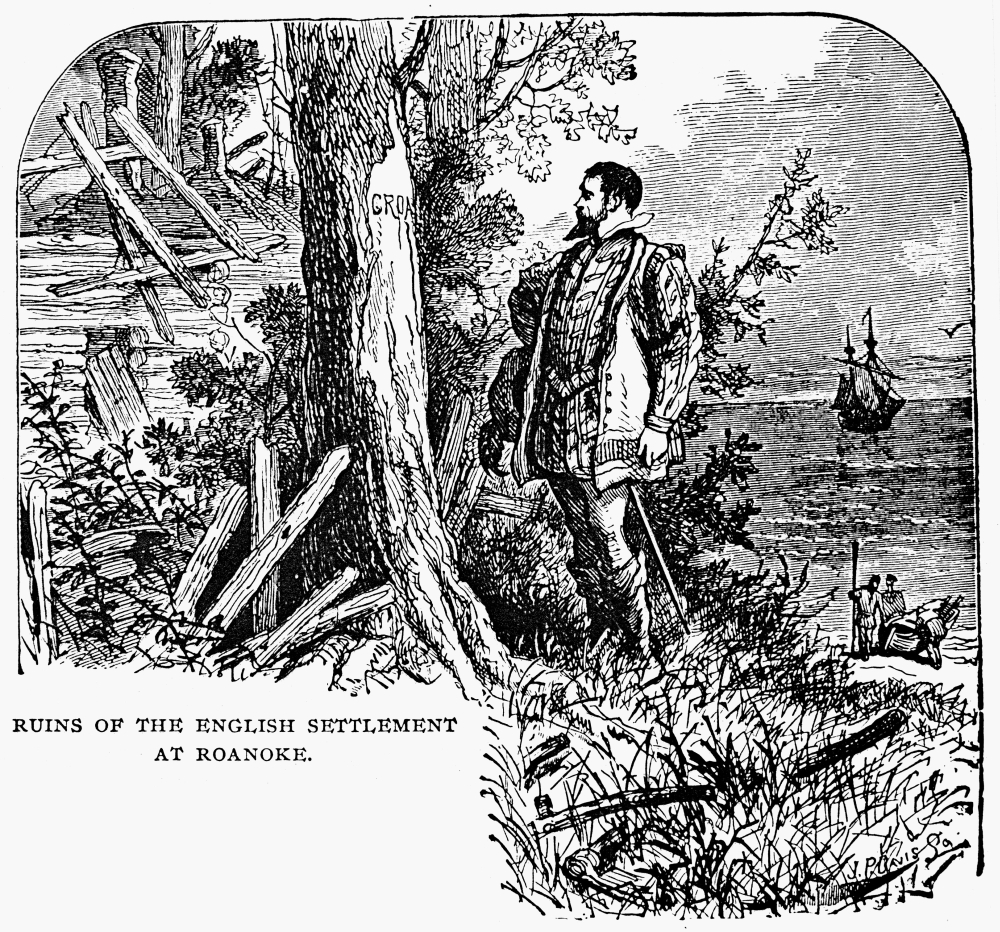
BELIEVE IT OR NOT: Now, let us turn our attention to some of the more curious and perhaps less widely known aspects of Virginia’s history. Virginia once boasted a significant wine industry in its early days, with attempts made to cultivate European grape varieties. Though these initial efforts met with limited success, they speak to the early aspirations and diverse ambitions of the colonists. Furthermore, consider the intriguing stories surrounding the Lost Colony of Roanoke in present-day South Carolina, a mystery that continues to baffle historians to this day. The disappearance of an entire settlement, leaving behind only the cryptic word “Croatoan,” fuels speculation and whispers of unknown fates. And who would have thought that Virginia played a crucial role in the development of early American literature, with figures like William Byrd II chronicling colonial life in witty and insightful prose? These lesser-known facets add layers of complexity and intrigue to the well-trodden paths of historical narrative.  

GHOSTS: Ah, and now we venture into the realm of shadows and whispers, where the veil between worlds is said to thin. Given its long and often turbulent history, it is perhaps unsurprising that Virginia is rife with tales of spectral encounters. Ancient plantations, witnesses to generations of joy and sorrow, are often whispered to be haunted by the lingering spirits of those who once walked their halls. Tales abound of disembodied voices, unexplained footsteps, and the spectral apparitions of former inhabitants, forever bound to the land. Civil War battlefields, soaked in the blood and anguish of a nation divided, are said to echo with the cries of long-lost soldiers, their restless spirits forever reenacting the tragic events of the past. Even the coastline, once frequented by pirates and privateers, holds legends of ghostly ships sailing through the mist, their spectral crews guarding long-lost treasures. Whether these tales are mere fancy or hold a kernel of truth, they undeniably add a certain mystique to the rich tapestry of Virginia’s past, a reminder that perhaps some echoes of history refuse to fade entirely.  

Thus, we have traversed the variegated landscape of Virginia’s history, from its promising beginnings and noble aspirations to its darker realities and enduring mysteries. The story of Virginia is one of stark contrasts, of light and shadow, of triumphs and tragedies, all woven together to create a snapshot as compelling and enduring as the land itself. And with that Ronnie and Rocinante bid Virginia fare well setting a course for neighboring West Virginia.

Onward through the fog… RH

From the strife of Jamestown…
To Colonial Union…
The nation’s birth pangs…
Start in Virginia…
And though the land was…
Abundant paradise…
Independence came with a heavy price.