Ronnie, aboard Rocinante (his trusty mount), felt the thrum of steel belts and asphalt as they rolled over the state line. The final stickpin on their quixotic “Hot Springs or Busk” tour… Maine! Land of sprawling nothingness peppered with the occasional Dunkin’, or so Ronnie imagined… Time for some lobster rangoon and a few more chapters of “Journey to the End of Night” from his audiobook.
“Upta camp!” Ronnie yelled to Rocinante, who responded with a disconcerting hesitation. Celebration was, as usual, premature. It smacked them in the face like a rogue wave of rockweed and kelp. Outside a dilapidated general store smelling faintly of woodsmoke and looming dread, a specter materialized. Tall, gaunt, skeletal, seemingly woven from the shadows, it pointed a bony finger.
“You ain’t from ’round here.” The phantom croaked, its voice like dry leaves scraping together. “This here’s puckerbrush country. Ya can’t get there from here, not really. Not without payin’.”
Ronnie scoffed. “Paying who? The moose mafia?” He’d heard this kind of backwoods hokum before. An encounter with a kooky pair in Derry, New Hampshire, with their whispers of clowns and floating balloons, had been similarly dramatic. They said they were from Bangor, and they seemed quite hesitant to endorse Ronnie’s wish to visit the home of that town’s famous resident, Stephen King. The woman had a pale anti-witch sort of countenance, like viewing a photo negative. White hair, fairly translucent skin, and a wry, knowing grin that gave Ronnie the stumbles. Her companion was a tall brooding figure reminiscent of one of Ronnie’s favorite childhood television programs. He was a dead ringer for Lurch, The Addams Family’s butler. The couple had a dog on a stout leash who took stock of Ronnie in a manner not typical of canine pets, a more sophisticated intelligence, not anxious, but not willing to let Ronnie pass without a proper olfactory inspection.
This motley bunch seemed to be warning our heroes away from Bangor, but the ever-rational Ronnie wasn’t willing to reroute the tour. He considered himself immune to such provincial spookiness.
But Maine… Maine hummed with a different kind of weird. Twelve thousand years of human habitation, the rumble of ancient glaciers, the ghostly echoes of birchbark canoes and longboats full of grumpy Vikings who probably just wanted some mead and a decent pillage.
Bangor NativeWelcome to SK’s MaineRonnie’s crazy daydreamBetter bring a compass
Upon arrival, our heroes found Bangor a bust. Rocinante, usually welcome in the most unlikely parking lots, was met with glares. The traffic was a Gordian knot of SUVs and pickup trucks, each driver seemingly mainlining black coffee and simmering with a quiet, territorial rage. Ronnie felt like a single, tangled strand of dental floss in a Sasquatch’s beard. Downtown, brick and shadowed, felt less like a literary pilgrimage and more like the prelude to a particularly grim Edgar Allan Poe story.
Then he heard it. A voice, omnipresent and resonant, seemingly emanating from the very asphalt. “Get OUT!” Ronnie didn’t wait for a second opinion. They needed to skedaddle, but not before soaking up a bit more authentic provincial dread for the upcoming loopcircus.com post, “This land: Maine.”
Their escape route twisted through a labyrinth of densely wooded backroads, the “puckerbrush!” A claustrophobic embrace of pine and shadow. Every rustle of leaves like spectral footsteps. Every twig snap prelude to a jump-scare directed by a particularly malevolent George Romero on a sugar rush. Coastal Down East Maine, advertised as a haven for artists, felt more like a haven for things with too many eyes and teeth and not enough discernible flesh.
The meander back south was a blur of paranoia and close calls… a shadowy figure by a deserted lake that turned out to be a very large, very still loon. A guttural snarl in the woods that was probably just a disgruntled beaver, but still… Maine had gotten under Ronnie’s skin, a splinter of ancient fear he couldn’t quite dislodge.
Finally, the familiar, slightly less but not completely un-haunted bramble of Tewksbury, Massachusetts, appeared through the pines. Rocinante practically sighed with relief. Boondocker-friendly! And the library! Sweet, glorious, digital-nomad friendly WiFi. Ronnie parked, the tension draining from his shoulders. He could almost smell the lukewarm coffee and the comforting sight of the open laptop. Time to finish this damn story and forget about Maine if only for a little while. The unsettling, unforgettable vibe of a state where one truly understands why you “can’t get there from here.”
Onward through the fog… Rohlfie
The road to Bangor… Lined with puckerbrush… The ancient glaciers… The rocky coast… If you can hear… The Viking ghosts… They’ll say… you can’t… Get there from here.
It was 2:00 P.M., give or take a minute, on an ordinary Tuesday, though in the suffocating maw of Northern New England’s July “Heat Dome,” nothing felt particularly ordinary. The very air hung thick and greasy, a humid shroud draped over the land, making even the squirrels pant like Alaskan Malamutes at Disney World. Inside the tin-can confines of Ronnie’s trusty, but un-air conditioned mount, Rocinante, a veritable bake oven on wheels, Ronnie noticed the cabin batteries sputtering, their digital readout fading like a bad dream. Keeping the provisions from turning into a science experiment in this hundred-degree crucible was draining the lifeblood right out of them. And when that happens, a drive, an hour or so, a nice little constitutional for the battery, that’s the ticket.
So, off they went, Ronnie at the helm, the digital siren song of Siri’s perpetually inebriated sister (known in these parts as Google Maps) croaking directions. The mission was to find the nearest watering hole for their dwindling provisions… a grocery emporium with a filtered-water refill station, a veritable oasis in this overheated landscape. Mission accomplished. The electronic drunkard was commanded to lead them back to their pre-designated encampment. But alas, Siri’s drunk sister, in a fit of digital delirium, delivered them not to the sylvan serenity of their New Hampshire hideaway, but to Tewksbury, Massachusetts.
Tewksbury, MA? Ronnie’s eyebrows shot up like a rocket. What the Sam Hell!? they weren’t done with New Hampshire yet! The verdant hills of Derry, still echoing with the ghost of a post unfinished. But by then, the sun, a malevolent orange eye in the hazy sky, was already dipping low, casting long, bruised shadows. Backtracking? Forget about it. The die was cast. And besides, they had everything they needed to finish the New Hampshire dispatch right here, right now, in this unexpected patch of overheated forest. Serendipity, it seems, often arrived in the guise of a geographical screw-up. For lo and behold, a stone’s throw from their new, accidental roost, stood the Tewksbury Public Library, and just beyond its brick façade, a short, almost ominous stroll away, loomed the Tewksbury State Hospital, its Gothic spires reaching for the heavens like skeletal fingers, steeped in a history as thick and dark as molasses. SERENDIPITY NOW! A drumroll, please, for the universe’s peculiar sense of humor.
Now, pull up a folding chair, pop a squat, and lend an ear, because we’re about to embark on a journey, a rollicking, rambunctious ride through the peculiar, the profound, and sometimes downright preposterous tapestry of this place called Massachusetts. It’s a land of “firsts” and “extremes,” as some folks are fond of saying, and if you ain’t careful, it’s liable to give you a case of psychic whiplash just trying to keep up.
Way back, long before your great-grandpappy’s great-grandpappy even thought about being born, this neck of the woods hummed with the quiet rhythm of life, home to a diverse tapestry of Indigenous peoples… the Wampanoag, the Narragansett, the Nipmuc, and a slew of others, their names whispered on the wind. They dwelled in ingenious lodges called wigwams, conical cocoons of bark and hide, or sometimes in grander longhouses, sprawling communal abodes, all under the watchful eye of their sachems, leaders who could be as easily a woman as a man, which just goes to show you some things ain’t so new under the sun. Why, the very name “Massachusetts” itself is a linguistic echo, plucked from the Massachusett people, a tribute to their enduring presence.
Then, in 1620, like a scene out of a stained-glass window, along came the Pilgrims, their faces grim with conviction, seeking a place to worship God without all the fuss and bother of the Old World. They clambered off their creaking wooden ark, the Mayflower, and promptly set up shop in Plymouth, a desolate spit of land that would forever be etched in the annals of American myth. A mere decade later, in 1630, another wave, an even more earnest phalanx of Puritans, arrived, their heads buzzing with the grand, almost hubristic idea of building an “ideal” religious society, a shining city upon a hill. They called their settlement the Massachusetts Bay Colony, a name that would eventually be swallowed by the booming metropolis we now call Boston. They even had what some historians, with a twinkle in their eye, refer to as the “First Thanksgiving,” a three-day bacchanal of feasting and goodwill after their initial, hard-won harvest. Now, whether that was a true act of profound gratitude or merely a darn good excuse to eat till their britches burst, we can’t rightly say, but it’s a yarn woven tightly into the fabric of American lore.
These Puritans, bless their earnest, God-fearing hearts, were mighty serious about their faith. So serious, in fact, that if you didn’t quite see eye-to-eye with their rigid interpretations… folks like the fiery Anne Hutchinson and the stubbornly independent Roger Williams… they’d politely (or perhaps not-so-politely, depending on the day and the prevailing winds of theological disagreement) suggest you try your luck elsewhere. And that, loopers, is how the feisty little state of Rhode Island got itself started, by gawd. It seems religious dissent, coupled with a hankering for a bit more elbow room, were quite the potent forces for colonial expansion back then.
Plymouth, MAMassasoit, Wampanoags’ SachemPlymouth Rock (allegedly)Mayflower II (definitely)
And let’s not overlook a grim chapter that unfolded in Salem, a town that earned itself a dark and indelible reputation for a spell of mass hysteria that involved accusations of witchcraft swirling through the air like a noxious fog. It just goes to show you what happens when folks get themselves all riled up, gripped by fear, and start pointing accusatory fingers. A truly grim chapter, that one, leaving a stain on the Puritanical ledger.
Now, fast forward a bit, through the sleepy colonial years, to the late 18th century, and Boston, like a coiled spring, begins to flex its muscles, asserting its destiny as the “Cradle of Liberty.” See, after the French and Indian War, a bloody, protracted affair that emptied the British coffers, the Crown decided it was high time the colonies, those spoiled colonial brats, paid their fair share. Massachusetts, being a feisty, independent-minded sort, didn’t much cotton to that idea. There were protests, simmering resentments, a bit of a ruckus in 1770 that went down in history as the Boston Massacre, where redcoats, those lobster-backed soldiers, fired into an angry crowd. And then, in ’73, those rascals, dressed like painted Indians, tossed a whole heap of tea… crates of it, a veritable harbor-full… into the frigid waters of Boston Harbor. The British, naturally, got their knickers in a twist, their royal temper flaring like a bonfire, and slapped Massachusetts with a series of punitive measures known as the Intolerable Acts. Well, that just poured gasoline on an already raging fire, and pretty soon, firebrands like Samuel Adams and John Hancock were stirring up so much trouble, so much revolutionary fervor, that it lit the fuse for the American Revolution in 1775. Massachusetts, it seems, was always good at getting things started, a perpetual instigator of change.
And speaking of rebellions, after the hard-won victory of the Revolution, a fellow named Daniel Shays, a weathered veteran of that very war, led a populist revolt from 1786 to 1787. They were disaffected, as the fancy folks in powdered wigs would say, burdened by debt and taxes, and they even tried to seize a federal armory in Springfield, a dramatic, ill-fated gambit. Now, this Shays’ Rebellion, as it’s known, didn’t exactly succeed in its immediate aims, but it certainly put the fear of God, or at least the fear of anarchy, into the fledgling nation, convincing everyone that the Articles of Confederation were about as useful as a screen door on a submarine. So, with a sense of urgency, they decided to draft a brand-spanking-new Constitution, a gleaming blueprint for a more perfect union, and Massachusetts, being quick on the draw, ever eager to be a pioneer, was the sixth state to ratify it in 1788, cementing its place in the grand experiment.
Now, this Massachusetts, it’s always been a veritable hothouse for big thinkers, for minds that dared to gaze beyond the mundane. It was a hotbed for the Transcendentalist movement, a philosophical ferment that preached the gospel of intuition, individual experience, and a deeper, almost mystical connection with nature. Ralph Waldo Emerson, a Boston boy who preferred the quietude of Concord’s leafy lanes, pretty much cooked up this whole philosophy, like a gourmet chef perfecting a new recipe. And his pal, Henry David Thoreau, that rugged individualist, spent a year roughing it in a little cabin at Walden Pond, living simply, observing the world, and writing about it all in prose as clear as spring water. Seems they liked to contemplate the universe, those two, and then tell everybody about it.
When the storm clouds of the Civil War gathered, Massachusetts, ever on the vanguard, was front and center, a tireless drum major in the parade for the abolition of slavery. It was the first state to muster itself a Black regiment, the 54th Massachusetts, a bunch of brave souls, sons of freedom, who went on to earn themselves some serious glory. And not content with just freeing folks from the shackles of bondage, in 1852, Massachusetts became the first state to make sure every child, rich or poor, got a bit of schooling. Compulsory education, they called it, and it just shows you they were always ahead of the curve when it came to smarts, ever eager to enlighten the populace.
And speaking of smarts, after the two big global conflagrations, when the smoke cleared and the cannons fell silent, eastern Massachusetts, which used to be all about the greasy gears of heavy industry, decided to give itself a radical makeover. It transformed itself, like a caterpillar into a butterfly, into a service-based economy, with all sorts of government contracts, private investments, and gleaming research facilities popping up like mushrooms after a spring rain. And the Route 128 corridor, that ribbon of asphalt winding through the suburbs, well, that became a regular parade of high-tech companies, a silicon valley of the East, all snatching up the bright young graduates from the area’s many fancy universities… places like MIT, where they’re so smart, they taught the world to ditch clunky analog media for the sleek, ethereal wonder of the “digital.”
Mass. Ethnic DiversityHenry David Thoreau’s Cabin SiteMITBattle of Lexington
Another feather in its progressive three-cornered hat, Massachusetts, ever the trailblazer, was the first state in the whole U.S. of A. to legalize same-sex marriage in 2004. They decided, plain and simple, after much deliberation and legal wrangling, that excluding loopers from civil marriage simply wasn’t constitutional, a blow for equality that reverberated across the nation. See? Extremes and firsts, a constant dance.
And they’ve got more famous literary figures than you can shake a stick at… from the colonial verses of Anne Bradstreet to the whimsical rhymes of Dr. Seuss, with the brooding prose of Nathaniel Hawthorne, the exquisite introspection of Emily Dickinson, and the epic seafaring tales of Herman Melville thrown in for good measure. It’s a regular literary jamboree, this place, a veritable feast for the word-hungry soul.
But let’s not get too puffed up, too self-satisfied, because even a place of such soaring highs has its crushing lows. And we’re not just talking about the low-down, gut-punching feeling you get when you see your quarterly property tax bill. The very place where this post is composed, this serendipitous stopping point called Tewksbury, whose State Hospital looms a short, somber walk away, started out as an almshouse back in 1854. It was a place for the poor, the sick, and later, the pauper insane, their minds adrift on stormy seas. A good many of its early residents were immigrants, especially the weary, hopeful souls from Ireland, fleeing famine and despair, and a full third of ’em, heartbreakingly, were children, their young lives touched by hardship. Why, Anne Sullivan, the remarkable woman who later taught Helen Keller to see the world with her mind’s eye, spent some of her own formative, often brutal years there. Discussing her time in the Tewksbury Hospital, she said, with an almost chilling detachment,
“Very much of what I remember about Tewksbury is indecent, cruel, melancholy, gruesome in the light of grown-up experience; but nothing corresponding with my present understanding of these ideas entered my child mind. Everything interested me. I was not shocked, pained, grieved or troubled by what happened. Such things happened. People behaved like that—that was all that there was to it.”
A chillingly matter-of-fact observation, a child’s stark assessment of a stark reality.
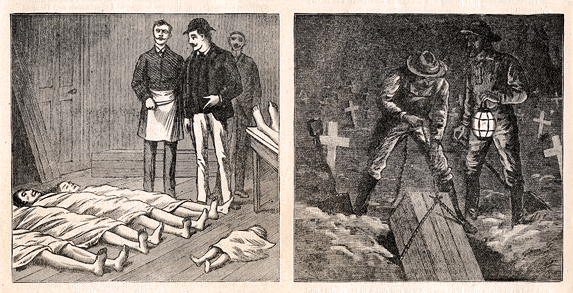
And if that ain’t enough to give you the shivers, to send a cold whisper down your spine, up to 10,000 souls are buried in the woods nearby, their final resting places marked only by tiny, anonymous numbered metal laurels, like miniature tombstone epitaphs. Most of their stories are lost to the mists of time, devoured by fires that consumed the early records, leaving only a spectral void. Some folks even whisper that the place is haunted by ghosts… friendly specters, they say, ghosts that have even infiltrated the hallowed halls of the library, no less. Benign ghosts, they say, and that’s a comfort given all the suffering that surely took place there.
Tewksbury Benign ghostsTewksbury Hospital Admin. Building10,000 Numbered GravesTewksbury 1907Hell is for ChildrenTewksbury Campus Tunnels
So there you have it… a tiny taste, a mere morsel, of the peculiar grandeur that is Massachusetts. Ronnie, ever the wanderer, says he’d love to hang out a while longer, to savor the coastal sights, to stroll the hallowed grounds of the MIT campus, perhaps even touch the very bricks where a nation was born. But alas, the open road calls, that siren song of adventure echoing in his ears. Two more states to go (Maine and Rhode Island), and then, like a homing pigeon, it’s back to Kanorado to take care of some of Ronnie’s personal business. After that, it’s the final leg, the grand pilgrimage back to Florida City, where the salt air and the gentle lapping of the waves will serve as the backdrop for the main event, the book, the very reason for this grand odyssey. Working title, you ask? One Year on the Road: Searching for the Fibrillating Heart of our Divided Nation. A grand ambition, indeed.
We’ll see you in Rhode Island.
Onward through the fog… Rohlfie
You can’t just breeze by… Massachusetts… The highs are too high… The lows are cavernous… The nation’s birth pangs… The death of innocence… Behold… the city on the hill.



 Loopcircus